
What a Growing Confectionery Brand Actually Needs
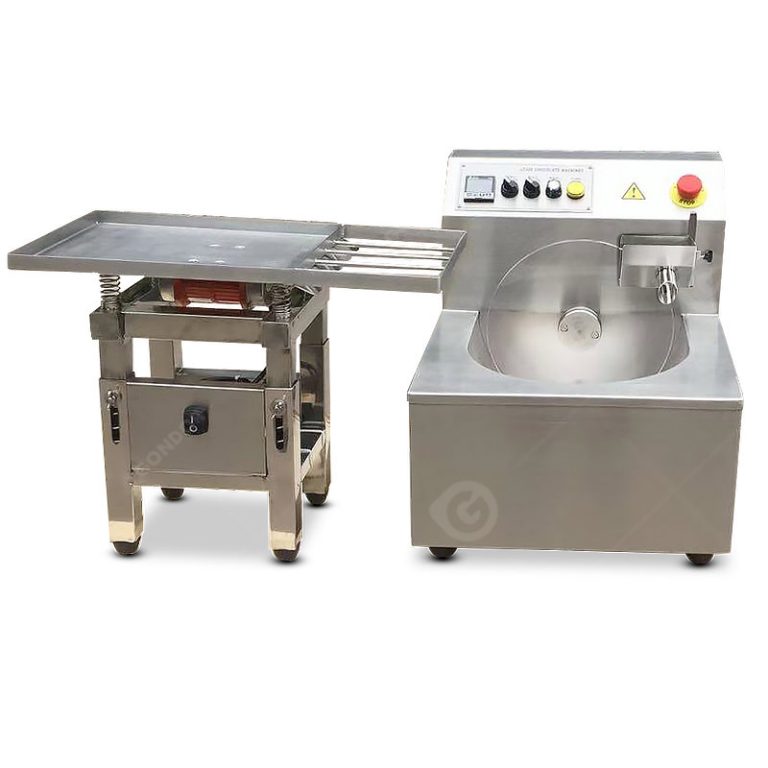
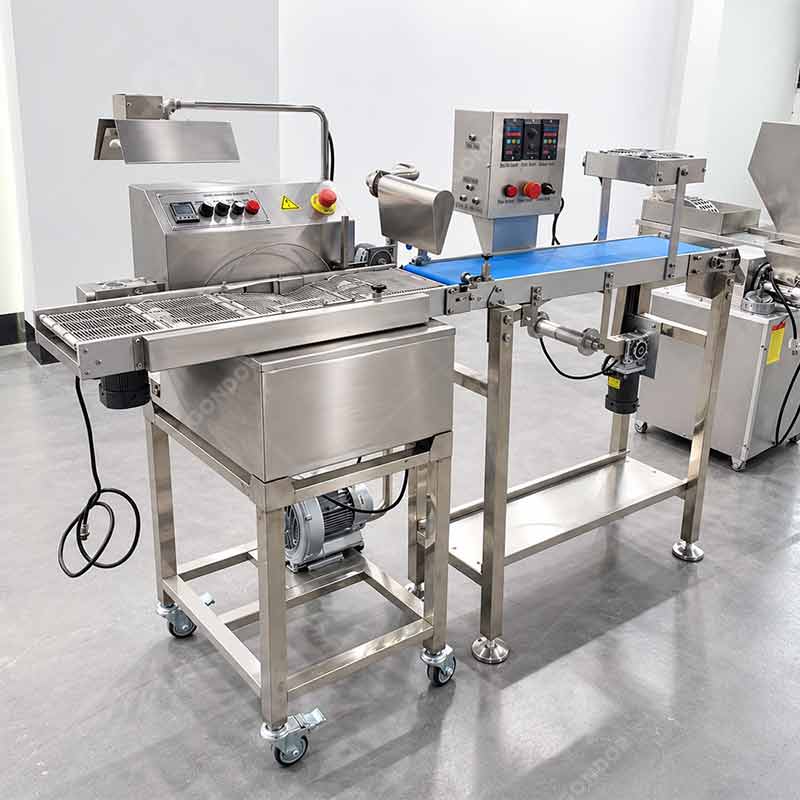
The solution to an enrobing chocolate machine is often born at the key node where the manual production mode touches the operating limit. In the weekend market, it is acceptable to pour melted chocolate on iron shelf products and solidify naturally, but once the first batch of large orders is placed by the coffee shop chain, this method of relying on manual experience is unsustainable-the inherent variables such as the temperature drop of chocolate between batches and the imbalance of coating thickness become unacceptable in large-scale production. This paper aims to systematically expound the operating mechanism of this kind of equipment, the real capability boundary of a small chocolate enrobing machine, and the core issues that must be verified before purchasing.
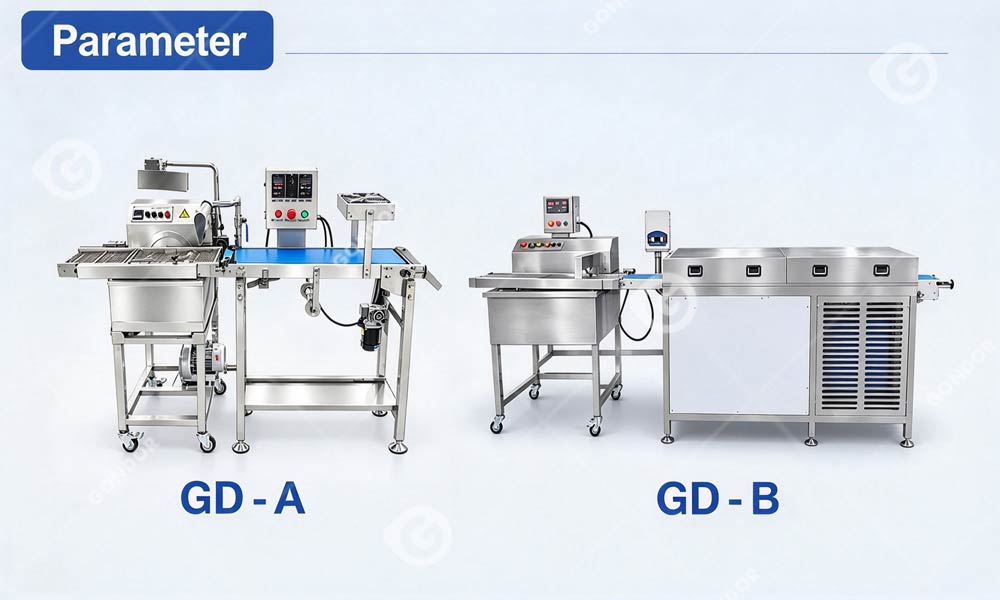
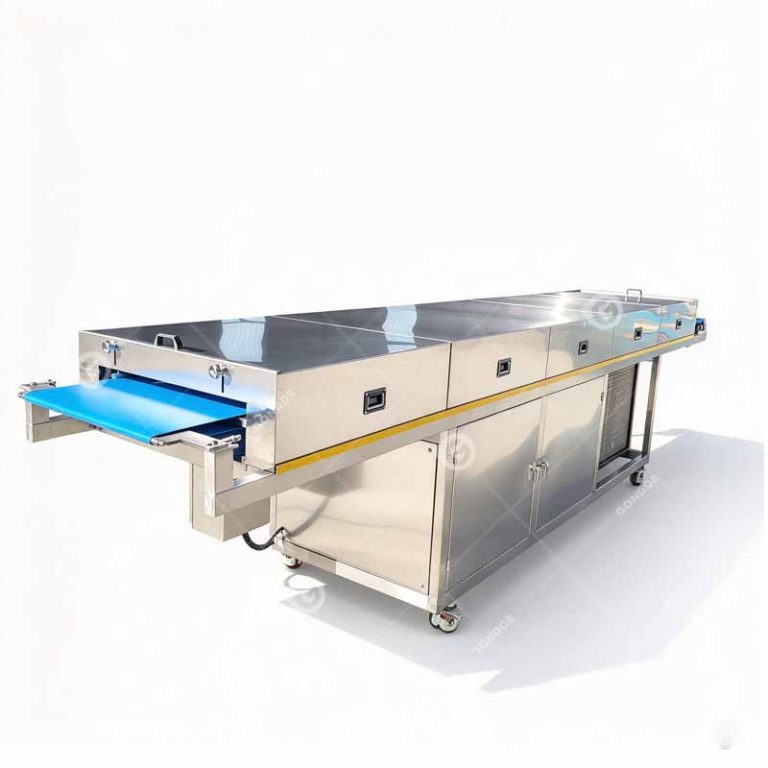
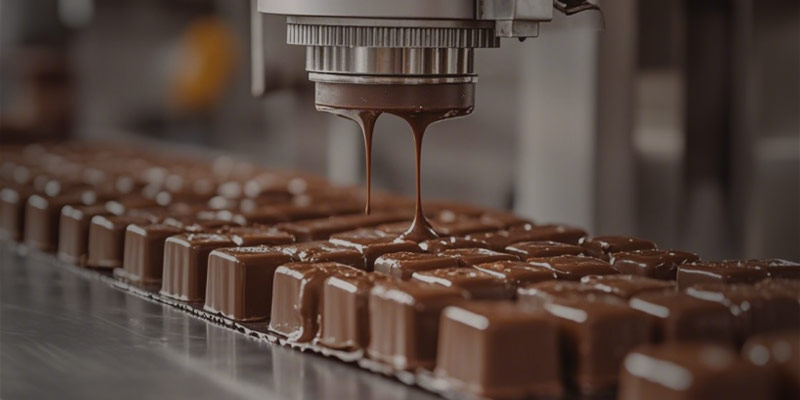
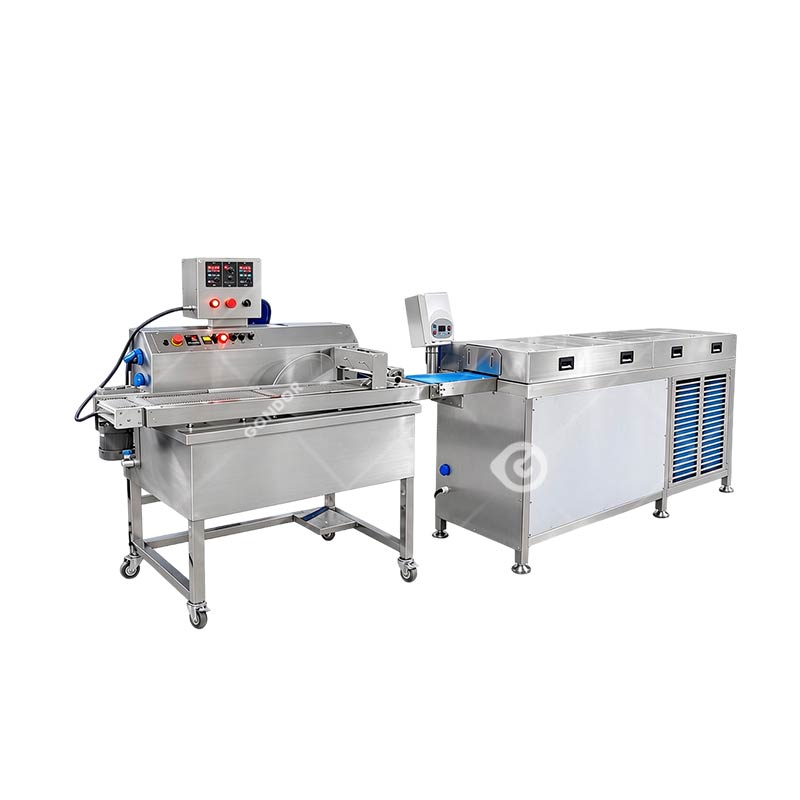
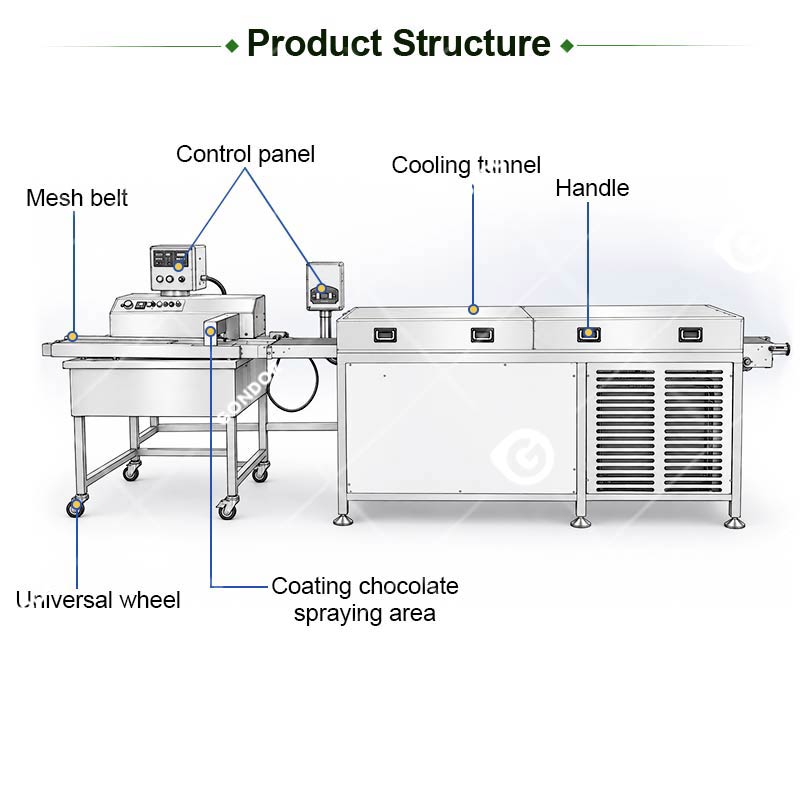
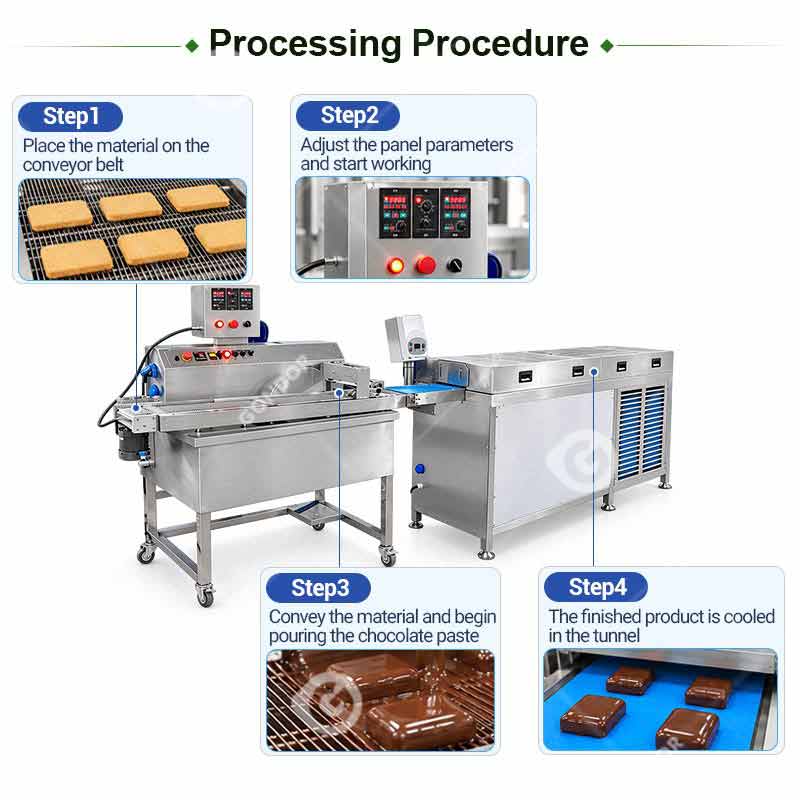
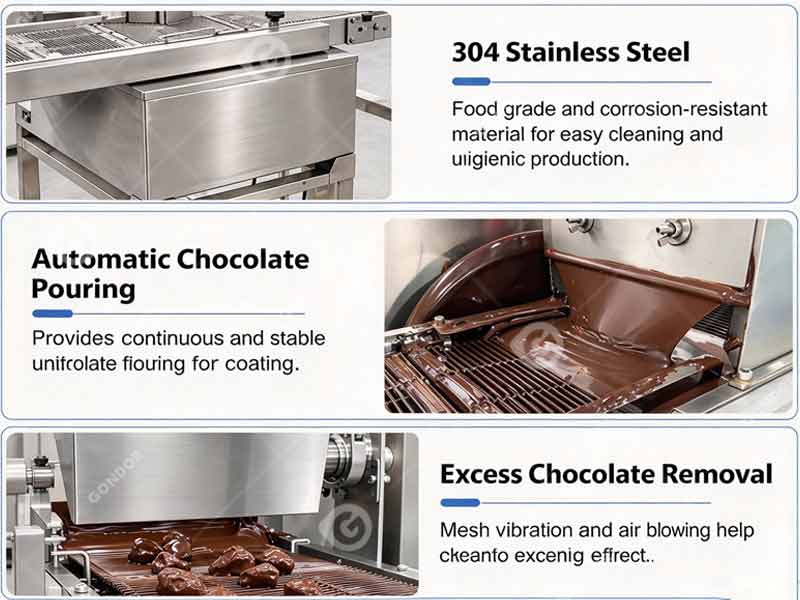
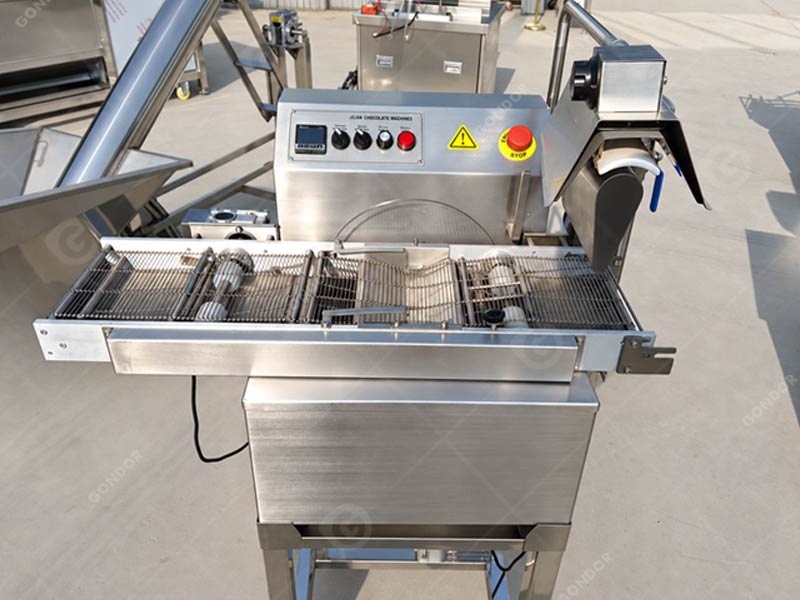
In essence, the enrobing chocolate machine automates the four core processes that manual coating will inevitably lose after the output increases: first, melting and heat preservation, to stabilize the chocolate in the adjustable working range of 20–45 C; Secondly, continuous feeding, the product passes through the chocolate curtain with the mesh belt at a uniform speed; Thirdly, removing the surplus material, namely blowing off the surplus coating with the aid of mesh belt vibration and airflow to form a uniform coating; Fourthly, cooling and setting, that is, the finished product is completely hardened by the refrigeration section of the cooling conveyor belt, to realize immediate demoulding and packaging. These four-step linkages have overcome the three major problems of temperature drift, uneven coating, and product adhesion in manual operation.
Is a Small Chocolate Enrobing Machine Enough?
For most workshops scaling up from bench dipping, yes — and the specification table explains why the small models are not just scaled-down toys:
| Item | 8L Model | 15L Model |
| Max. Chocolate Capacity | 8 L | 15 L |
| Min. Chocolate Loading | 3 kg | 5 kg |
| Total power | 1.4 kW | 2.0 kW |
| Voltage & Frequency | 220V / 50Hz, single phase | 110–220V / 50–60Hz |
| Conveyor Belt Size(W × L) | 200 × 1000 mm | 200 × 1000 mm |
| Wire Mesh Belt Size (W × L) | 180 × 1000 mm | 180 × 1000 mm |
The number experienced buyers look at first is not capacity — it is minimum loading. Three kilograms of chocolate in the tank is enough to run the 8L model. You do not have to commit a full case of couverture before making a single test batch, and leftover chocolate does not sit for days between runs. Both small models run on single-phase power and a standard plug customised to your country, so they install in a normal workshop without rewiring.
If the business grows into supplying multiple outlets, the same design scales up through larger tank sizes — but the working principle, and the muscle memory your team builds on it, stays identical.
What You Can Put Through It
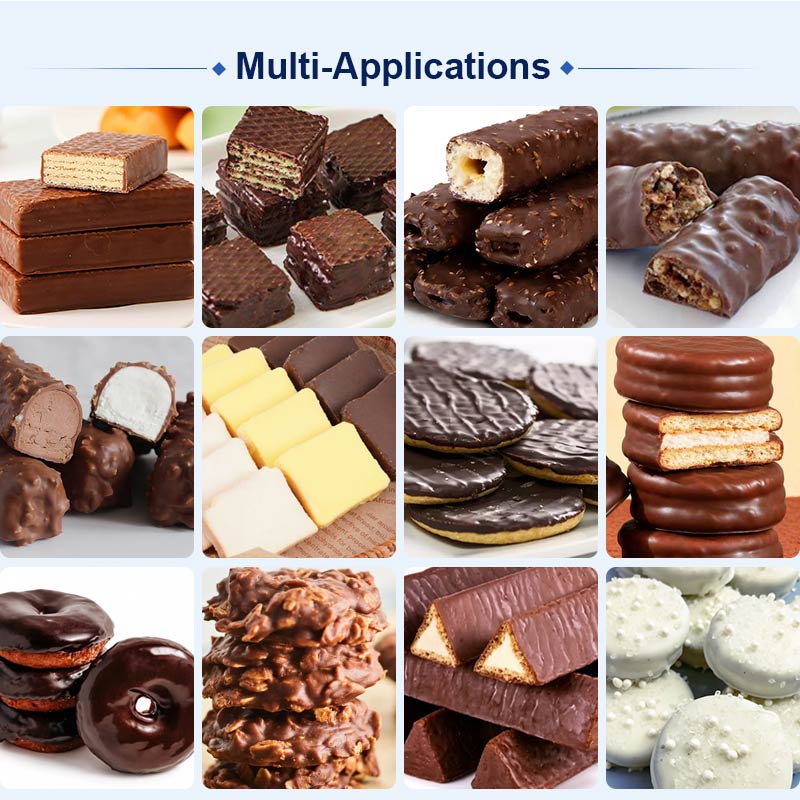
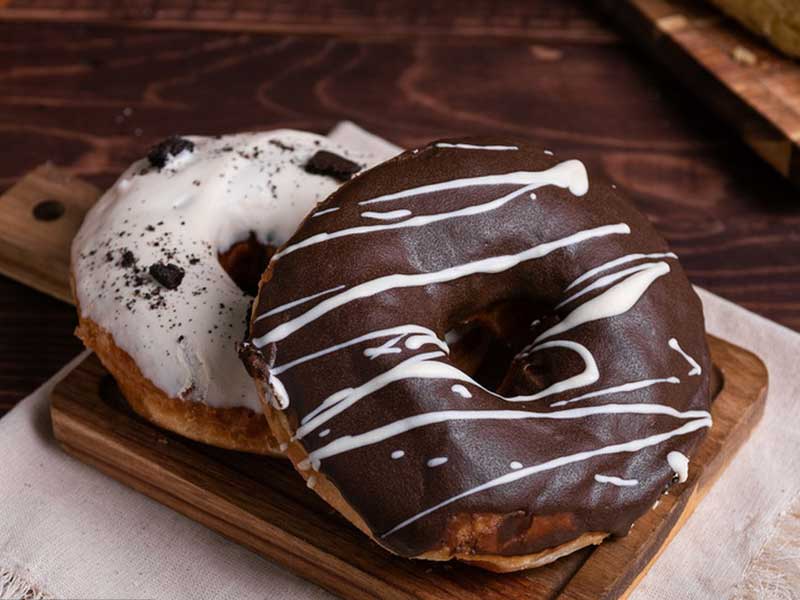
An enrobing chocolate machine is product-agnostic: if it holds together on a belt, it can be coated. The products we see going through most often:
- Nut clusters and dried fruit — the classic small-batch bestseller.
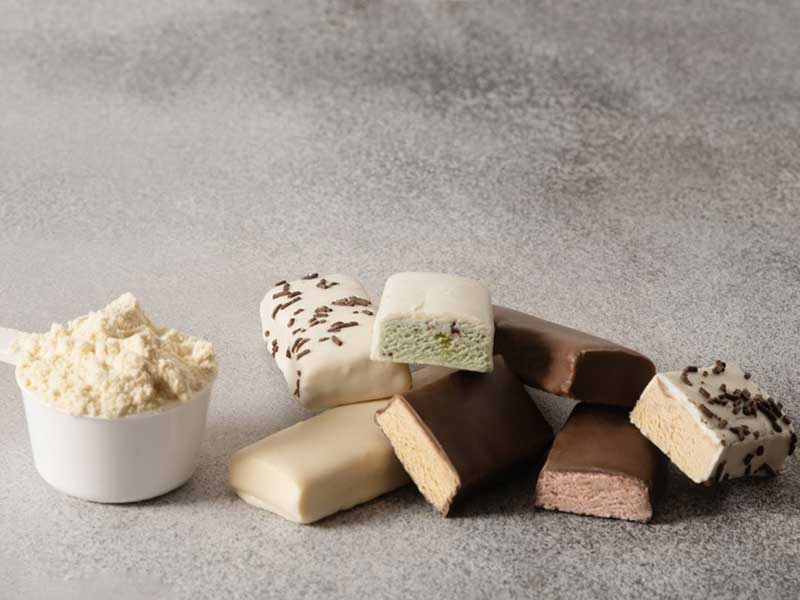
- Cereal bars and protein bars — full coat, or a base-only coat that keeps fingers clean.
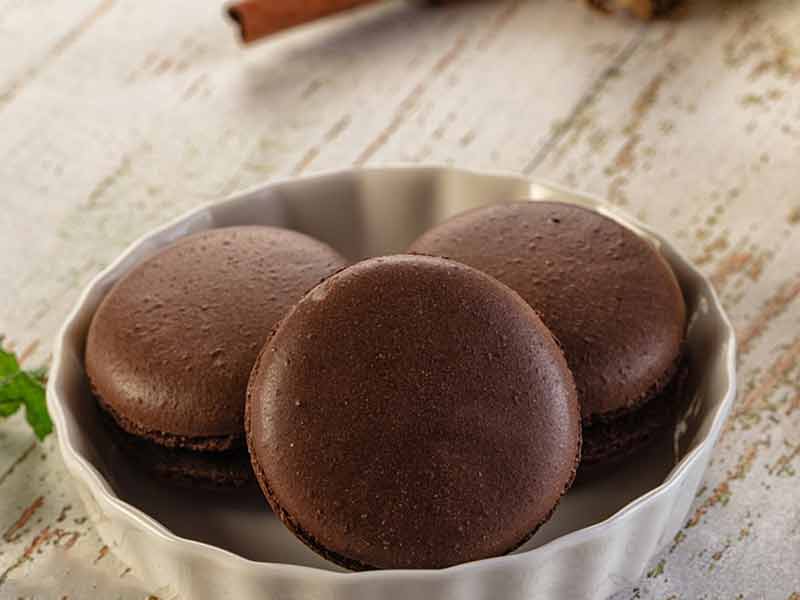
- Cookies, biscuits and wafers — full or partial dipping, including decorative top coats.
- Cakes and bread items — partial enrobing for bakery-style finishes.
- Candies and confectionery centres — a smooth shell before packing.
Where Cheap Enrobers Fail — and What to Check Instead
This is the feature budget machines quietly drop. Without mesh vibration and air blowing, every piece leaves with a thick foot of chocolate pooled at the base. Ask to see the bottom of a finished piece, not the top.
Full 304 stainless steel frame and food-contact surfaces, an accessible tank and pump, and a belt that wipes down quickly. Cleaning should take minutes at shift end — if the demonstration looks like a two-person job, keep looking.
Chocolate punished by temperature swings shows it on the shelf. An independent control system holding the mass within the 20–45°C working range, with continuous circulation, keeps the chocolate in condition for the whole shift — no re-melting, no guessing.
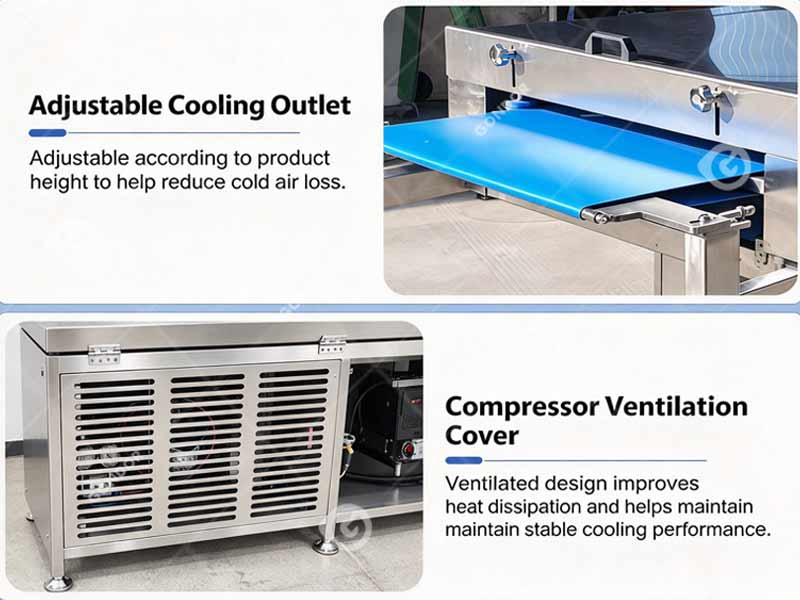
Coating needs proper setting. A refrigerated tunnel with food-grade PU belt cools chocolate to a firm shell. Delivering -5°C or -10°C, adjustable outlets match product height, cutting wasted airflow. Products exit firm, glossy, packing-ready.
Questions Chocolate Makers Ask First
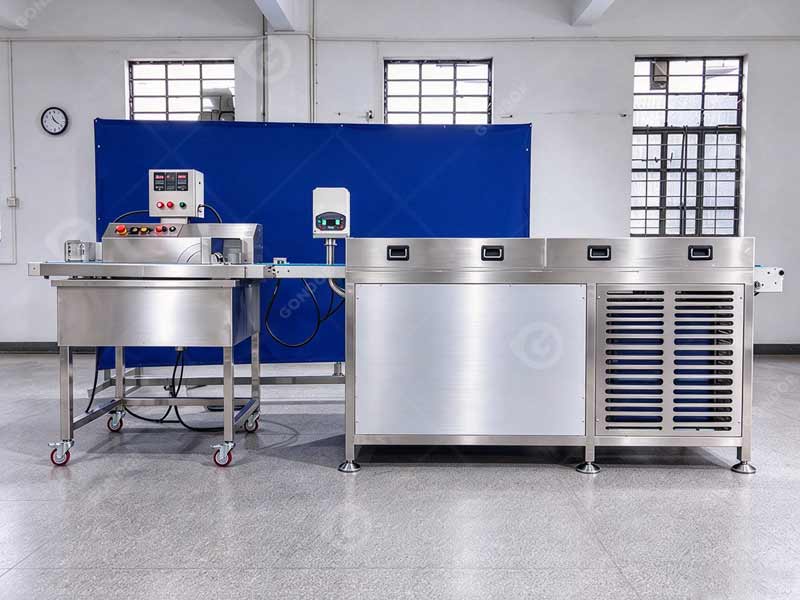
Open the Full Link from Enrobing to Packaging
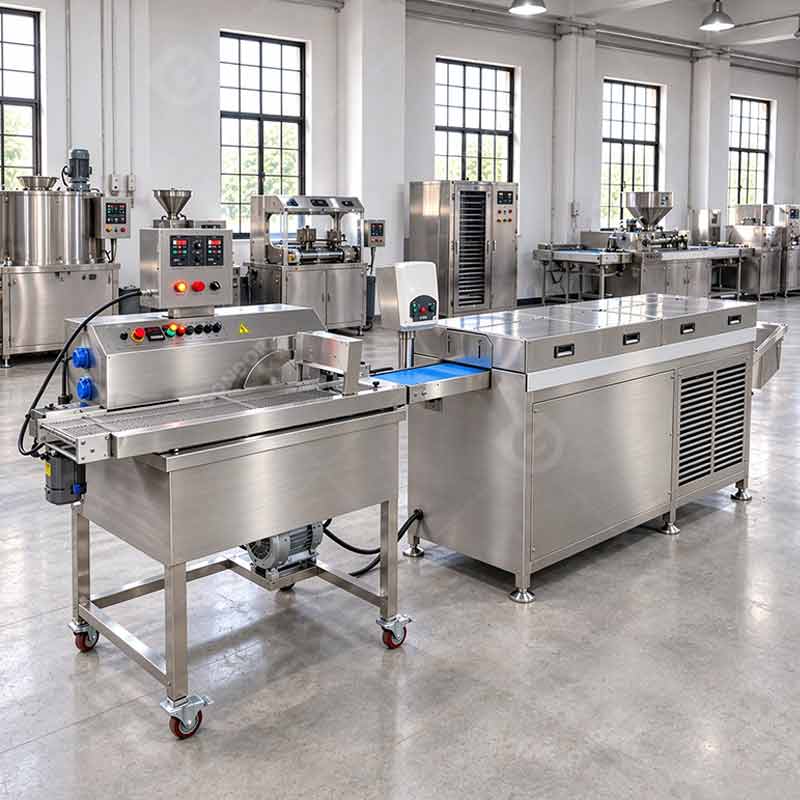
In the complete production layout, the upstream hot air rotary furnace and the automatic tray setting machine ensure that the blank is regular and free from manual pollution, and provide ideal raw materials for the small chocolate enrobing machine; The equipment is equipped with a cooling tunnel conveyor to complete the coating setting, and then the chocolate cooling tunnel is connected to stabilize the product. Finally, the chocolate packaging machine completes the packaging of the finished product, forming a complete and expandable chocolate coating production line. Welcome to provide the product, formula and capacity requirements to make an appointment for commissioning. We will customize the scheme for you and contact immediately to get the quotation for the whole line configuration.