
Chocolate Decorating Machine: Funktionen & Line Integration
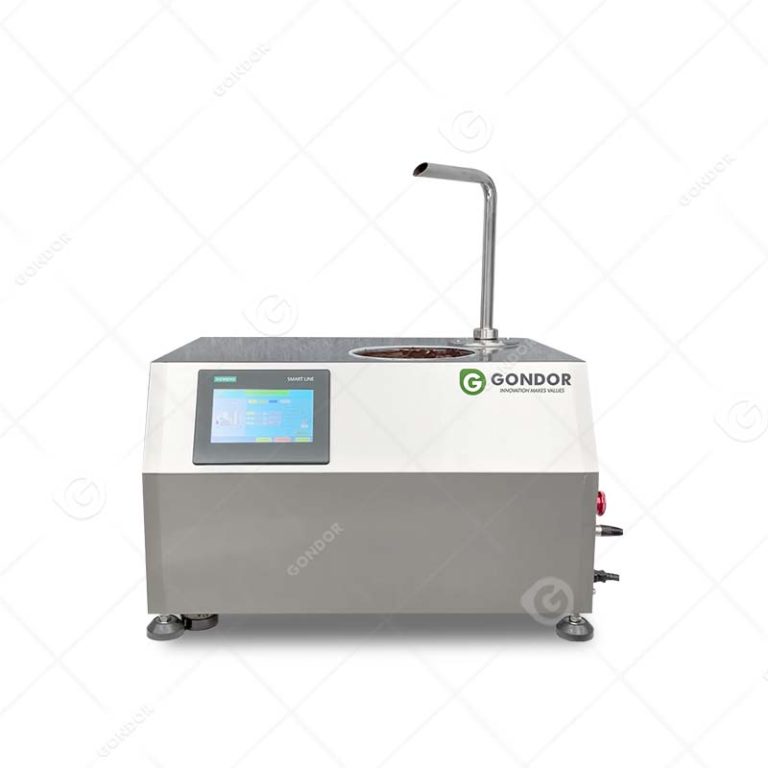
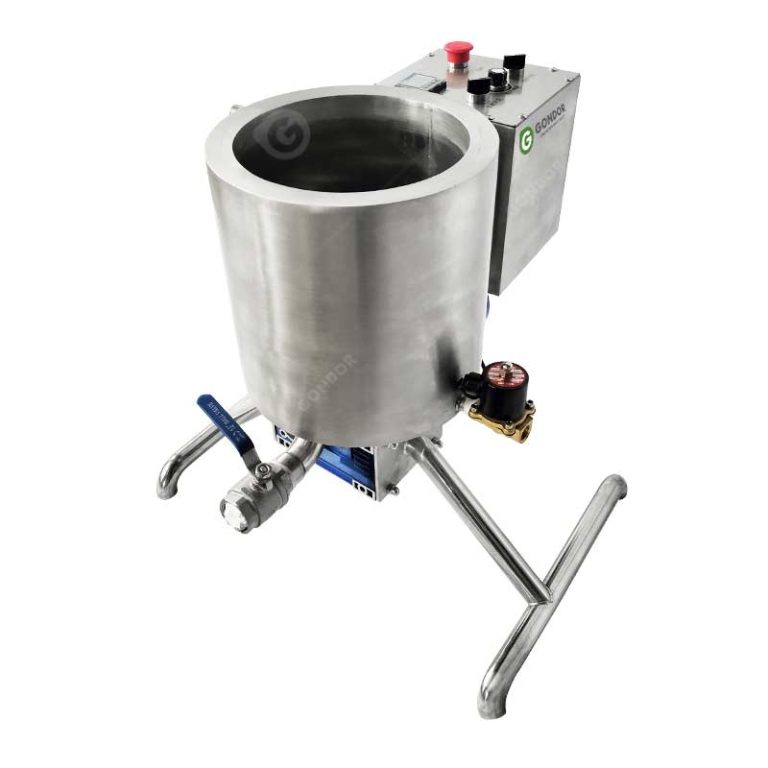
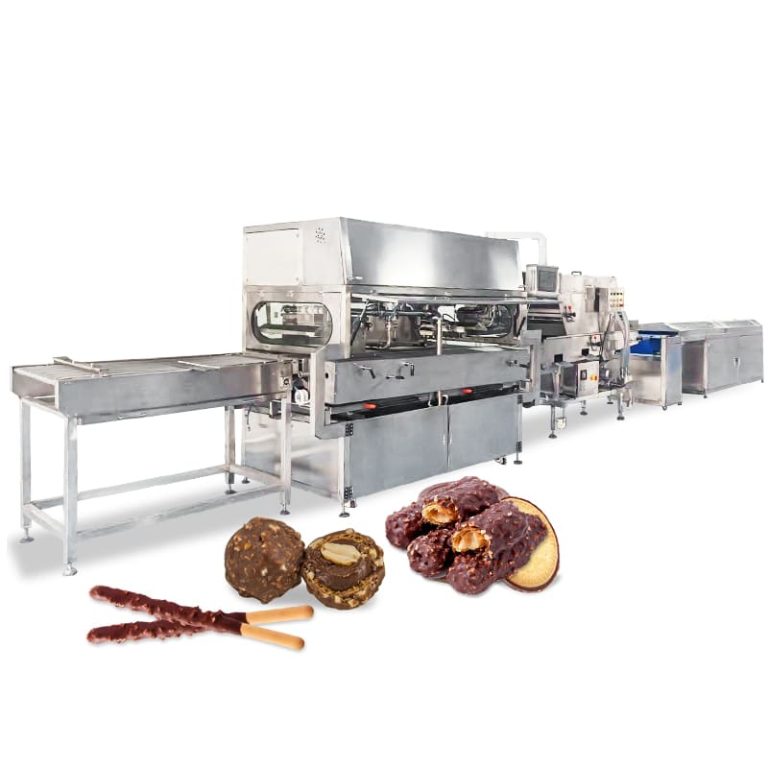
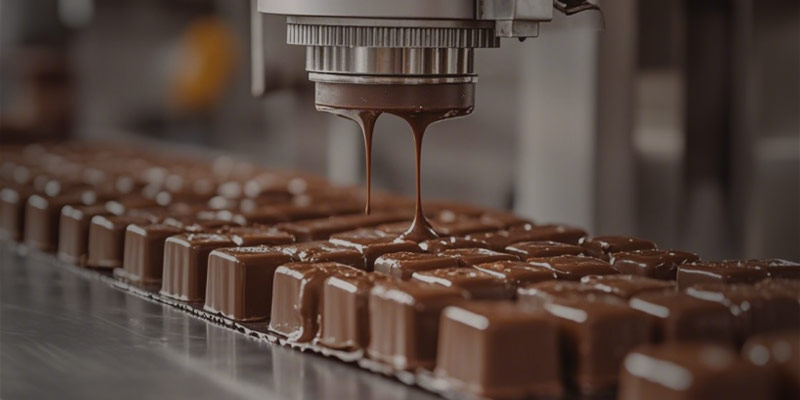
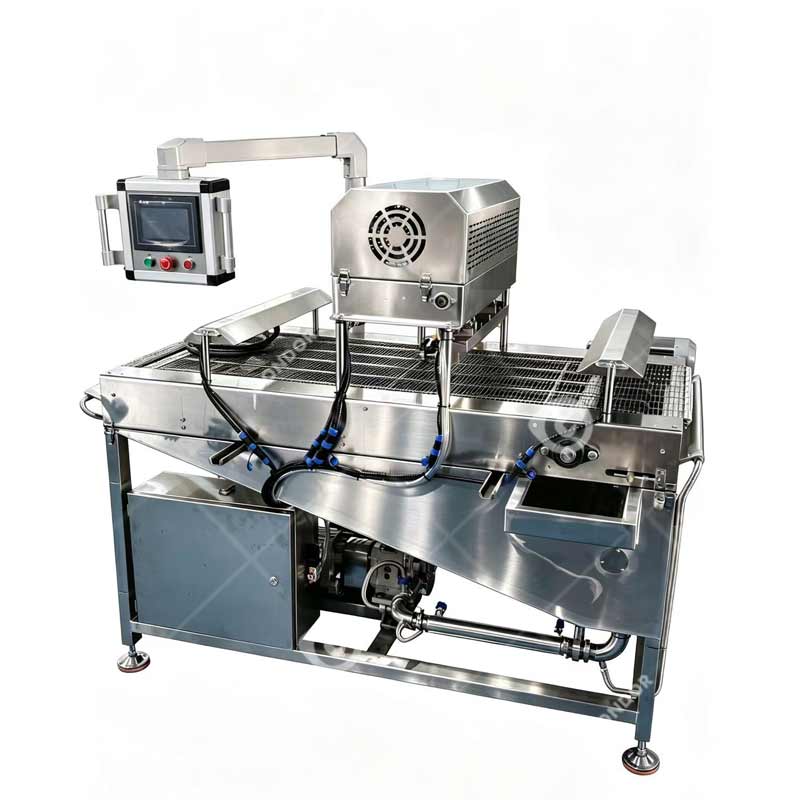
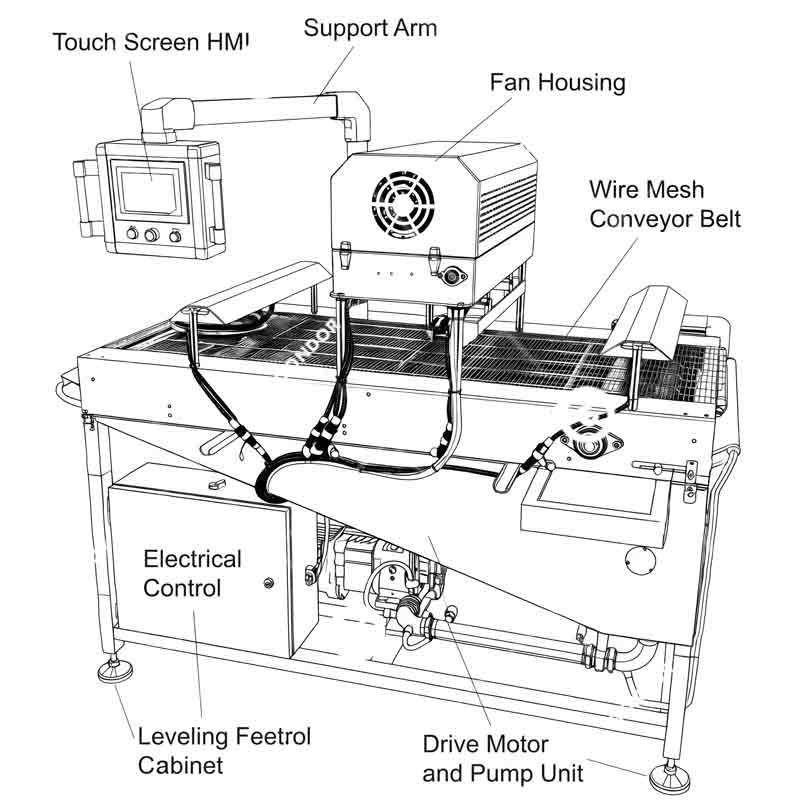
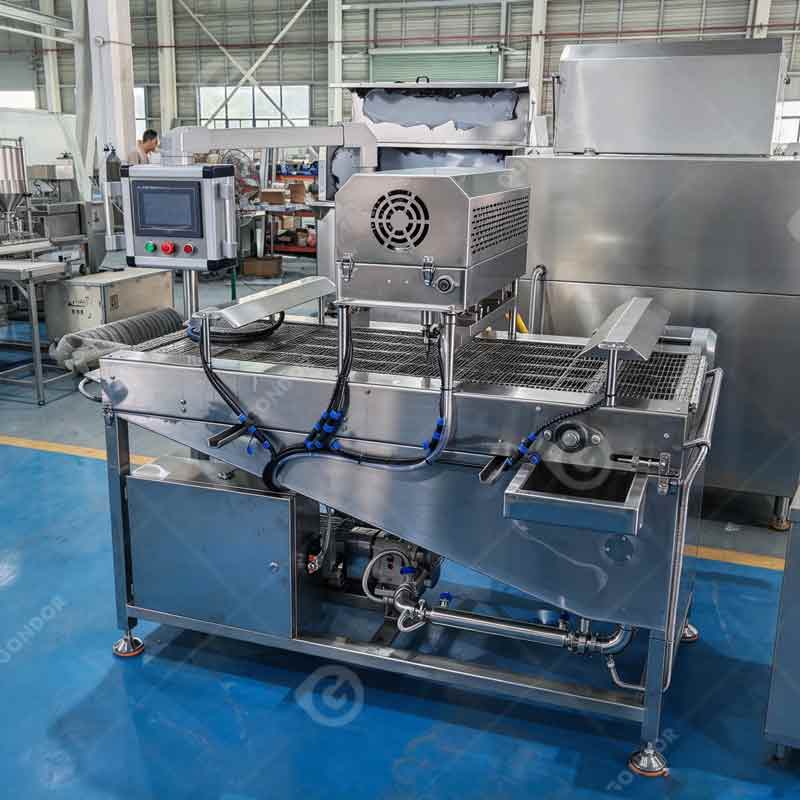
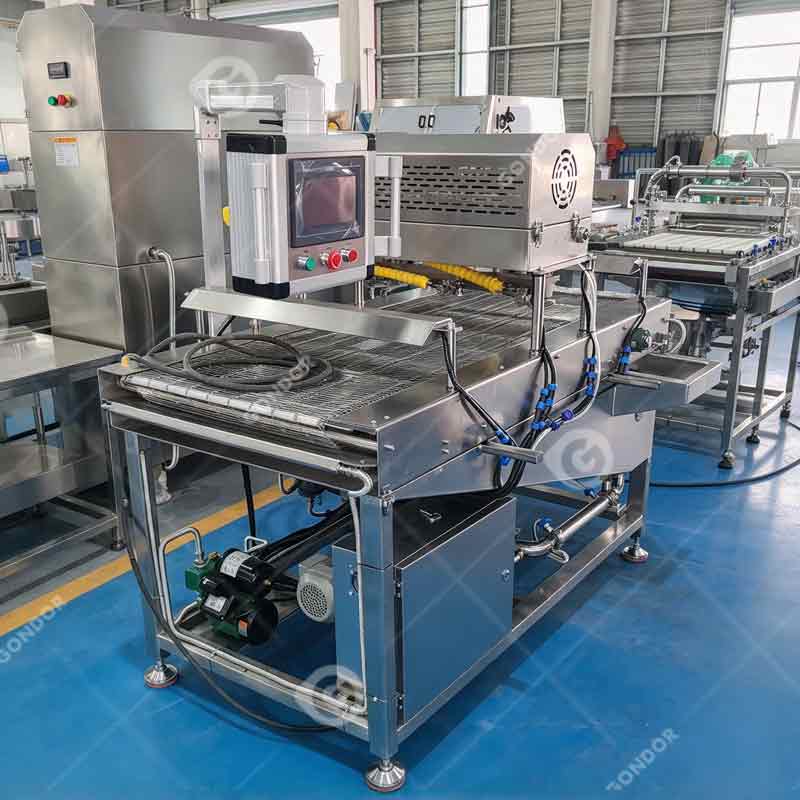
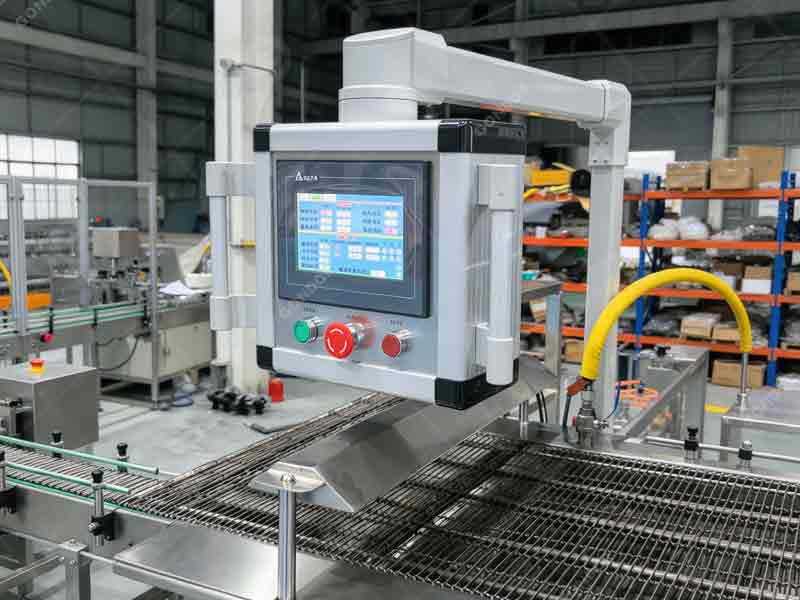
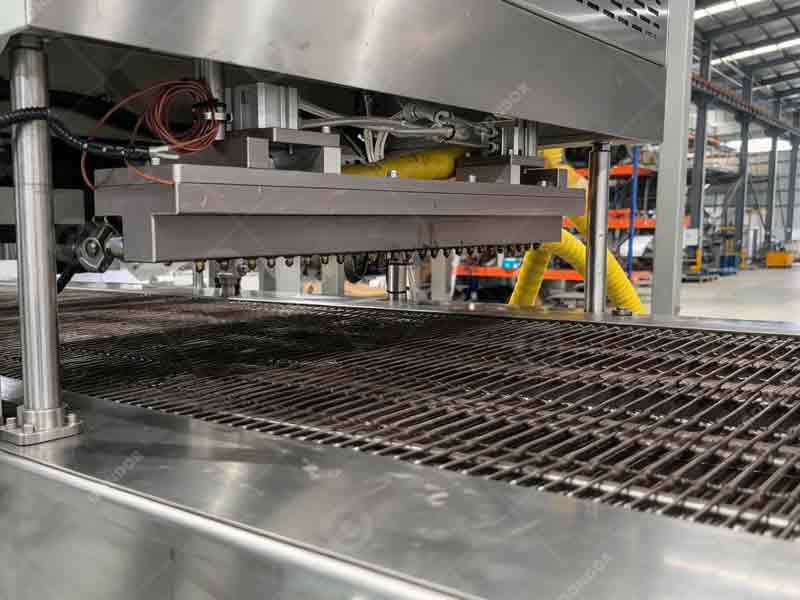
A chocolate decorating machine sprays patterns onto products via a mesh belt—also called a chocolate drizzling or flower drawing machine. Note that suppliers may use different names for the same equipment, so searching just one term can miss options. It decorates surfaces only, not coats or molds. Installation is flexible: standalone with its own tank, shared mesh belt, or at a cooling tunnel entrance. Tell us your line layout, and we’ll recommend the right setup.
Where the Chocolate Stringer Sits in the Line
| Bühne | Job | Why it matters to the pattern |
| Tempering machine | Brings the chocolate to a stable, tempered state | Untempered chocolate blooms and loses its gloss within days |
| Mantel (optional) | Coats the product fully | Gives the drizzle a contrasting base to sit on |
| Chocolate stringer | Lays the pattern | Works while the surface will still take it |
| Cooling tunnel | Sets the chocolate | Fixes the pattern and the gloss |
| Verpackung | Wraps the finished piece | A pattern that has not set smears in the wrapper |
Two practical points fall out of this. Erste, tempering upstream is not optional. A drizzle laid over poorly tempered chocolate looks fine for a day and dull by the end of the week. Zweite, the decorating width should follow the belt it decorates. If your enrober belt is 600 mm, A 600 mm-class decorating unit is the right buy. Going wider costs more and decorates nothing extra.
What Customers Actually Run Through It
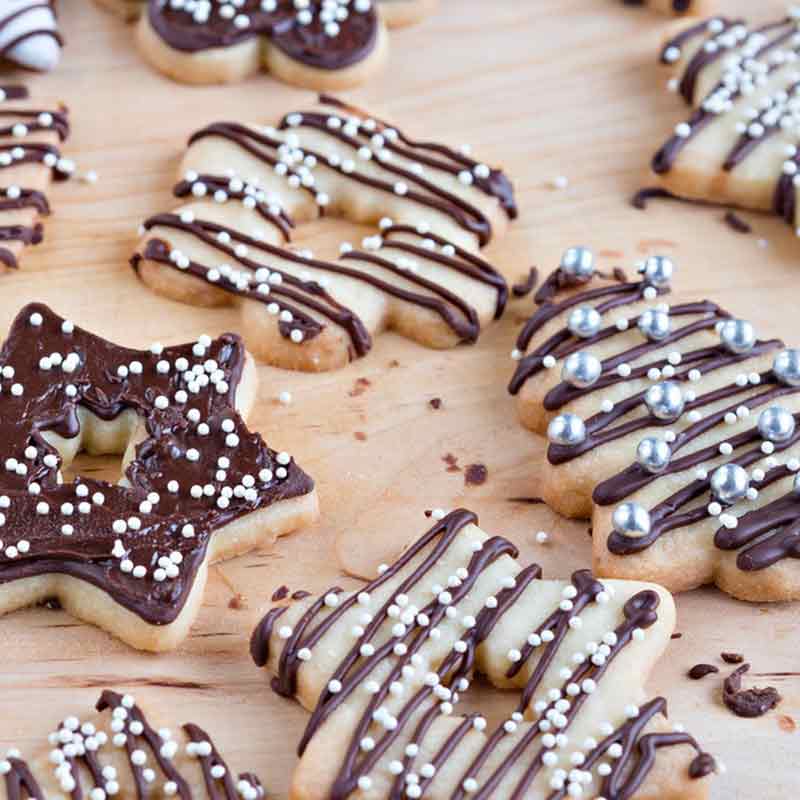
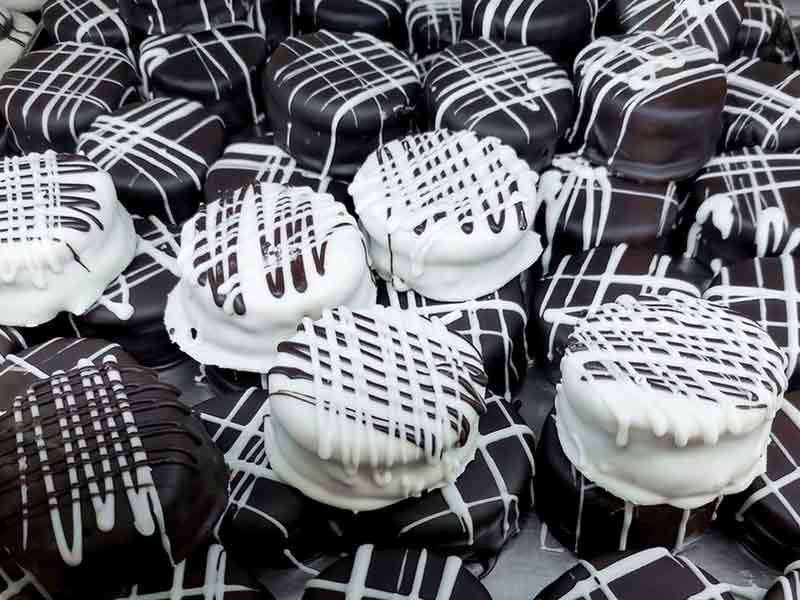
The classic use. A drizzle across a coated biscuit reads as a different product on shelf, and it gets there without a new recipe, a new mould or a new wrapper.
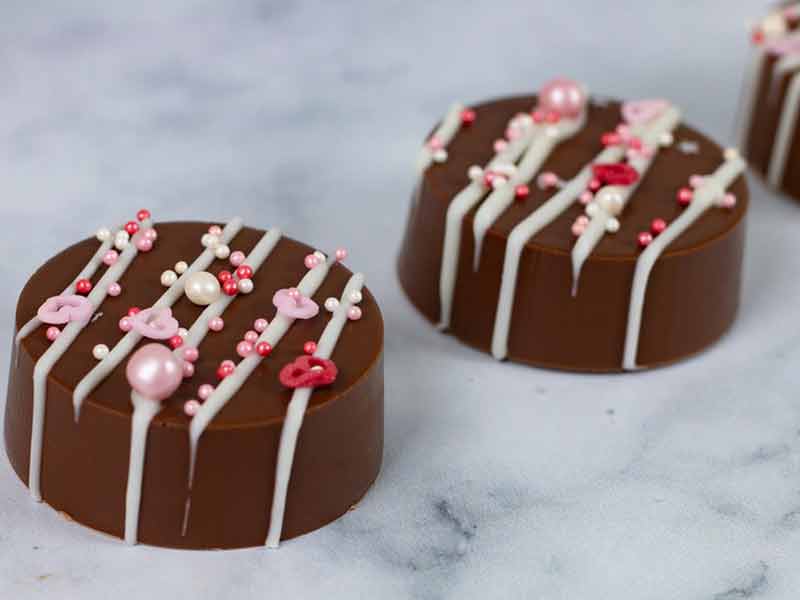
A pattern on the face of a moulded piece, or a second colour across the back. One mould then produces a small family of SKUs instead of just one.
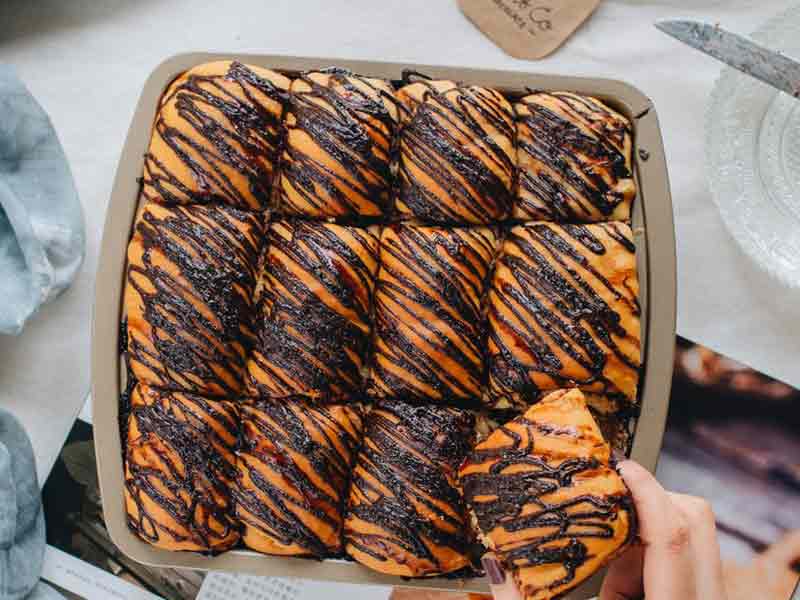
Here the drizzle does two jobs at once. It adds taste layering, and it breaks up the look of a bar that would otherwise be a single brown rectangle.
Decorate in batch, then distribute. Central production is the only way to guarantee that every outlet puts out the same finish, and it takes the piping bag out of the store entirely.
Six Advantages, Stated as Outcomes
Specifications at a Glance
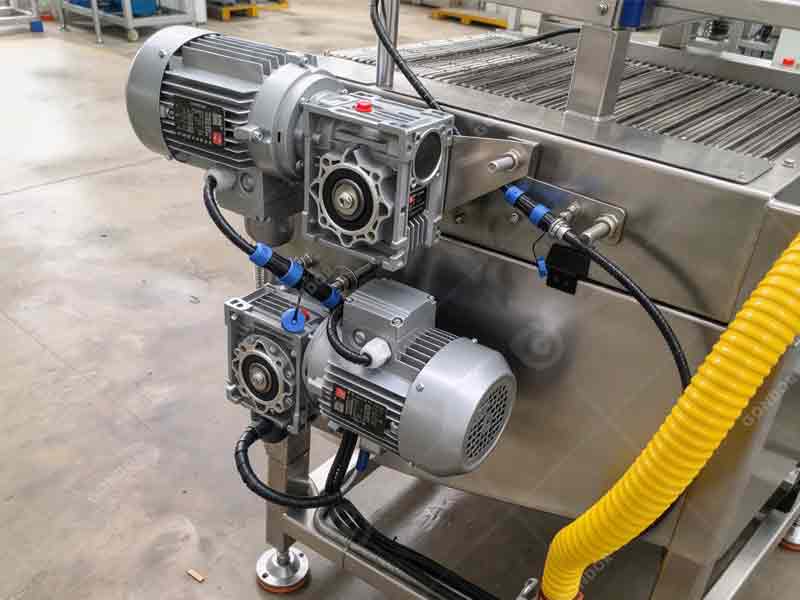
| Modell | Working width | Leistung | Gewicht | External dimensions (L x W x H) |
| 400 | 350 mm | 4 kW | 260 kg | 1610 x 1250 x 1640 mm |
| 600 | 550 mm | 4.5 kW | 320 kg | 1650 x 700 x 1700 mm |
| 900 | 850 mm | 5.5 kW | 450 kg | 1950 x 800 x 1700 mm |
| 1200 | 1150 mm | 6.5 kW | 660 kg | 2250 x 800 x 1700 mm |
Pattern types on these models: straight line or multiple curves. Power supply can be configured to your local standard.
A Day on the Line
- Walk the entire machine, inspecting the tank, nozzle group, belt, air supply, and earthing connection.
- Set the panel parameters including chocolate temperature, belt speed, pattern type, and piece count.
- Preheat the tank thoroughly and wait for the chocolate to reach working temperature before you begin.
- Start the belt and nozzle group, then watch the first twenty pieces before running the full batch.
- Cool the pieces completely, discharge them from the mold, and pack them into boxes.
Questions Worth Asking Any Supplier
● What is the actual working width, and does it match my belt?
● How many nozzles, and can unused ones be plugged off?
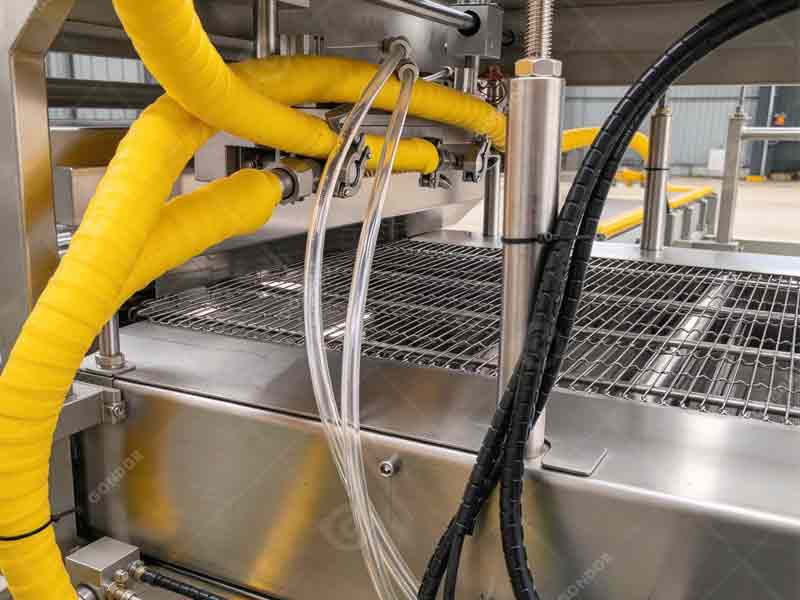
● Is the pipework heated as well as the tank?
● Which patterns does this specific build produce? Not the range. This build.
● Can I see it run with my product, or with something close to it?
FAQ
Send Us Your Sample, Get the Right Setup
A chocolate decorating machine works in a narrow 30-second window—match the belt width and tempering, and it runs without fuss. Send us your product photo and desired pattern; we’ll size the model, nozzles, and confirm if you need a Ausrüstung zum Überziehen von Schokolade or chocolate cooling tunnel to complete your Schokoladenverarbeitungsgeräte setup.