

Dalgona cookies, with their unique crisp texture and rich caramel flavor, have become a new favorite among baking enthusiasts worldwide in recent years. The charm of dalgona cookies lies in their minimalist ingredients, the ritualistic “chemical reaction” of the making process, and the slightly caramelized and crisp texture of the finished product. For home cooks, they are a quick and easy dessert; for small shops/workshops, they are a perfect product to attract customers with “made-to-order + customized designs.”
But do you know how to make dalgona cookies?
Below, I will explain the key proportions, temperature, and common reasons for failure in a more professional and replicable way, and demonstrate how to make them using a cookie-making machine.
The core principle is simple: sugar is heated until melted and slightly caramelized → a very small amount of baking soda (sodium bicarbonate) is added to create bubbles → the mixture is quickly spread and pressed into a mold to set.
The key to success or failure lies in three main points:
Caramel Cookie Ingredients
Caramel Cookie Making Tools:
Small saucepan/nonstick saucepan or metal spoon
Digital scale
Scraper or metal spatula, baking paper/silicone paper
Pressing tool: Pattern cookie cutter
Heat-resistant gloves
Dalgona Cookie Processing Steps
Step 1: Preheating and Preparation
Line the work surface with baking paper. Keep the cookie cutter and pressing plate within reach. Once the cookie dough has formed, you’ll need to work continuously.
Step 2: Melting the Sugar
Pour the sugar into a small saucepan over medium-low heat, avoiding burning. Do not stir immediately; gently swirl the pan to ensure even heating. Once the edges of the sugar have melted, gently push and mix with a spatula.
Step 3: Add Baking Soda
Add baking soda from the heat or over very low heat, and stir quickly for 5-8 seconds. The sugar syrup will expand and lighten in color.
Ideally, it should expand noticeably but not overflow.
Step 4: Spread and Mold (Very Short Window)
Pour the expanded sugar syrup onto baking paper. Wait 2-3 seconds for the surface to set slightly, then gently press it into a round disc using a pressing plate. Next, use a patterned cookie cutter to gently press out the pattern.
Note: Only press out the pattern with the cookie cutter; do not press through it, otherwise it will be more prone to breakage.
Step 5: Cool and Demold
Cool at room temperature for 1-2 minutes until completely hardened.
Biscuit Making Machines: Consistency and Efficiency on a Large Scale
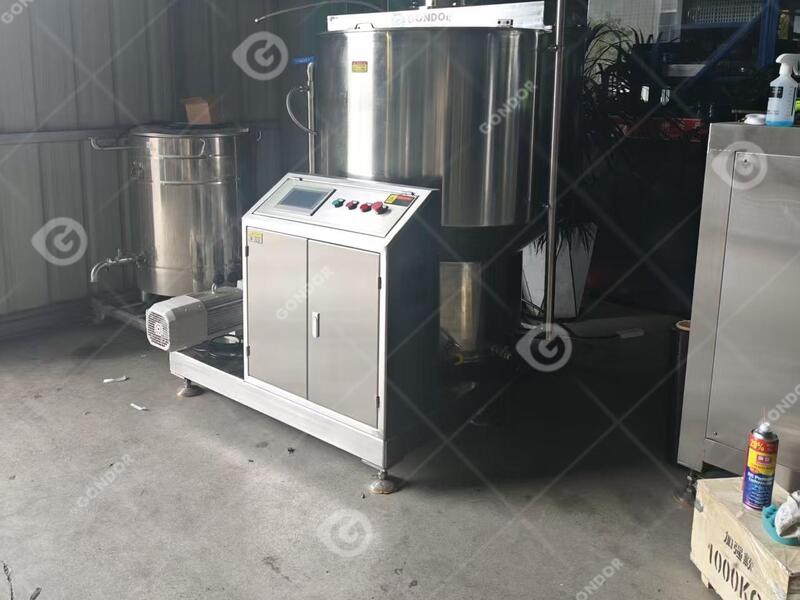
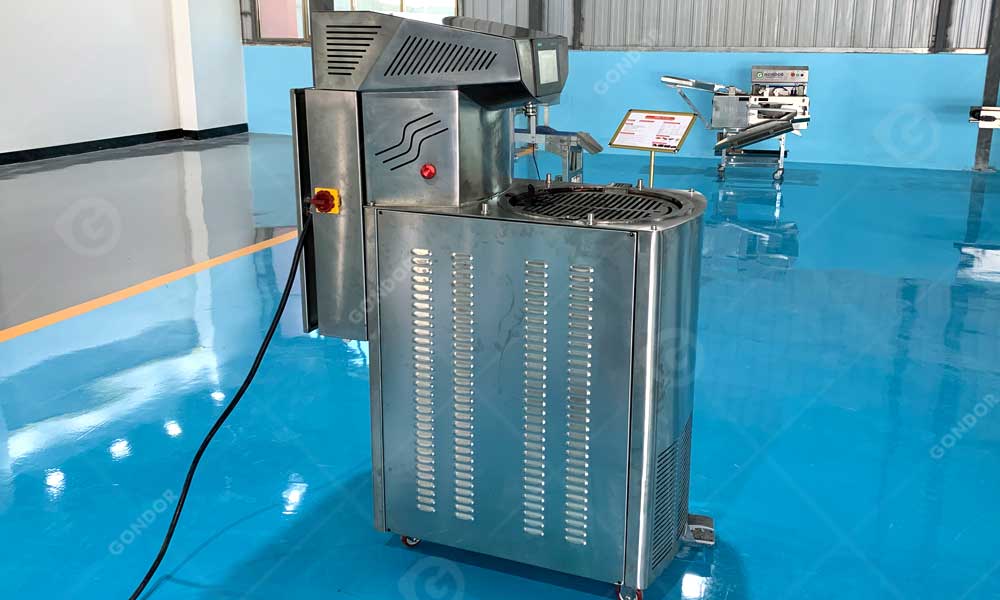
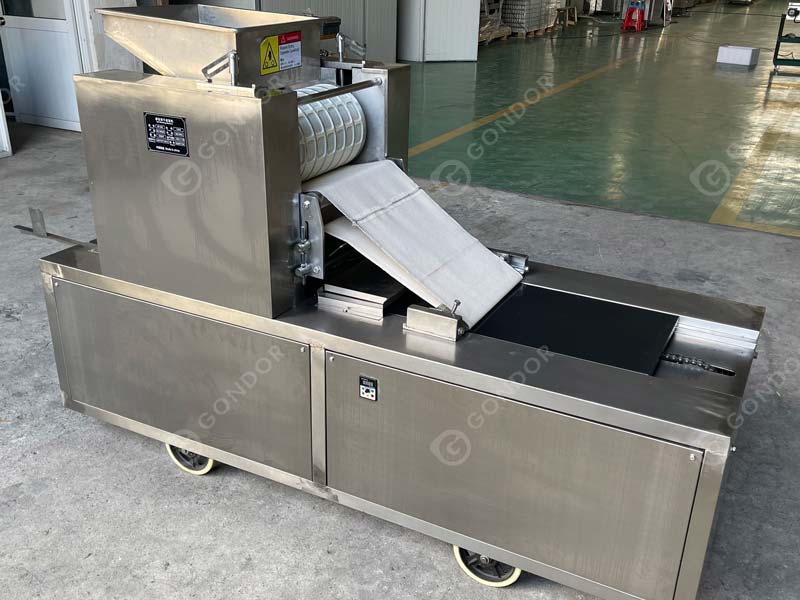
As caramel cookies move from home kitchens to commercial production, biscuit making machines become crucial for ensuring both quality and quantity. Modern food machinery automates production through the following processes:
Precise Temperature Control System: Mechanized heating devices precisely control the melting temperature of the sugar, preventing burning or crystallization.
Automatic mixing module: The timing of baking soda addition and stirring speed are controlled by a program to ensure consistent leavening.
Forming and cooling production line: Cookies are formed by rolling or injection molding, and then quickly set via a conveyor belt through a cooling tunnel.
Automated packaging: Robotic arms or automatic packaging machines complete sorting and sealing, reducing manual contact.
Using cookie manufacturing machinery not only increases production to thousands of cookies per hour, but also allows for real-time monitoring of product quality through sensors, reducing raw material waste.