

Chocolate, as one of the world’s most popular sweets, owes its delicate taste and silky texture not by chance, but to a complex and precise industrial production process. For investors planning to enter the chocolate manufacturing industry or manufacturers seeking to upgrade their production capacity, one of the most common questions is: What machines are needed for a chocolate production line?
Chocolate production is not simply mixing raw materials and cooling them into shape; it is a process with very high requirements for particle fineness, temperature profiles, fat crystallization state, and rheological properties. This question may seem simple, but it actually relates to product positioning, capacity planning, automation level, factory layout, and the stability of subsequent quality. A mature chocolate production line is not a stack of individual pieces of equipment, but a complete system solution designed around melting, grinding, refining, heat preservation, tempering, shaping, cooling, and packaging.
Machinery Composition of a Chocolate Production Line
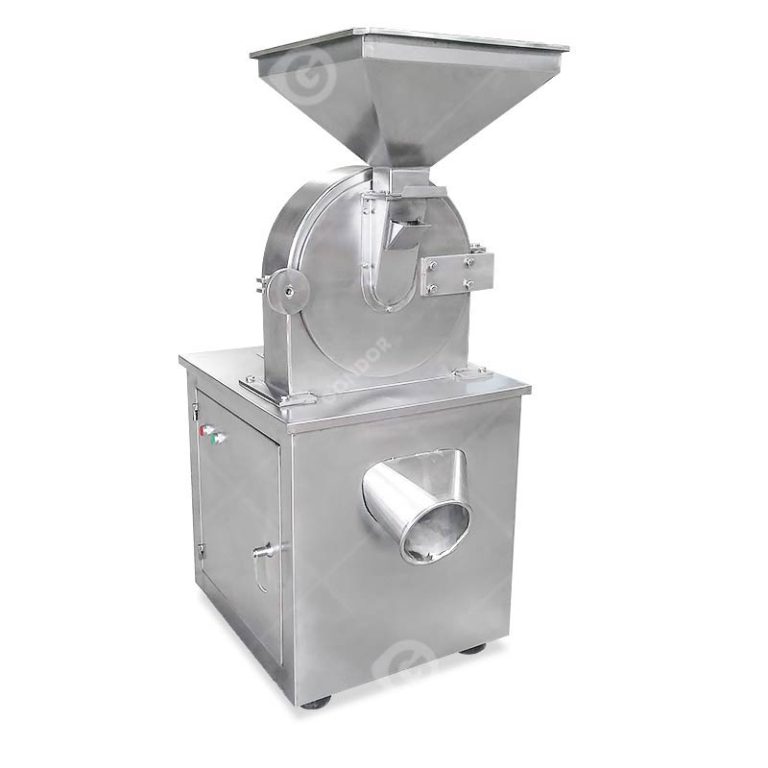
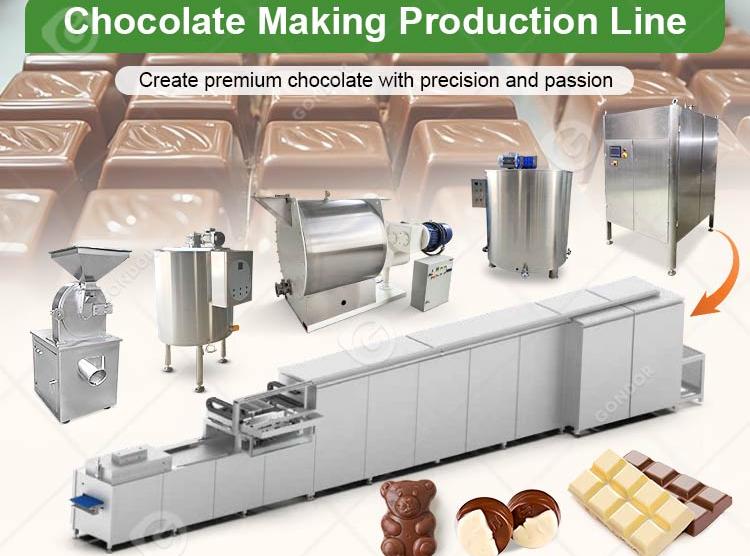
A chocolate production line typically consists of a sugar powder mill, a chocolate refining mill or ball mill, insulated tanks, a tempering machine, a shaping machine, a cooling tunnel, and packaging equipment, and can be combined with conveyor pumps, pipelines, and molds to achieve continuous production. Production capacity can be customized to project requirements, typically ranging from 100–2000 kg/h, with some solutions capable of being expanded to even higher capacities.
Research and industry data indicate that the fineness of chocolate particles directly affects texture and smoothness; excessively coarse particles result in a noticeable grainy texture, while a properly fine grind contributes to a smoother mouthfeel. Simultaneously, tempering determines whether cocoa butter crystals can form a stable structure, directly impacting the finished product’s gloss, crispness, and resistance to blooming.
Therefore, the core of a truly professional chocolate production line is not simply the number of machines, but rather the stable synergy of each equipment node in achieving the final quality.
Core Equipment of a Chocolate Production Line
1. Basic Raw Material Processing: Cocoa Butter/Cocoa Liquor Melting Equipment
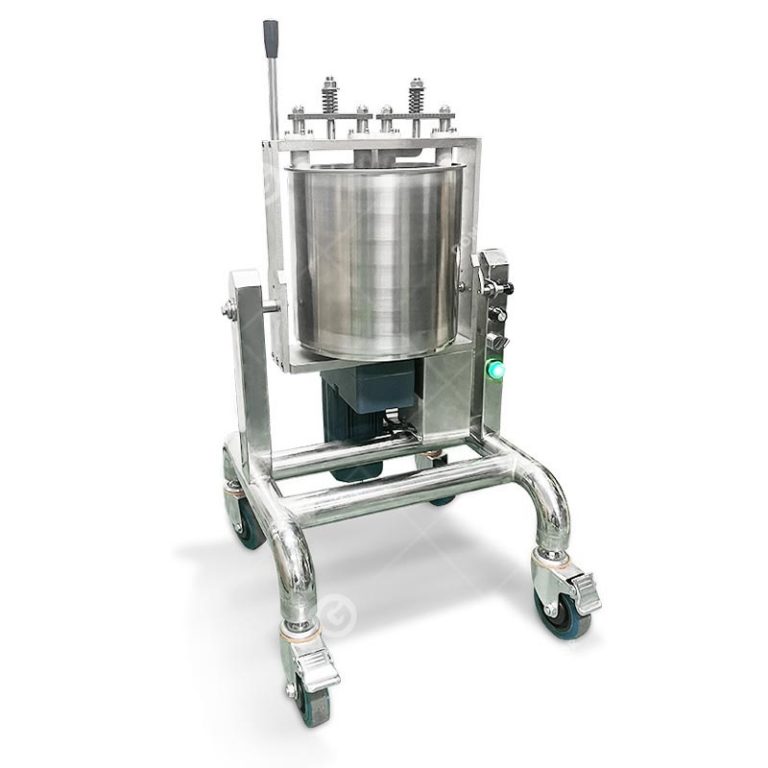
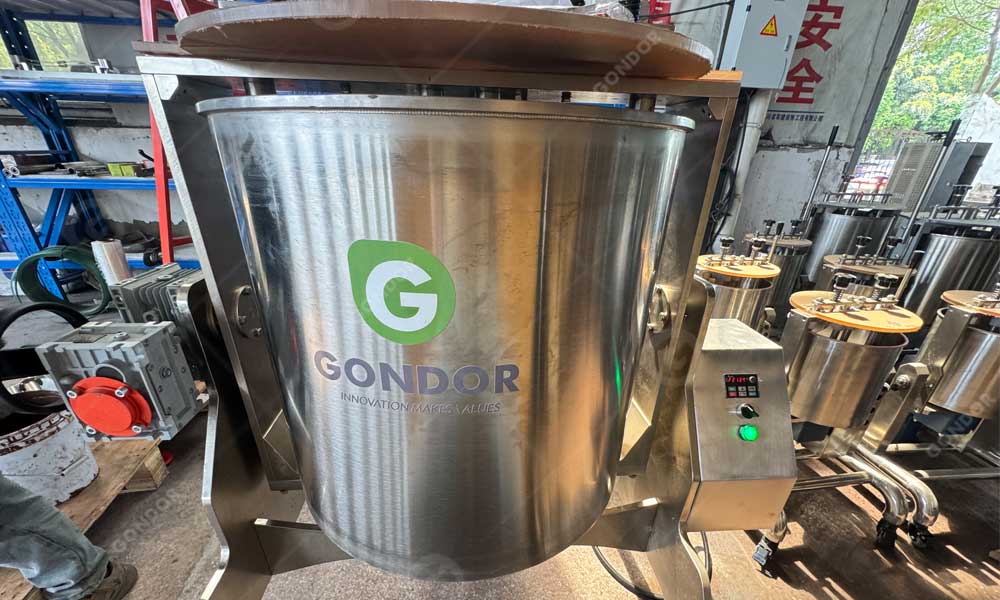
In many chocolate factories, a chocolate melting tank or cocoa butter melting equipment is typically installed at the front end. Its main function is to stably heat cocoa liquor, cocoa butter, or some premixed materials to a suitable flow state, preparing them for subsequent mixing and refining.
If the melting is uneven, problems such as sticking to the walls, material blockage, and large temperature differences may easily occur during subsequent mixing and conveying, ultimately affecting the continuous and stable operation of the entire line.
2. Chocolate Refiner/Ball Mill
This is the most crucial step in determining chocolate quality.
A chocolate refiner/conche removes moisture and volatile acids from the raw materials, eliminating bitterness and resulting in a richer aroma and smoother texture.
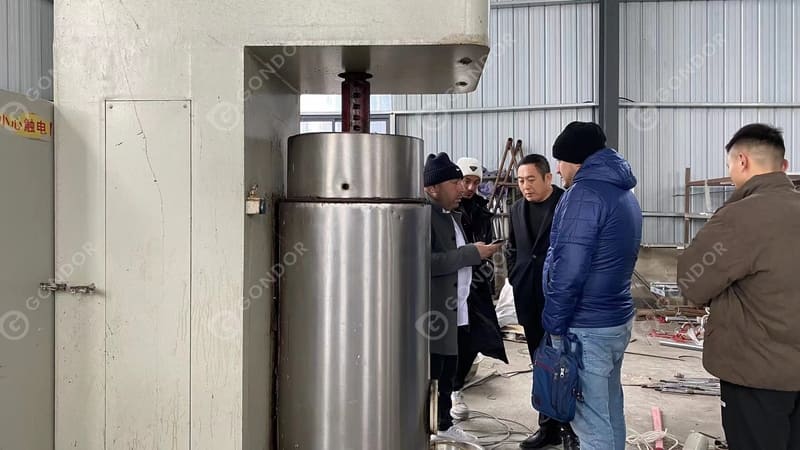
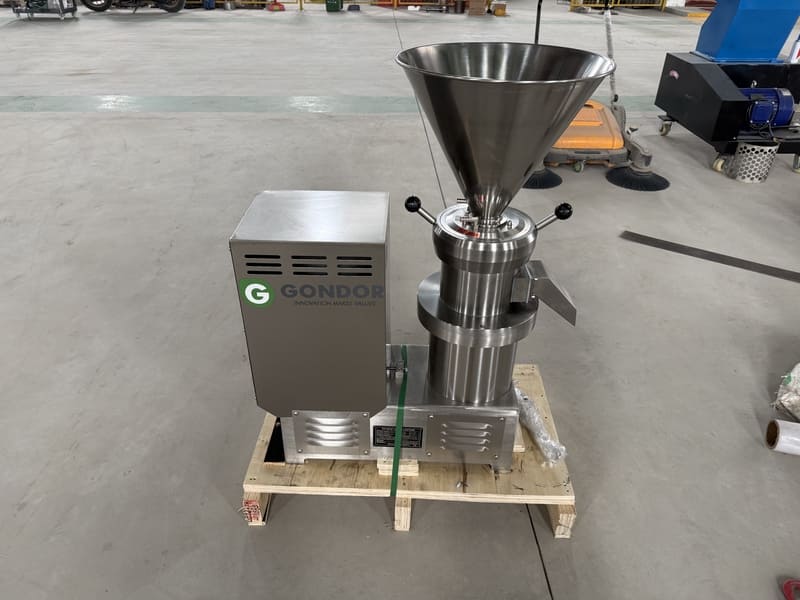
If melting and sugar processing are the “preparation stage,” then the refiner or ball mill is the core equipment in the chocolate production line that truly determines the quality level. The chocolate refiner uses specially designed scrapers and internal stone slabs or steel bars to reduce the particle size of the mixture to below 20-25 microns. Its advantages also include the ability to achieve even higher levels of fine grinding with certain configurations.
Therefore, the refiner does more than just “grind the raw materials finely”; it actually determines the smoothness of the product’s texture, its basic flowability, and its subsequent shaping performance. For factories producing mid-to-high-end chocolates, filled chocolates, and flavored chocolates, the selection of refiner equipment often directly impacts their final market competitiveness.
3. Chocolate Tempering Machine: A Key Tool for High-Quality Finished Products
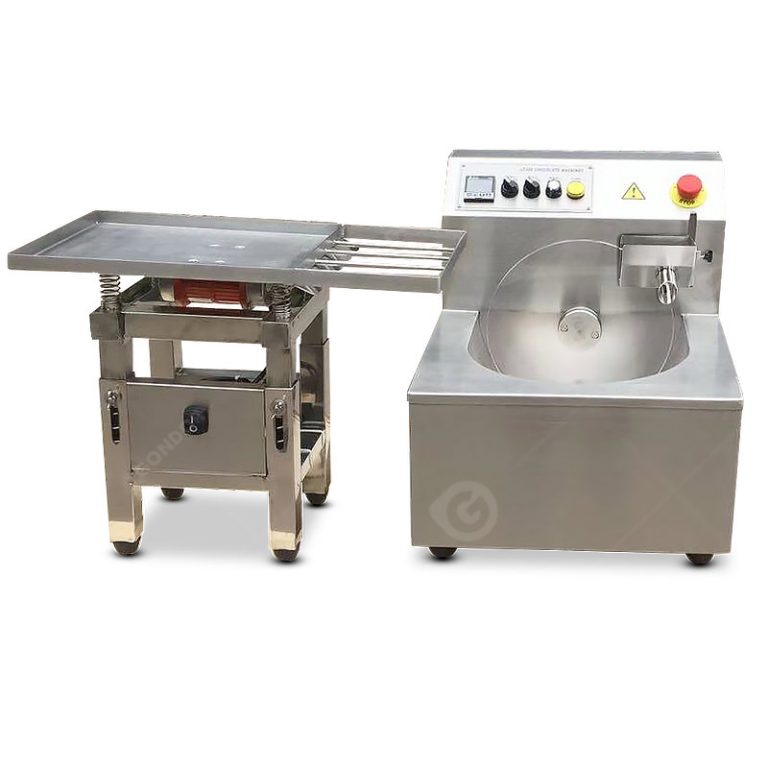
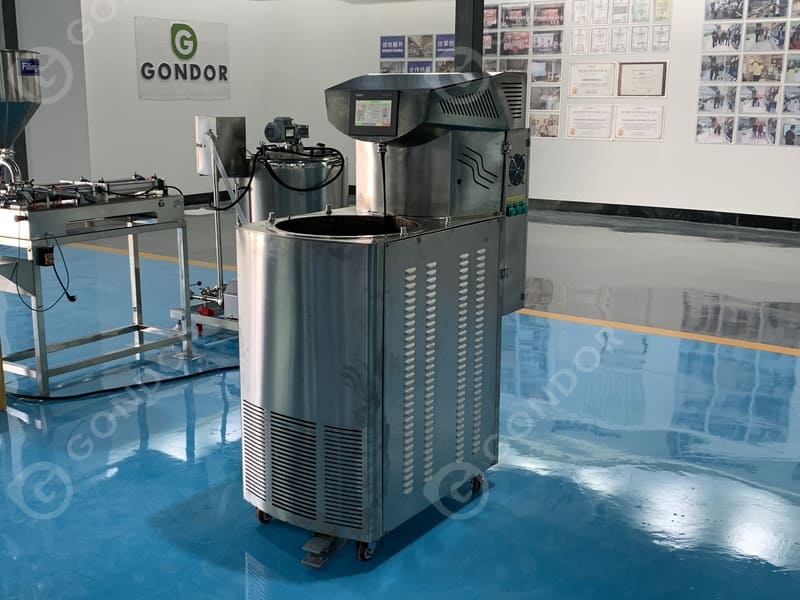
If you could only choose one machine that you absolutely cannot skimp on, many professionals would vote for a chocolate tempering machine. Tempering isn’t simply about raising or lowering the temperature; it’s about guiding cocoa butter to form a more stable crystalline structure through a controlled process of heating, cooling, and reheating. The Gondor website explicitly states that continuous tempering machines, by precisely controlling the temperature profile, help chocolate achieve better surface gloss, a crisp texture, and reduce whitening or blooming issues.
Related research also shows that tempering is a crucial step in determining chocolate’s gloss, snap (brittleness), and bloom resistance.
For companies pursuing high quality, a commercially viable appearance, and longer shelf life, a chocolate tempering machine is virtually irreplaceable. Especially when making molded chocolates, filled chocolates, or two-tone chocolates, higher tempering precision generally results in better product consistency.

4. Chocolate Depositing Machine:
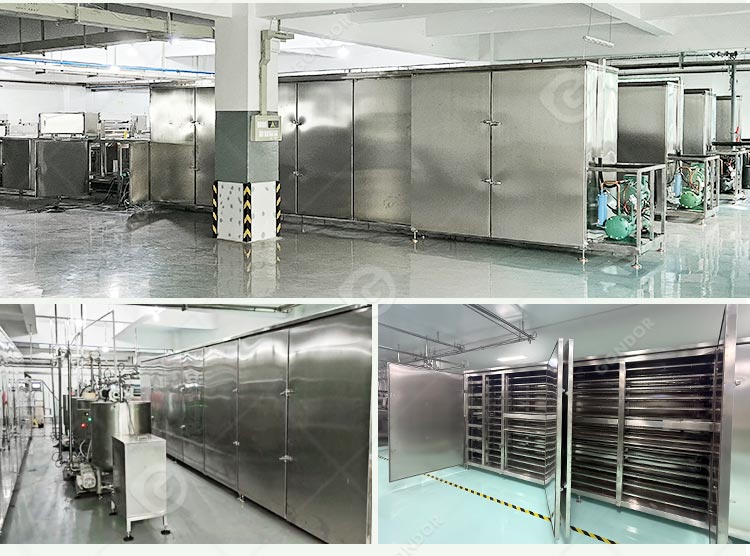
This is the core of the production line’s automation. It precisely measures and pours chocolate paste according to the mold shape. Modern casting machines support single-color, two-color (filled), and large-particle mixed production. Equipped with mold preheating and vibration venting functions, they ensure the finished chocolates are free of air pockets and have a perfect shape.
5. Cooling and Packaging
So, what machines does a chocolate production line need?
The answer isn’t simply “a few pieces of equipment,” but rather a complete system encompassing quality control, continuous production, product shaping, and commercial packaging. Typically, a relatively complete chocolate production line includes: melting equipment, a sugar powder mill, a fine grinder or ball mill, insulated tanks, a temperature control unit, shaping machines, a cooling tunnel, and packaging machines, supplemented by conveyor pumps, piping, molds, and an automatic control system.
For companies looking to enter the chocolate manufacturing industry, choosing a production line that matches their product positioning and stage of development is far more important than simply pursuing the lowest price.