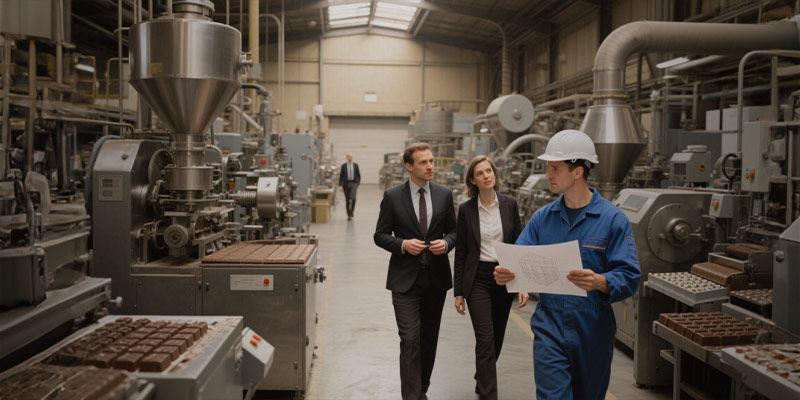
French Chocolate Manufacturing’s Pursuit of Excellence
This March, Mr. Tasman Murray from France, the world’s culinary capital, officially introduced our industrial-grade chocolate ball mill. As a professional producer with extremely high standards for the fineness and flavor of chocolate, Mr. Murray’s initial intention was very clear: to find a solution that could balance “ultra-fine grinding” and “high automation” to meet the growing market demand for high-quality chocolate.
For these types of customers, the core objectives of purchasing chocolate ball mill typically include the following:
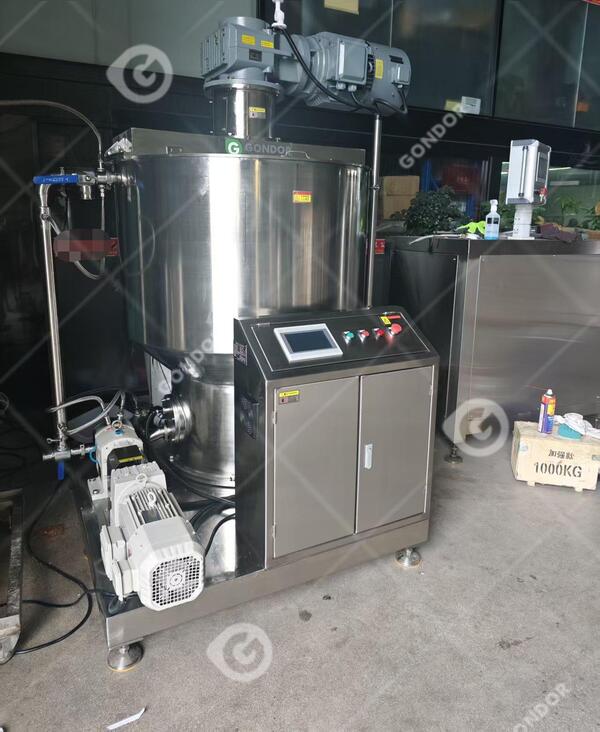
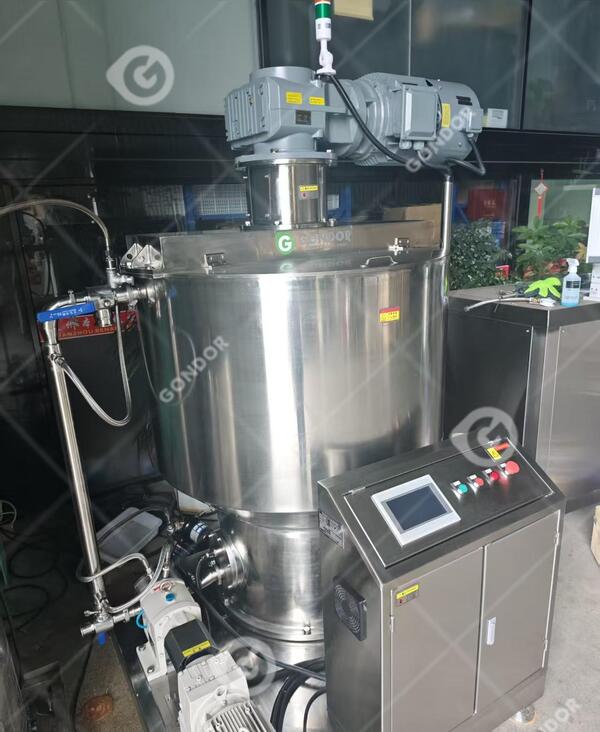
The “Last Mile” from Equipment Delivery to Production Standardization
For precision food machinery, the “install and use” approach is a misconception. Upon receiving the equipment, Mr. Murray faced two very typical and critical challenges in the industry:
Solution: Standardized operations under professional guidance
As a supplier with profound industry experience, we did not merely focus on delivering equipment. Instead, through customized technical support, we assisted our clients in establishing standardized operation procedures:
1. The first scientific cleaning plan
In response to Mr. Murray’s inquiry about the cleaning method, we provided professional suggestions based on material characteristics.
Core medium: Hot water must be used. Hot water not only effectively removes any industrial oils that may remain during the processing, but also provides a preheating environment for the subsequent flow of materials.
The logic of “preventing moisture is more important than cleaning”: We specifically remind customers that they must keep the interior dry immediately after cleaning.
- Reason 1 (Equipment Protection): Prolonged water accumulation can cause micro oxidation of the grinding cylinder or steel balls, thereby shortening the mechanical lifespan.
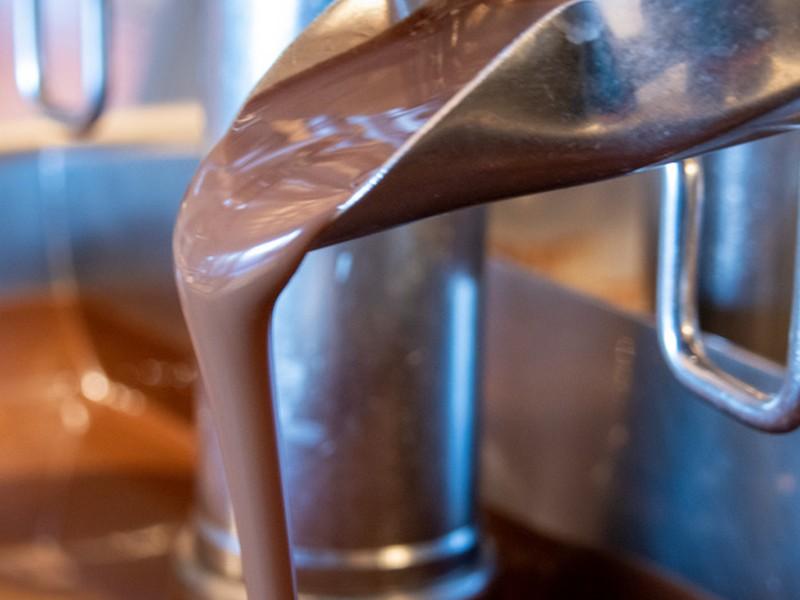
- Reason 2 (Quality Control): Chocolate is a substance that is “extremely sensitive to water”. Even a very small amount of residual moisture entering the grinding process can cause the chocolate sauce to “re-crystallize” or have a significant increase in viscosity, seriously affecting the taste of the final product.
2. Deep integration of physical control and automation logic
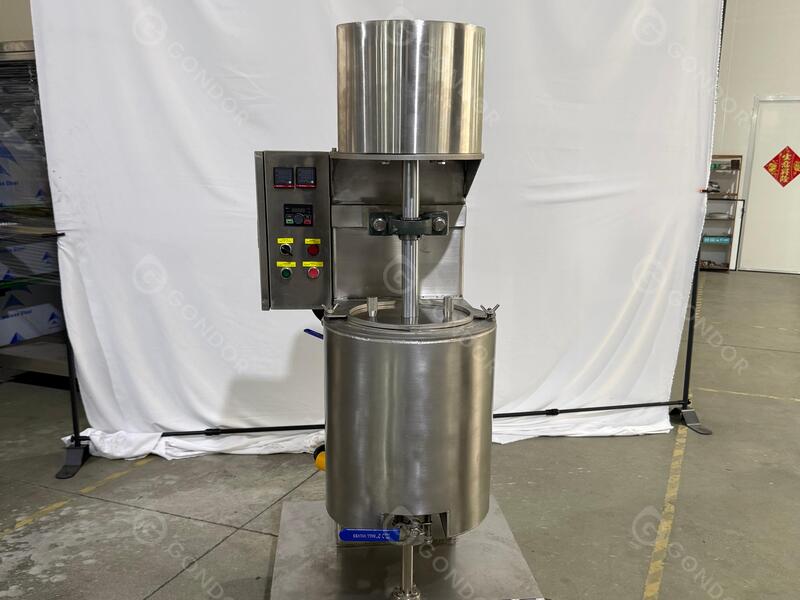
To facilitate quick adoption by customers, we have provided a detailed “Equipment Physical Logic Comparison Table”, which covers:
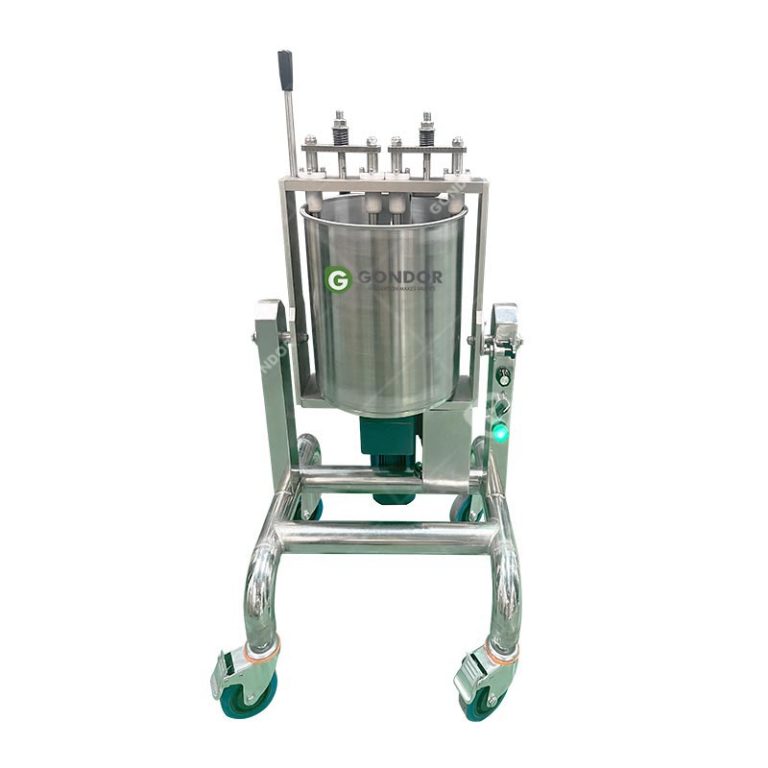
Multifunction control lever and buttons: Clearly indicate the speed, pumping power and temperature control instructions corresponding to each knob.
Intelligent water tank system: Explains how the water tank precisely controls the material temperature during the grinding process through the interlayer circulation, preventing the chocolate from caking.
Integrated automated discharging: One of the key advantages of the ball mill is its fully automatic discharging system.
We guide our customers to connect the dedicated rotating tubes to the discharge ports, achieving a closed and automated transfer from the grinding process to the storage containers. This significantly reduces the risk of contamination caused by manual intervention.
Precautions for Using Chocolate Ball Mills
Regarding the use of chocolate ball mills, we offer the following professional advice to our global counterparts:
Customer Testimonial
“We are extremely satisfied with the automation performance of this ball mill. Special thanks to the team for their professional guidance on the initial cleaning and operating logic. They not only sold us a machine, but also taught us how to maintain production standards in the most scientific way.” — Tasman Murray
One-Stop Chocolate Ball Mill Procurement
Tasman Murray’s case study illustrates that after purchasing a chocolate ball mill, what truly determines the subsequent user experience for customers is not just the performance of the equipment itself, but also whether the supplier can provide detailed, professional, and practical operating instructions.
From initial cleaning recommendations to precautions for keeping the interior dry, and explanations of the instruction manual and automatic discharge connection methods, these details, though seemingly simple, are precisely the parts of a food machinery project that best demonstrate professionalism and service value.
For chocolate manufacturers, stable equipment is only the foundation; correct usage is a crucial prerequisite for ensuring product quality and production efficiency.
If you are also looking for a suitable chocolate ball mill for chocolate production, or hoping to obtain an equipment solution more tailored to your specific process needs, please contact us. We can provide you with more targeted suggestions based on your product type, output requirements, and production process.