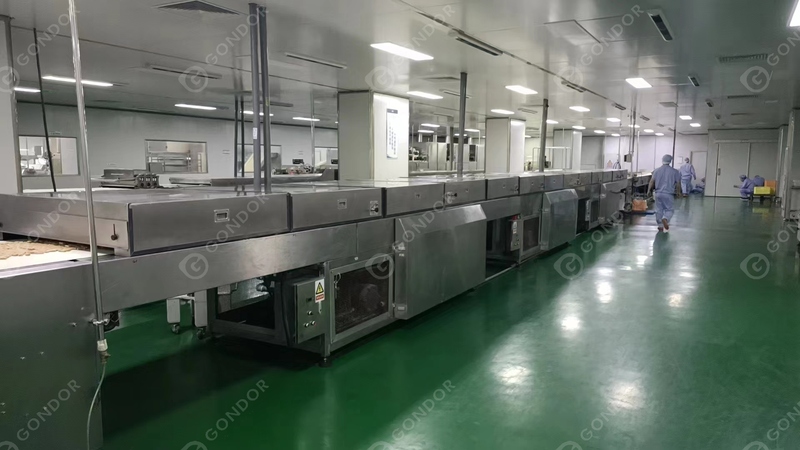
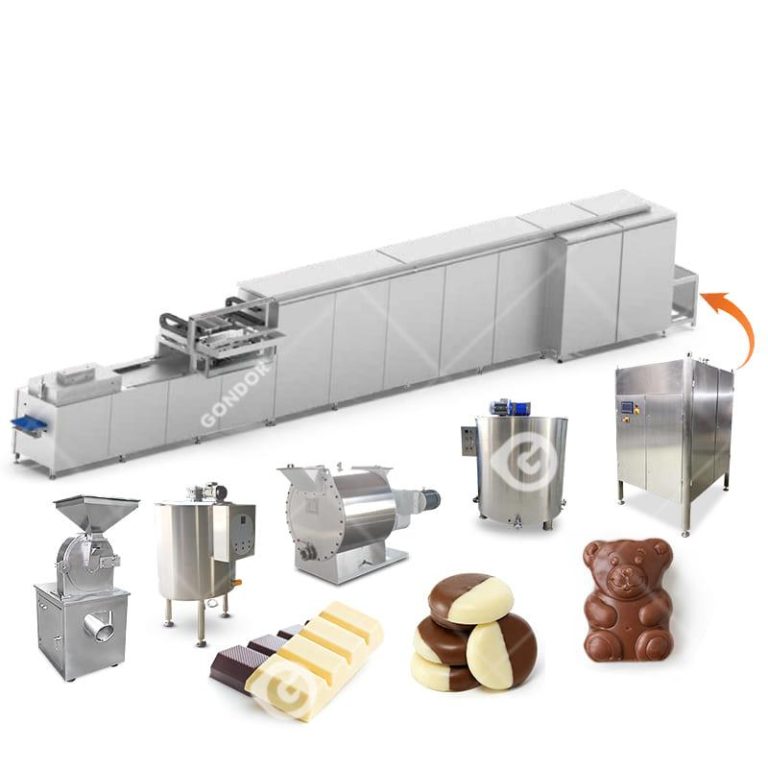
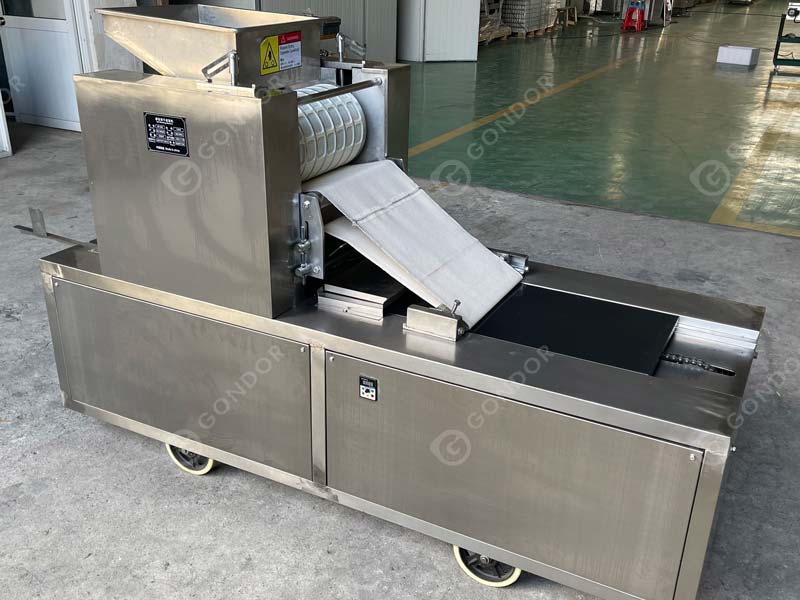
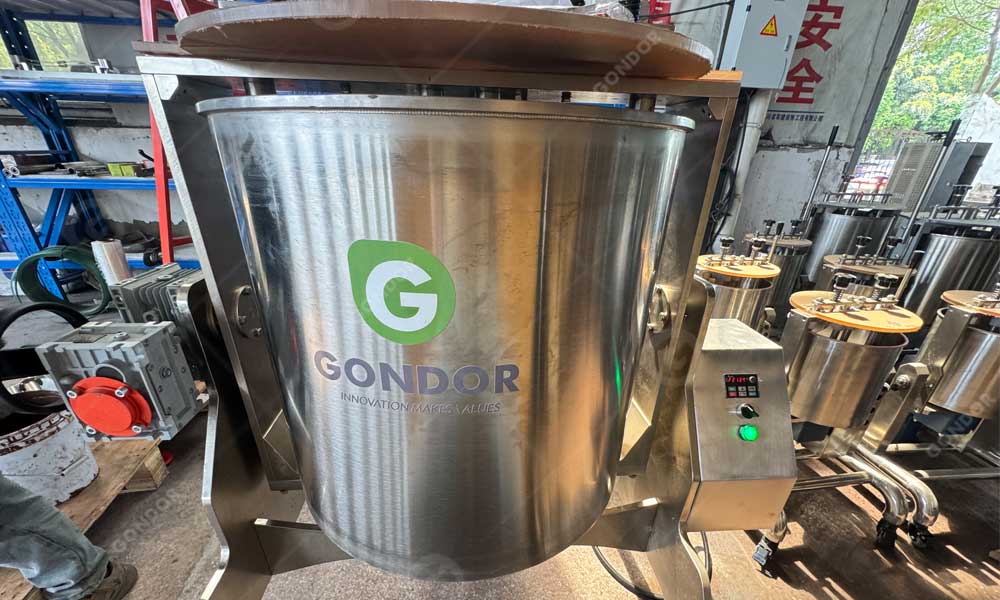
A chocolate drip production line is an automated system specifically designed for producing small-particle chocolate products, suitable for continuous, large-scale production. Its core features are high drip precision, high production efficiency, and stable operation. It allows for precise control of the dripping speed, temperature, and thickness of the chocolate, ensuring consistent appearance and quality of the finished product.
What is chocolate drip line main purpose?
This production line primarily uses a high-precision dripping system to pour tempered chocolate syrup onto a conveyor belt. After cooling and setting, it forms small granules, drops, or similar decorative chocolate pieces. It can be used for standardized mass production as well as customized small-batch production.
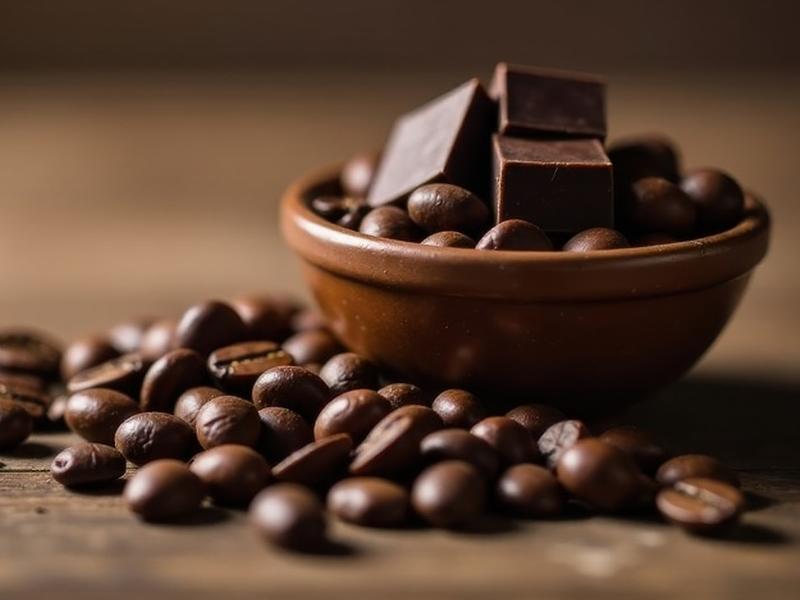
Production of raw materials for chocolate beans, chocolate drips, and small chocolate particles;
Providing a stable supply of chocolate ingredients for the baking, dessert, and confectionery industries;
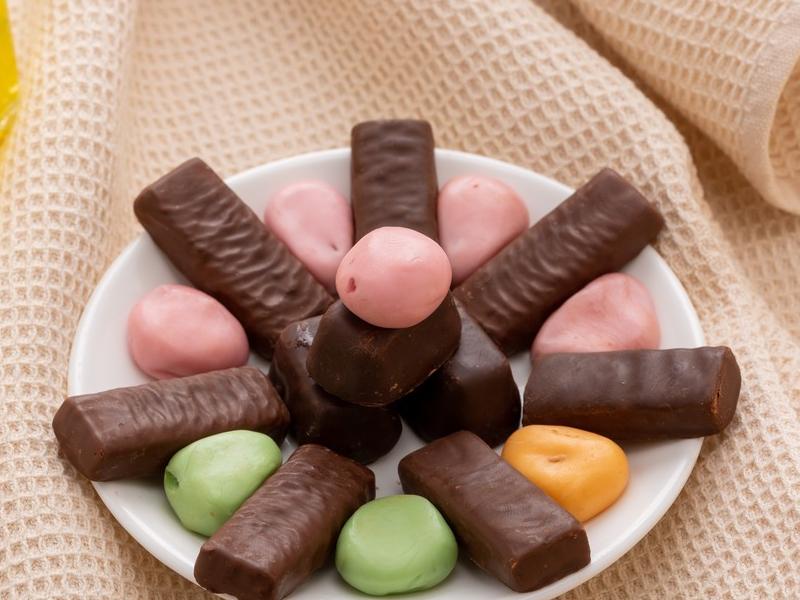
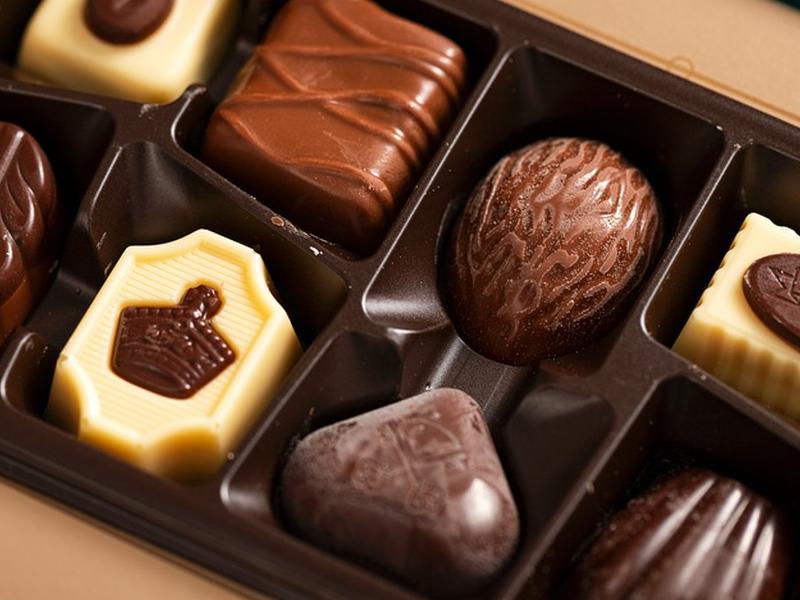
Used for the molding of handmade chocolates, holiday gift box chocolates, etc.;
Providing chocolate decorations or ingredients for hotels and restaurant chains.
So, do you know how a high-capacity chocolate chip production line works?
Chocolate Dripping Production Line Working Principle
To produce glossy, crisp chocolate chips, the entire production line involves seven key stages. A mistake at any stage can lead to bloom or uneven shape in the product. Modern dripping production lines follow these precise operating procedures:
1. Precision Tempering of the Chocolate Syrup
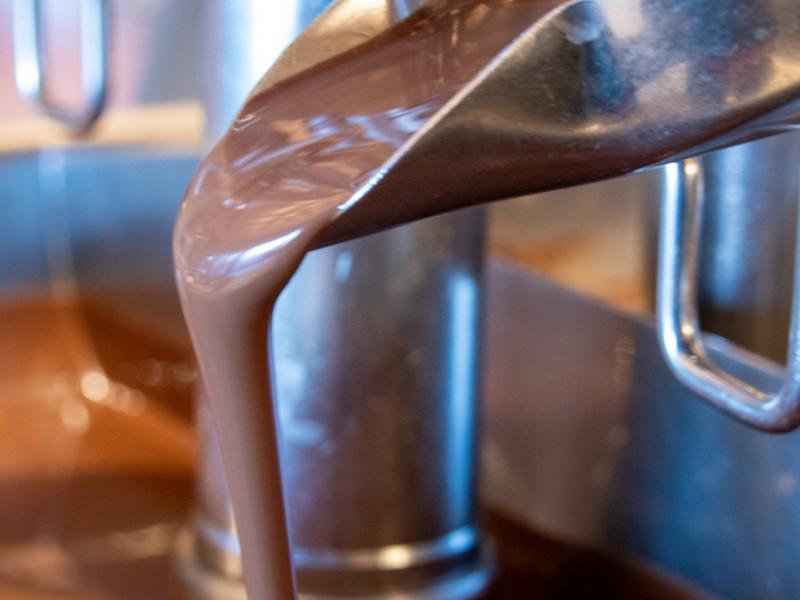
It all starts with temperature control. The chocolate syrup is first processed by a tempering machine to induce the cocoa butter to form a stable V-shaped crystal structure. This is crucial for determining whether the finished product has a glossy finish and a crunchy texture.
2. Constant Temperature Circulation
After being tempered by the chocolate tempering machine, the syrup is transported to the dripping machine through pipes with a hot water jacket. The entire system must maintain a constant temperature to prevent the syrup from solidifying or clogging due to cooling during pumping.
3. Servo-Controlled Depositing
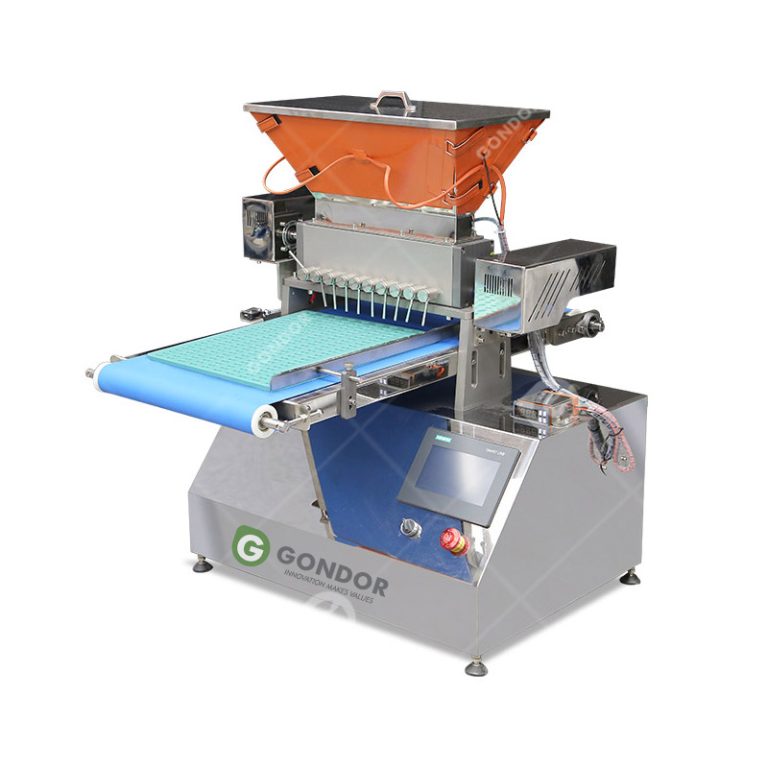
This is the core of the molding process. Under the command of the PLC system, a servo motor drives the dispensing head to precisely drip the slurry according to the set weight (e.g., 0.1g to 5g). The opening time of each row of drip holes is accurate to the millisecond.
4. Surface Tension Shaping:
When the liquid chocolate comes into contact with the food-grade PU conveyor belt, relying on the surface tension of the chocolate and the specific dripping height, the slurry will naturally shrink into a hemispherical shape or a droplet with a small pointed tip.
5. Multi-Zone Gradient Cooling
The dripped chocolate immediately enters a cooling tunnel tens of meters long. The system uses “gradient cooling”: from a slight cool air at the front to strong convection in the middle, ensuring that the chocolate solidifies uniformly from the inside out, avoiding cracking.
6. Physical Contraction & Release:
The chocolate will slightly shrink during the cooling process. When the conveyor belt passes the turning axis (blade) at the end of the tunnel, the solidified chocolate will automatically peel off from the belt, achieving a damage-free release.
7. Automatic Sieving & Collection
Finally, the finished product passes through a vibrating screen. This step filters out the very few fragments or connecting bridges generated during production, ensuring that every bag of chocolate beans delivered to the customer is a uniformly shaped, qualified product.