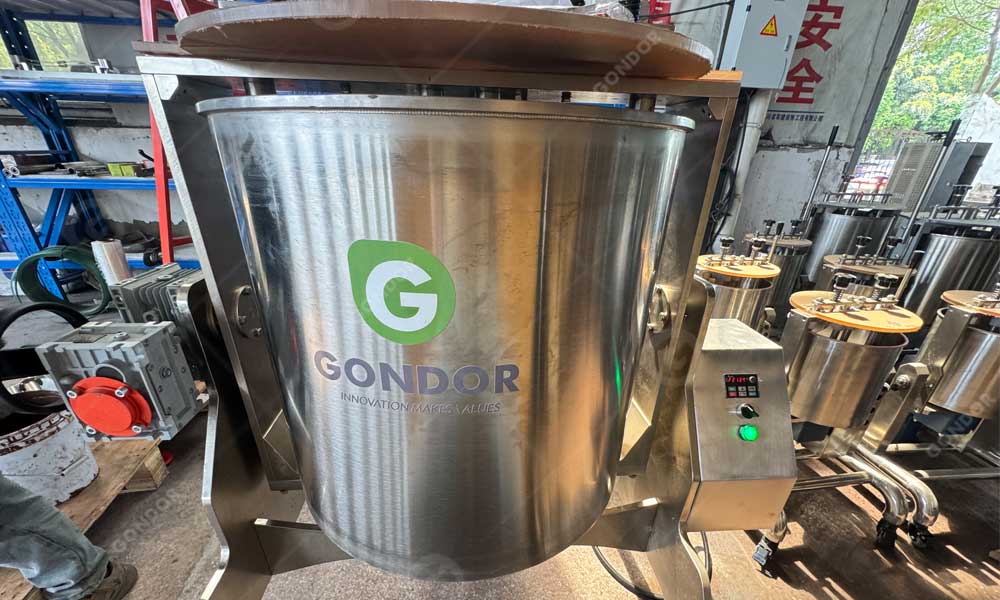


From Cocoa Beans to Chocolate Chips
There’s nothing quite like the rich, melty goodness of chocolate chips. Whether studded in a batch of homemade cookies, swirled into pancake batter, or simply enjoyed by the handful, these tiny morsels are a testament to culinary delight. But have you ever wondered how cocoa beans are transformed into the perfect, uniform chips we all know and love? The process is a fascinating blend of art, science, and high-tech engineering, relying on specialized machinery at every step.
The journey begins with raw cocoa beans. Upon arrival at the factory, they are cleaned and then roasted to develop their signature deep, rich flavor. This critical first step requires precision heating, which is expertly handled by machines like the Cocoa Bean Roaster, designed for perfect batch consistency.
Step 1: Cracking and Winnowing
After roasting, the beans are cracked to separate the outer shells from the inner nibs—the true source of chocolate. A powerful airstream then blows the lighter shells away, leaving behind the pure, valuable cocoa nibs. This is where a cocoa bean peeling and winnowing machine ensures maximum yield and purity, a crucial factor for quality and cost-efficiency.
Step 2: Grinding into Chocolate Liquor
The cocoa nibs are then ground. The friction and heat from grinding release the cocoa butter within, turning the nibs into a rich, liquid paste known as chocolate liquor. This requires robust and consistent grinding equipment. A chocolate grinder melanger machine is engineered to handle this task, creating a smooth, liquid foundation for all chocolate products.
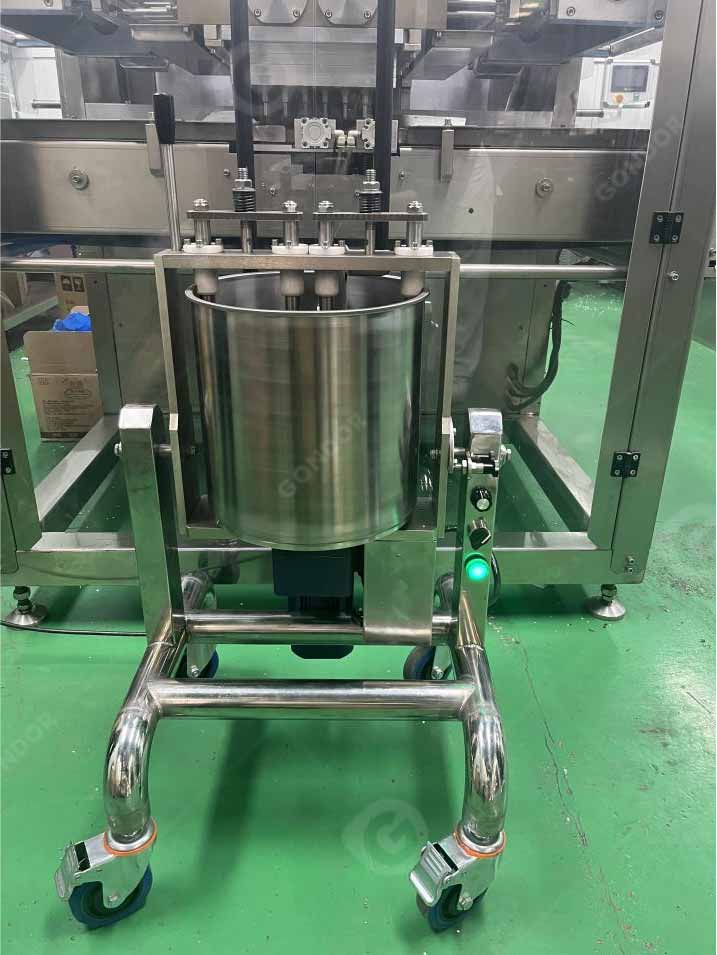
Chocolate Stone Grinder Melanger
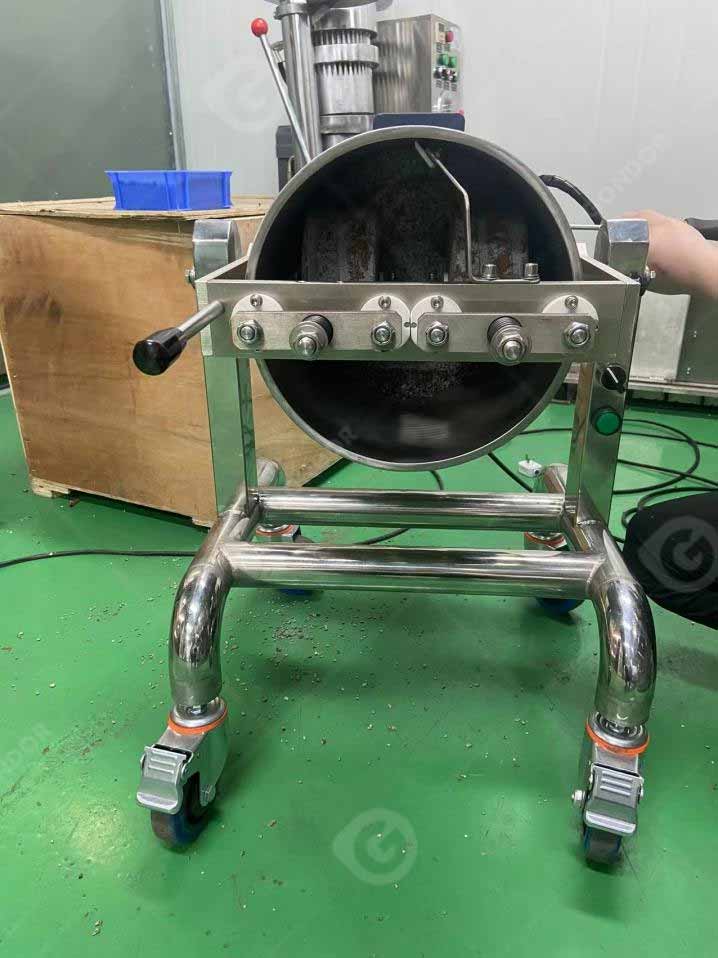
Chocolate Stone Grinder Melanger Machine
Step 3: Refining the Recipe and Texture
For the chocolate used in chips, the liquor is further processed. It is mixed with ingredients like sugar, milk powder (for milk chocolate), and extra cocoa butter. This mixture is then refined through heavy rollers to achieve an ultra-smooth texture. The particles are ground so fine that they become silky to the touch.
Step 4: The Crucial Step of Tempering
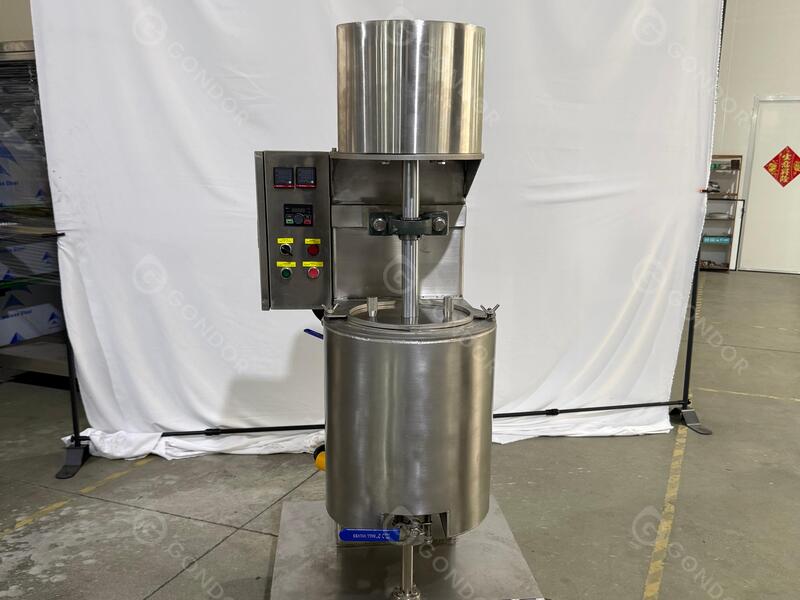
Perhaps the most critical step in creating a chocolate chip that snaps nicely and melts perfectly in the oven is tempering. Tempering is a precise process of heating and cooling the chocolate to stabilize the cocoa butter crystals. This gives the finished chip its glossy appearance, satisfying snap, and resistance to melting at room temperature. For commercial producers, achieving perfect tempering consistently is non-negotiable. This is best accomplished with a reliable automatic chocolate tempering machine, which automates the process for flawless results in high-volume production.
Step 5: Forming the Iconic Chip Shape
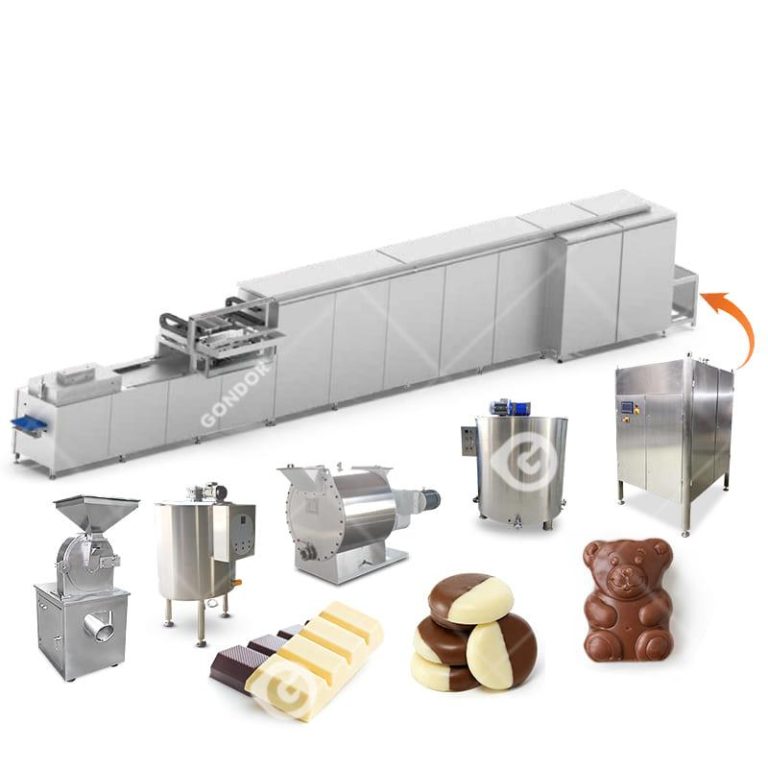
Finally, the tempered chocolate can be molded by continuous chocolate chips line, replacing the traditional mold. The automatic system pumps liquid chocolate into a heating hopper, which is accurately measured by a servo or pneumatic control deposition head, and evenly drops chocolate droplets onto a food-grade conveyor belt. The conveyor belt then sends it into a multi-zone cooling tunnel, where it quickly solidifies in controlled cold air, thus locking the luster and crisp texture. The solidified chocolate chips automatically fall off at the end of the tunnel and enter the packaging process. This continuous production process ensures a high degree of consistency in weight, shape and quality from the first piece to a million pieces of products.
Step 6: Cooling, Packaging, and Quality Control
The solid chips are popped off the belt, cooled completely, and sent for automated packaging. Throughout this entire journey, rigorous quality control checks ensure that every chip meets strict standards for taste, texture, and appearance.
The creation of the humble chocolate chip is a remarkable feat of food engineering. From the raw bean to the perfectly formed chip in your bag, it relies on sophisticated and durable technology to deliver the consistent quality we all love.
At the heart of this delicious process is advanced machinery from industry leaders like Gondor. Each stage, from winnowing and grinding to the precise art of tempering and depositing, depends on equipment designed for performance and reliability.