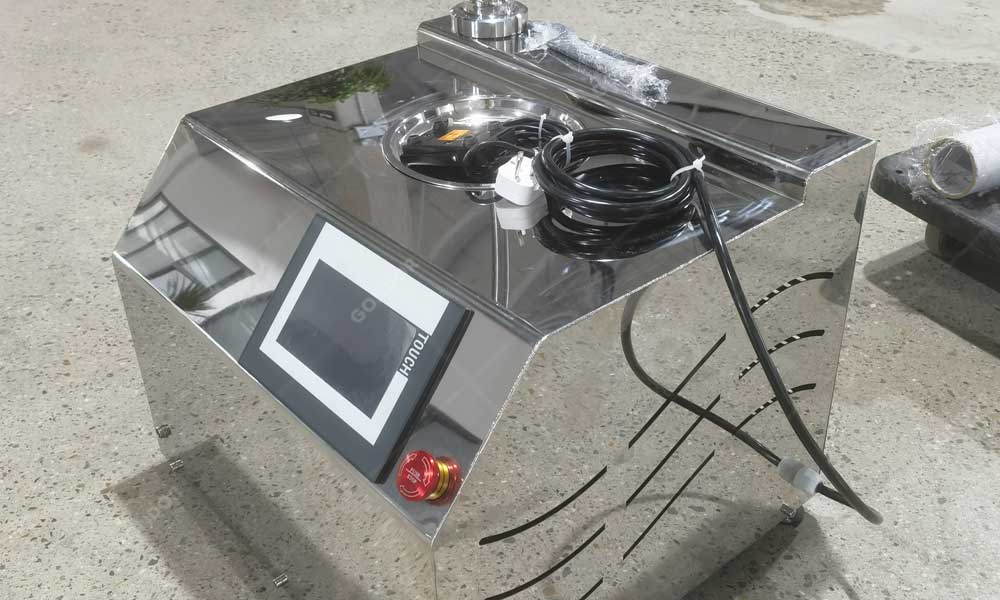


If you have ever tried making handmade chocolate, you will know that there is a huge difference between “melting” and “tempering”. For chocolate manufacturers, bakers, or confectioners who strive for superior quality, a chocolate tempering machine is not just a heating device; it is a sophisticated instrument that gives chocolate its “soul”. Tempering determines whether the finished product has an attractive sheen, a crisp snap (when broken), and a smooth texture. Without proper tempering, the chocolate may exhibit a white “frosting” phenomenon and have a rough texture.
So, do you know how to use a chocolate temperature controller? This article will provide you with the most detailed instructions.
What is a chocolate tempering machine?
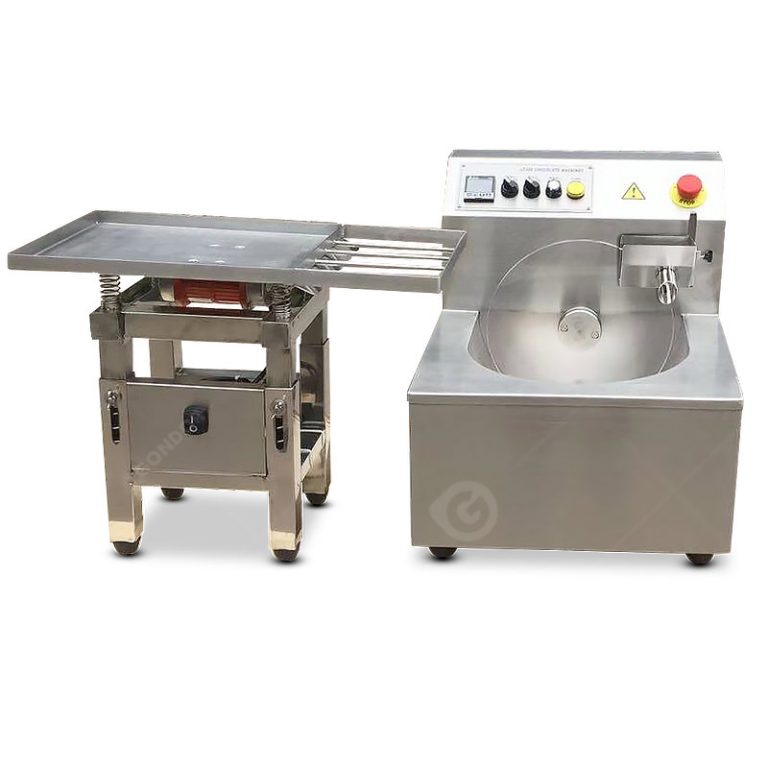
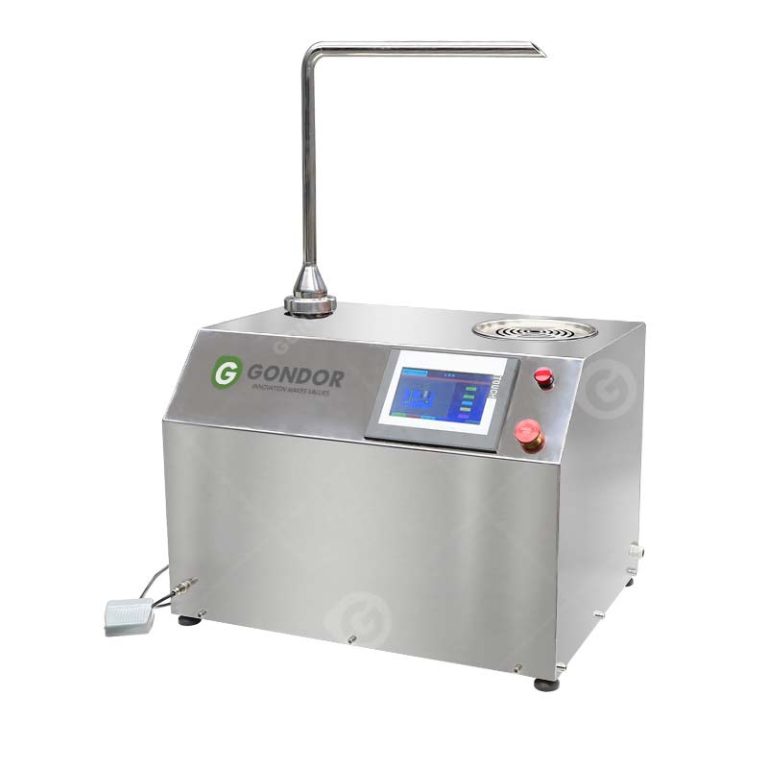
The chocolate temperature control machine is a specialized equipment designed for chocolate processing. Its main function is to control heating, cooling and stirring steps to enable the cocoa butter in the chocolate to form a stable crystal structure, thereby enhancing the gloss, taste and demolding properties of the final product.
Unlike simply melting chocolate, the temperature control machine can precisely control the temperature curve, allowing the cocoa butter crystals to form a stable β-type structure at the correct stage, avoiding problems such as surface frosting, too soft texture or easy melting, and ensuring that the chocolate has a better appearance and flavor.
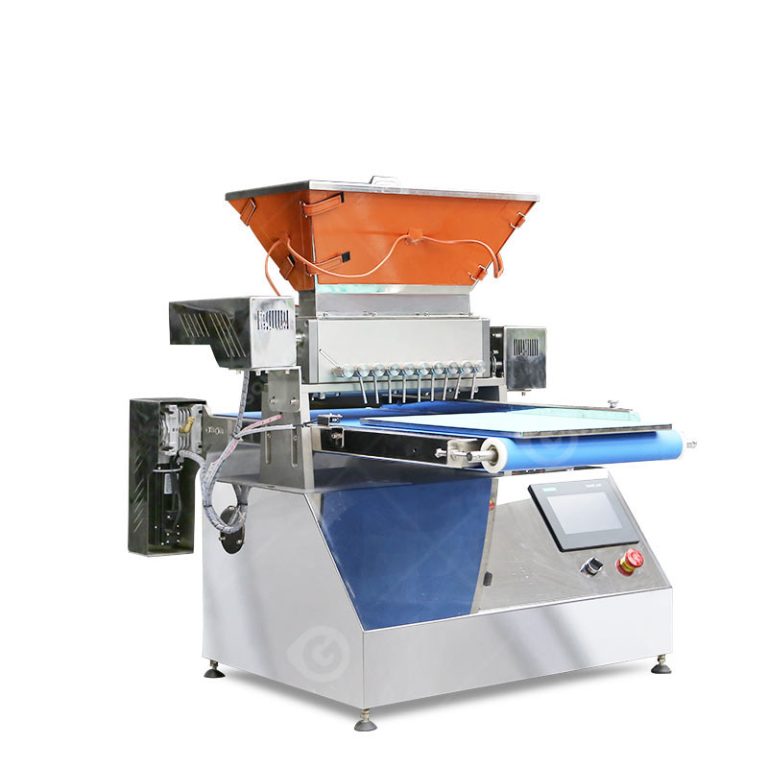
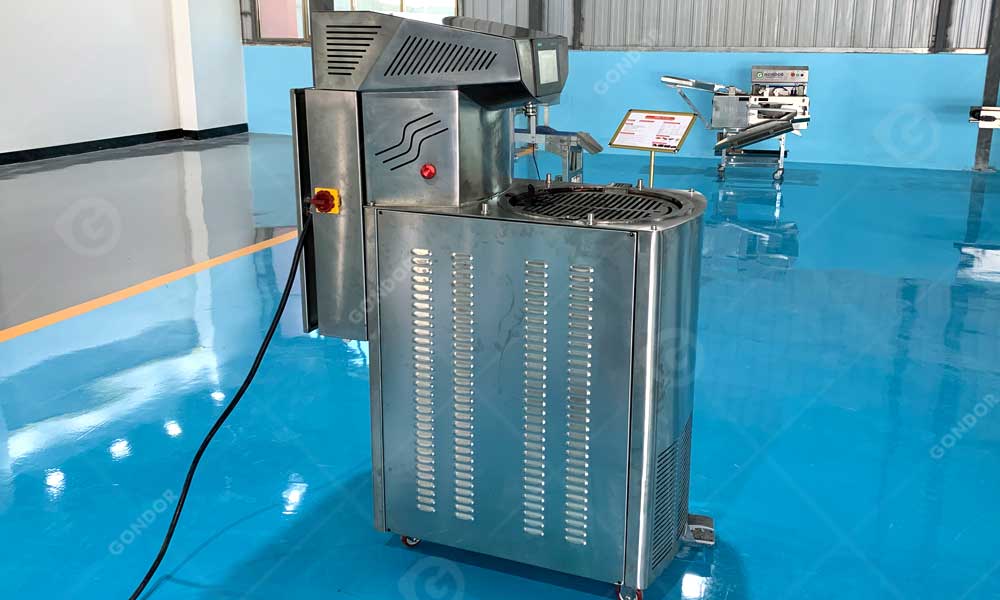
The tempering chocolate machine can continuously maintain the chocolate at the ideal working temperature. It is applicable to the chocolate production process ranging from small artisan workshops to large-scale food production lines. It is an indispensable equipment for various chocolate-making processes such as coating, pouring, and molding.

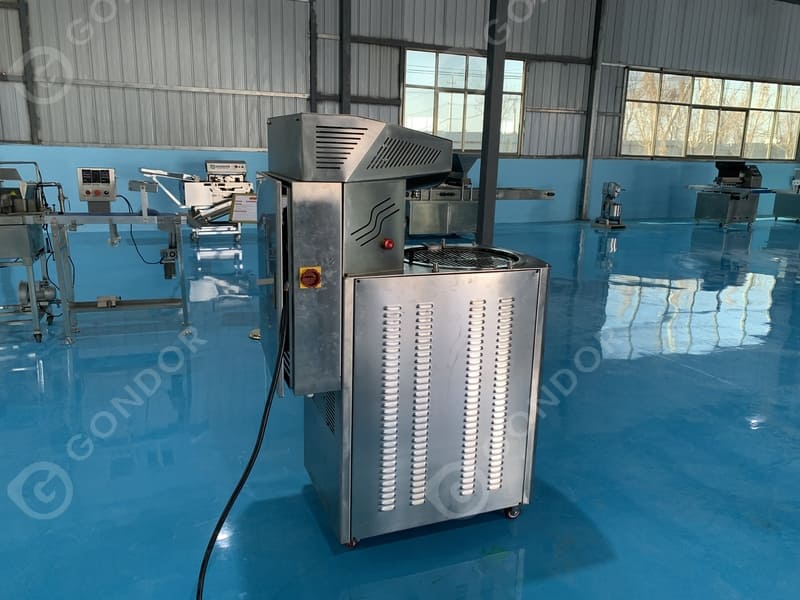
How does a chocolate tempering machine work: Understanding the principle
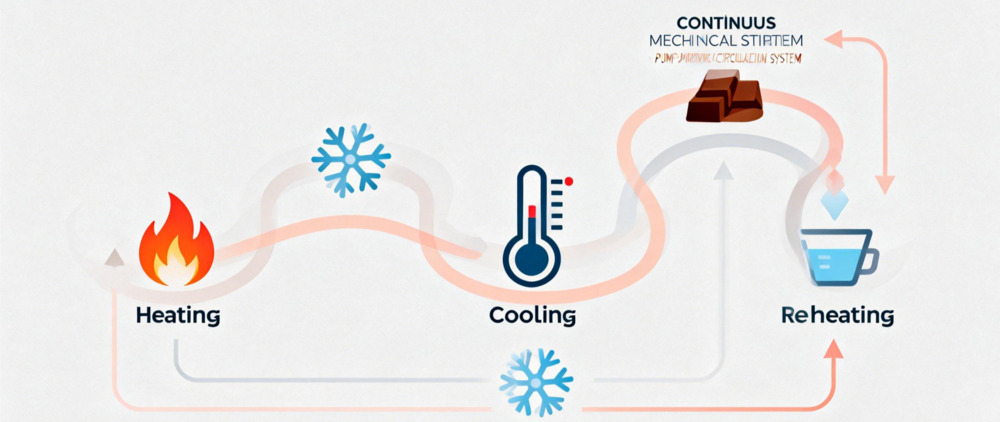
The basic principle of the chocolate temperature controller is that before pressing the start button, we need to understand what happens inside the machine. The core component of chocolate is cocoa butter, which has a poly-crystalline property. In simple terms, cocoa butter can form six different crystal structures, but we only want the V-shaped crystals (Beta crystals). The temperature controller achieves this goal through precise “heating-cooling-reheating” cycles.
How to Choose the Right Chocolate Tempering Machine?
Not all tempering machines are the same. Different scales and application scenarios have vastly different requirements for tempering machines. Choosing the right model is a crucial prerequisite for ensuring long-term stable production.
Common chocolate tempering machines can be broadly categorized as follows:
When selecting a model, the following parameters should be given priority:
- Whether the rated capacity matches the actual production demand.
- Whether the temperature control accuracy is sufficiently stable.
- Whether the stirring structure is suitable for high-viscosity chocolate.
- Whether the equipment materials meet food-grade hygiene standards.
Preparations before using the temperature control machine
Before powering on the device, adequate preparation is the first step towards successful temperature adjustment. Mistakes in operation often stem from insufficient preparation.
In terms of raw material preparation, it is recommended to use chocolate blocks or chocolate beans of uniform size. This helps to achieve a faster and more uniform melting during the heating process. Additionally, different types of chocolate (dark chocolate, milk chocolate, white chocolate) should be processed separately to avoid confusion caused by mixed use and improper temperature control.
6 steps for chocolate temperature control operation
Safe Use and Maintenance
Chocolate tempering machines are high-temperature food processing equipment. Special attention should be paid to electrical safety and burn prevention during operation. All maintenance and cleaning should be performed only after the equipment has been completely powered off and cooled down.
Daily maintenance recommendations include:
- Clean the mixing tank and stirring components after each use.
- Regularly inspect the heating and cooling systems.
- Avoid scratching the stainless steel inner walls with hard objects.
Good maintenance practices not only extend the life of the equipment but also ensure consistent quality for every batch of chocolate.
One-stop chocolate manufacturing solution
Gondor is committed to providing a complete range of chocolate tempering solutions, from beginner to professional. Our machines are designed to simplify and control the complex tempering process, featuring precise temperature control of ±0.3°C, a highly efficient scraper-type stirring system, and a user-friendly intelligent interface.
Whether you are a newly established artisanal chocolatier or a manufacturer seeking to upgrade production capacity, we can recommend the most suitable model for you.