

Peach Cookies Quality Depends on the Whole Process
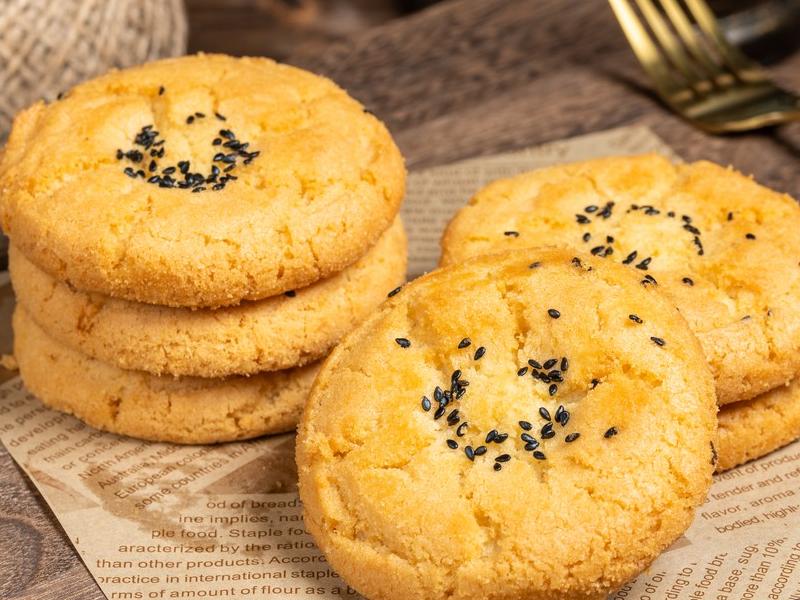
Many manufacturers assume that peach cookies quality is mainly determined by the formula. In practice, however, high-quality peach cookies depend on the combined performance of dough mixing, forming, baking, and cooling. Even when the ingredient ratio looks correct, the final product may still show poor cracking, excessive breakage, uneven color, or unstable texture if the process is not well controlled.
Sugar-Free Peach Cookies Are Usually Harder to Stabilize
Compared with conventional peach cookies, sugar-free versions are often more difficult to process. Traditional sugar does more than provide sweetness. It also affects color development, surface appearance, and internal structure during baking. Once this support is reduced or removed, manufacturers may see more common problems such as weak surface cracking, fragile texture, and a higher breakage rate after cooling. This is one of the main reasons why many factories can produce regular peach cookies smoothly but struggle when switching to sugar-free recipes.
Front-Zone Temperature Helps Create Natural Cracking
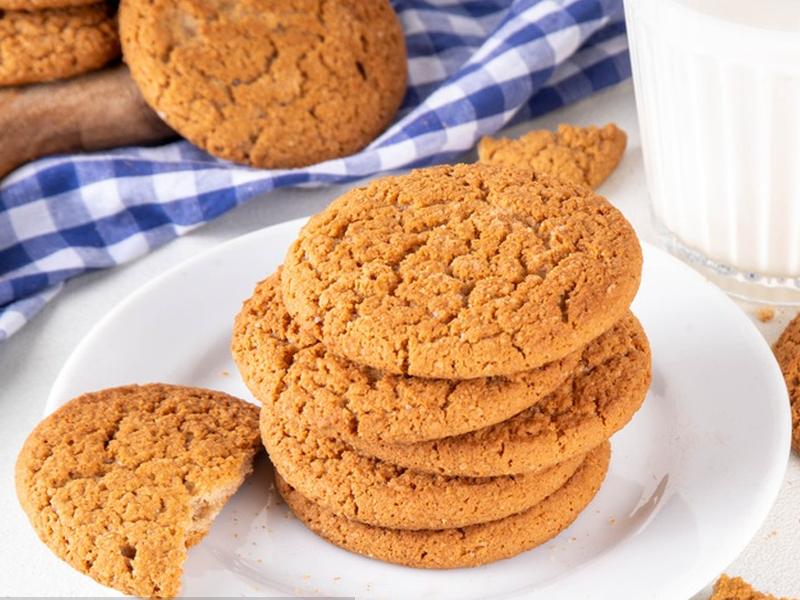
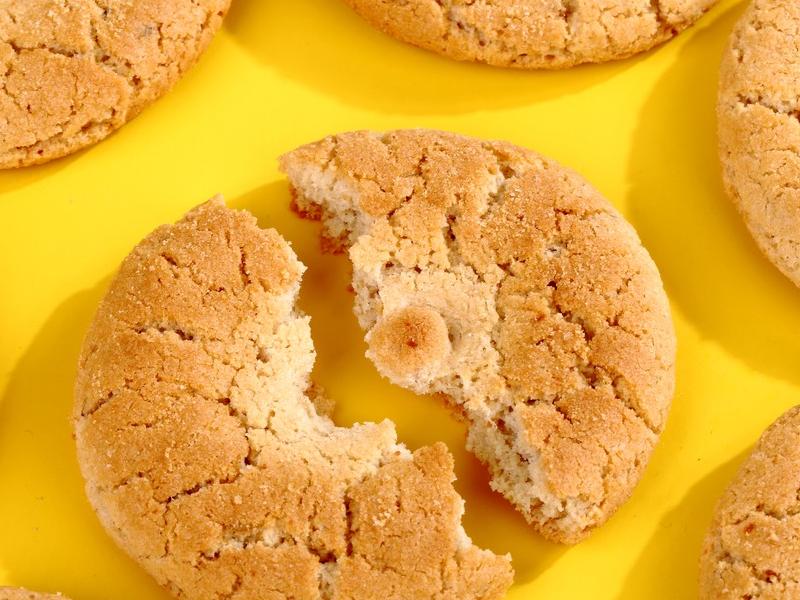
For peach cookies, attractive surface cracking is one of the most important visual quality indicators. In sugar-free production, if the baking temperature profile remains the same as that used for regular products, the surface may stay too flat and dull. A practical solution is to raise the front-zone temperature appropriately so the dough pieces can set faster in the early baking stage. This helps the surface open naturally and form the classic cracked appearance that consumers expect.
Rear-Zone Temperature Should Stay Under Control
While a stronger front-zone temperature can improve cracking, the rear-zone temperature should not simply be increased in the same way. If the back section remains too hot, the outer layer may lose moisture too quickly while the internal moisture has not redistributed evenly. The cookies may look finished at first, but once cooled they can become too fragile and break easily during handling. In other words, the baking logic for peach cookies should be: first encourage cracking, then complete balanced drying, and finally stabilize the structure.
Thickness Affects Both Texture and Breakage
Product thickness has a direct effect on heating behavior and final strength. If peach cookies are made too thick without adjusting the temperature profile, the outer layer may harden too soon while the center remains insufficiently baked. This can create abnormal dry cracks, loose internal texture, and a higher risk of breakage after cooling. High-quality peach cookies are not simply “thicker is better.” The dough thickness must match the recipe, baking curve, and target texture.
Dough Mixing Consistency Is a Hidden Quality Factor
Many production issues appear in the oven but actually begin during dough preparation. If the dough is mixed unevenly, if fat distribution is unstable, or if the dough is too dry or too loose, the later stages of forming and baking will become harder to control. This is especially true for sugar-free peach cookies because their structure is already more sensitive. Consistent dough mixing helps improve shape stability, color consistency, and overall batch repeatability.
Uniform Forming Makes Temperature Adjustment More Effective
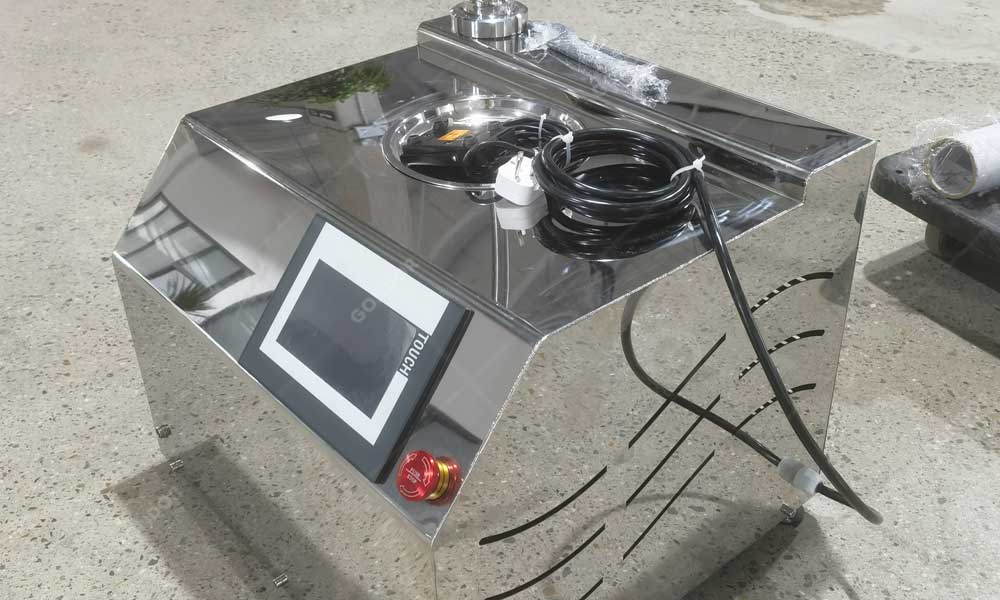
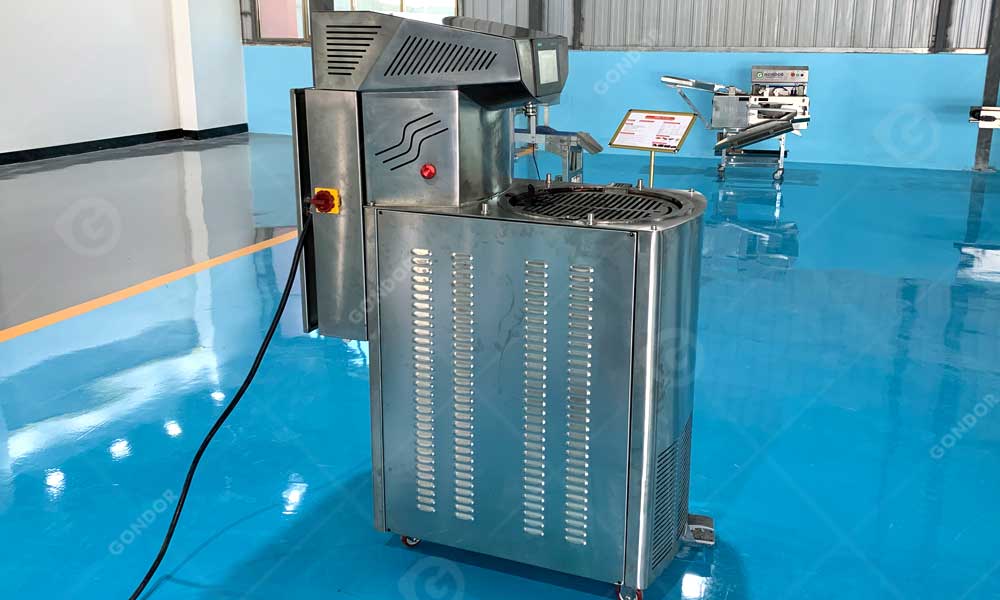
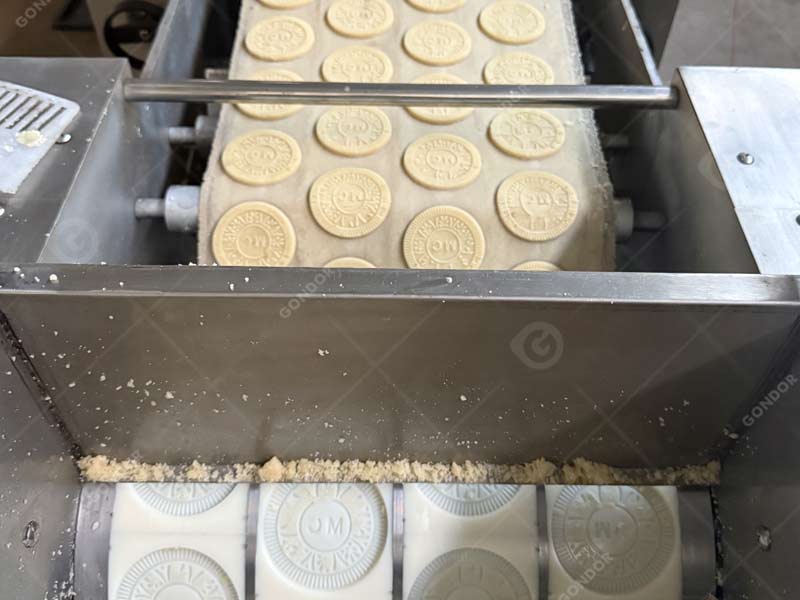
No baking curve can perform well if every dough piece enters the oven with a different size, weight, or thickness. Uniform forming is therefore one of the foundations of stable peach cookies production. When dough pieces are consistent, temperature adjustment becomes far more meaningful and the baking result becomes easier to repeat from batch to batch. For factories that want to improve standardization, using an automatic biscuit forming machine can help create more consistent dough pieces before baking. The product page highlights roll-printing forming, over 100 mold options, and stable standardized shaping, which is highly relevant for peach cookies and other biscuit products.
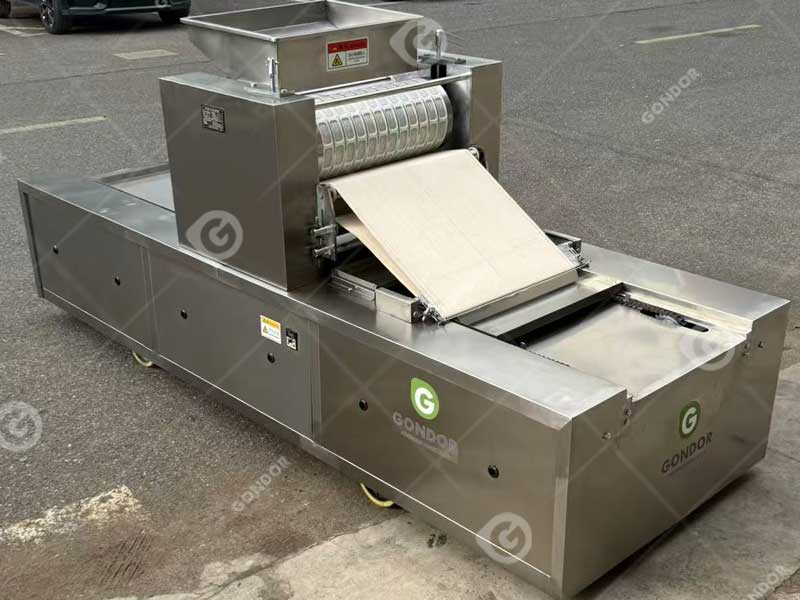
Equipment Design Also Supports Cleaner, More Scalable Production
When peach cookies production moves from manual operation to larger-scale output, equipment structure becomes more important. According to the product page, this biscuit making machine uses stainless steel construction, supports automatic scrap recovery, and can connect with ovens and packaging lines. These features matter because they improve hygiene, reduce unnecessary material loss, and make it easier to maintain smoother continuous production. The same page also mentions voltage options, mold customization, and formula support, which can be useful for factories producing multiple SKUs.
Cooling Is Critical to Final Product Strength
Cooling is often underestimated in peach cookies manufacturing. Right after baking, the internal structure is still setting. If products are moved too quickly, stacked improperly, or packed before heat is fully released, breakage can increase significantly. This is particularly important for sugar-free peach cookies, which tend to be more delicate after baking. A stable cooling stage helps preserve shape, reduce cracks caused by handling, and improve final packaging yield.
Good Cracking Is Not the Same as Dry Splitting
Some producers see a strongly cracked surface and assume the process is already correct. In reality, natural cracking and abnormal dry splitting are not the same. Good cracking should look open, even, and attractive, while the cookie still keeps a stable internal structure. If the surface is too hard, the inside too loose, and the cookie breaks at a light touch, the cracking is likely a sign of excessive heat or poor thickness control rather than a positive baking result. Quality evaluation should include appearance, internal texture, and cooled handling strength together.
Focus on Three Practical Targets During Process Adjustment
If a factory wants to improve peach cookies quality, process adjustment should focus on three practical targets. The first is natural surface cracking for better visual appeal. The second is balanced moisture removal to avoid an over-dry shell and weak center. The third is a higher finished-product integrity rate so the cookies can pass through cooling, packaging, and transport with less breakage. When these three goals improve together, both product quality and commercial performance usually improve as well.
Standardization Builds Long-Term Product Quality
Peach cookies may look simple, but making them consistently at a high level requires systematic process control. In modern production, especially for sugar-free or health-focused products, quality depends on a clear sequence: stable formula, even dough mixing, uniform forming, segmented baking, and gentle cooling. For manufacturers planning larger-scale output, an industrial biscuit making machine can be a practical way to improve forming consistency and integrate with downstream production. The product page presents it as a solution for standardized biscuit production with mold flexibility and line integration, which fits the needs of factories aiming for repeatable quality and higher efficiency.
If you are planning a peach cookie or biscuit production project, choosing the right forming equipment can help improve consistency, reduce breakage, and support scalable output.
Gondor Machinery can provide you with the most suitable cookie production solution.