

Cocoa butter is one of the most valuable ingredients in the chocolate industry. From luxury chocolate bars to skincare products, it delivers a creamy texture, delicate aroma, and long shelf life. But how exactly is cocoa butter extracted from cocoa beans?
This guide explains the step-by-step process of cocoa pressing, the equipment involved—especially the cocoa butter press machine—and how manufacturers maximize yield and quality.
Whether you are new to chocolate production or exploring industrial equipment, you will learn how cocoa pressing works and what role modern machinery plays in refining cocoa into cocoa butter and cocoa cake.
How Does a Cocoa Butter Press Extract Cocoa–Complete Guide
1. What Is Cocoa Butter Pressing?
Cocoa pressing is the mechanical process that separates cocoa butter from cocoa mass (also called cocoa liquor). After roasting and grinding cocoa beans into a thick paste, producers send this paste to a press machine that squeezes out liquid cocoa butter under high pressure.

What is the cocoa pressing process like?
Loading the cocoa liquor: The cocoa liquor is fed into a cocoa press, typically a hydraulic or screw press designed for high-pressure extraction. In modern setups, this step is automated to maintain consistency.
Applying pressure: The machine gradually increases the pressure, usually reaching several hundred bar. This stage of cocoa pressing is crucial; too much pressure degrades quality, while insufficient pressure may leave behind valuable oils. The cocoa press uses plates or pistons to compress the liquor, forcing the cocoa butter through a fine filter.
Separation and collection: As pressure increases, the liquid cocoa butter is expelled and collected in tanks. Meanwhile, the remaining solids form a cake, which can be further processed into cocoa powder. This separation makes cocoa pressing so versatile—cocoa butter can be reused in chocolate recipes or sold as a standalone product.
Cooling and filtering: The extracted cocoa butter is then cooled and filtered to remove any impurities, yielding pure, golden fat. This step ensures that the grease meets food safety standards, a key consideration for foreign trade companies supplying machinery to the global market.
The result is:
- Cocoa butter (liquid fat used in chocolate, cosmetics, pharmaceuticals)
- Cocoa cake (solid residue used to make cocoa powder)
This step is essential in chocolate manufacturing because cocoa butter provides smoothness, stability, and controlled melting properties for chocolate formulations.
2. Overview of the Cocoa Press Machine
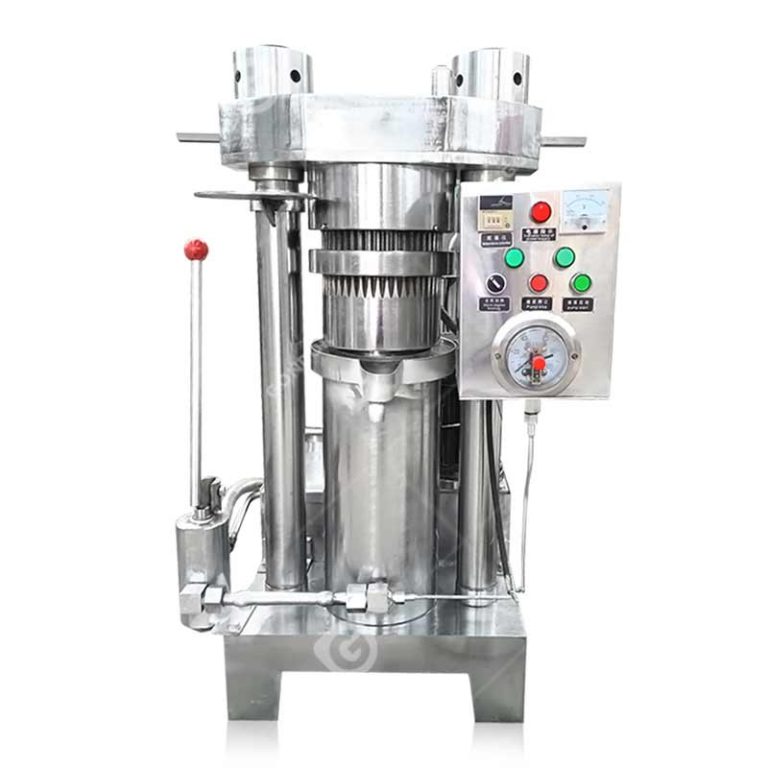
A cocoa press machine—sometimes referred to simply as the cocoa press—is a specialized device designed to apply extremely high pressure to cocoa liquor.
Modern chocolate plants often use a hydraulic cocoa butter press, which offers:
- High extraction efficiency
- Easy automation
- Consistent pressure control
- Clean operation

A cocoa press machine can process cocoa liquor from small-scale craft chocolate makers to large industrial factories.
The terminology varies, but all refer to similar equipment:
- cocoa press
- cocoa pressing machine
- cocoa butter press
- cocoa press machine
- cocoa butter press machine
These machines are the backbone of cocoa fat extraction.
3. How Cocoa Butter Extraction Works — Step by Step
Step 1: Cocoa Bean Roasting
Raw beans are roasted to develop flavor and loosen shells. Proper roasting influences aroma and fat release efficiency.
Step 2: Winnowing & Grinding
Roasted beans are cracked and de-shelled, producing cocoa nibs.
Nibs are then ground to produce cocoa liquor—a dense paste containing:
- ~50–55% cocoa fat
- Cocoa solids
The finer the grinding, the smoother the extraction.

Step 3: Pre-Heating the Cocoa Liquor
Before entering the cocoa press, the liquor is heated to keep the fat fluid. This improves flow and extraction yield.
Typical temperature: 80–100°C (176–212°F)
Step 4: Filling the Cocoa Press
The hot cocoa liquor is pumped into a cylinder of the cocoa butter press.
Step 5: High-Pressure Cocoa Pressing
This is the core extraction stage.
A hydraulic system applies pressure—often up to 40–60 MPa (5800–8700 psi)—squeezing the liquor through filter screens.
Liquid cocoa butter flows out, while solid cocoa cake remains.
This step turns cocoa liquor into two valuable products:
- Cocoa butter — collected, filtered, cooled
- Press cake — removed and processed into cocoa powder
Step 6: Cooling & Stabilizing Cocoa Butter
After extraction, cocoa butter is filtered and cooled. It may undergo further refining or deodorizing depending on quality requirements.
Step 7: Crushing the Cocoa Cake
The remaining solid cake is broken and ground into cocoa powder.
A cocoa press can produce various grades of cake depending on residual fat content.
4. Mechanical Principles Behind Cocoa Pressing
A cocoa butter press machine works similarly to industrial oil presses. It follows:
- High pressure → Fat release
- Controlled temperature → Improves liquid flow
- Filtration → Separation of oil from solids
The pressure forces liquid fat through perforated plates while solids remain inside.
Modern hydraulic systems make the cocoa pressing stable and energy-efficient.
5. Why Is Cocoa Butter Pressing Important for Chocolate?
Cocoa butter is essential for chocolate texture.
In cocoa press chocolate production, a specific fat content is required so manufacturers adjust butter content precisely by pressing.
Benefits include:
- Smooth mouthfeel
- Glossy appearance
- Controlled melting point
- Longer shelf life
Without precise cocoa pressing, chocolate quality becomes inconsistent.
6. Types of Cocoa Butter Press Machines
1) Hydraulic Cocoa Press
Most common for chocolate processing.
- High pressure extraction
- Efficient oil separation
- Clean & precise operation
2) Mechanical Screw Press
Less common for cocoa, more for oilseeds.
Lower fat extraction efficiency.
Which One Is Better?
For chocolate factories, a hydraulic cocoa butter press is preferred due to high yield and purity.

7. Applications of Extracted Products
Cocoa Butter
Used in:
- Premium chocolate bars
- Coatings
- Cosmetic creams
- Lotions
- Pharmaceuticals
Cocoa Cake & Powder
Used in:
- Cocoa powder beverages
- Baking
- Confectionery
- Ice cream
The dual-product nature makes cocoa pressing highly economical.
8. Key Factors Affecting Extraction Quality
| Factor | Influence |
|---|---|
| Bean origin | Flavor & fat content |
| Roasting temperature | Aroma release |
| Grinding fineness | Pressing efficiency |
| Pre-heat temperature | Fat fluidity |
| Pressure | Extraction yield |
| Pressing time | Fat content & cake texture |
Understanding these ensures high-quality cocoa press chocolate production.
9. Advantages of Using a Modern Cocoa Press Machine
- High yield of cocoa butter
- Consistent product quality
- Energy-efficient design
- Automated pressure control
- Low maintenance
- Long-term stability
A modern cocoa butter press machine also makes production cleaner and more hygienic, aligning with food-safety standards.
10. Final Thoughts
A cocoa butter press is an essential component of cocoa processing. It transforms cocoa liquor into two valuable ingredients—cocoa butter and cocoa cake—both central to the chocolate industry.
The process is straightforward yet highly technical:
- Roast & grind beans into liquor
- Pre-heat and feed liquor into the cocoa press
- Apply high pressure for cocoa pressing
- Extract cocoa butter & cocoa cake
Choosing the right cocoa press machine ensures:
- Higher cocoa butter yield
- Stable product quality
- Efficient cocoa press chocolate production
As global demand for premium chocolate increases, having a reliable cocoa butter press machine becomes more important than ever.