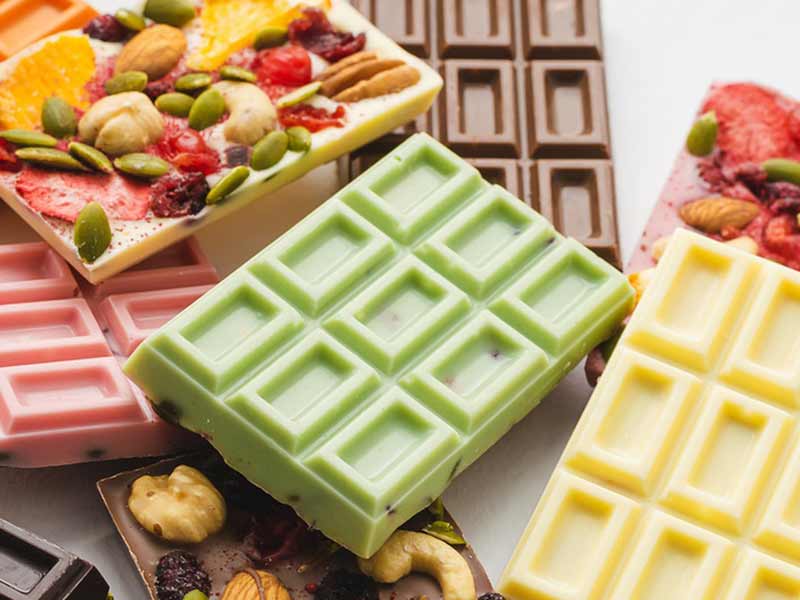
In the global confectionery industry, white chocolate production stands out for its smooth texture, creamy flavor, and distinctive ivory color. Unlike milk or dark chocolate, white chocolate contains no cocoa solids, which focuses instead on cocoa butter, milk powder, and sugar to deliver its signature taste. At Gondor Machinery, as a professional supplier of food processing machinery, we understand that mastering the process of chocolate production, especially for white chocolate, requires precision, quality control, and the right equipment. Below, we break down the standard process chocolate production flow for white chocolate, from raw ingredients to final packaging.
Raw Material Selection and Preparation
In professional
chocolate manufacturing, each ingredient is weighed and sifted to remove impurities before processing. And our automated dosing systems ensure precise ratios for consistent batches. Moreover, high-quality white chocolate production starts with the right ingredients:
- Cocoa Butter: Refined, deodorized cocoa butter ensures purity and consistent melting properties.
- Milk Powder: Provides the creamy taste and smooth mouthfeel.
- Sugar: Finely milled to avoid graininess in the final product.
- Emulsifiers: Such as soy lecithin, to improve viscosity and blending.
Melting and Pre-Mixing
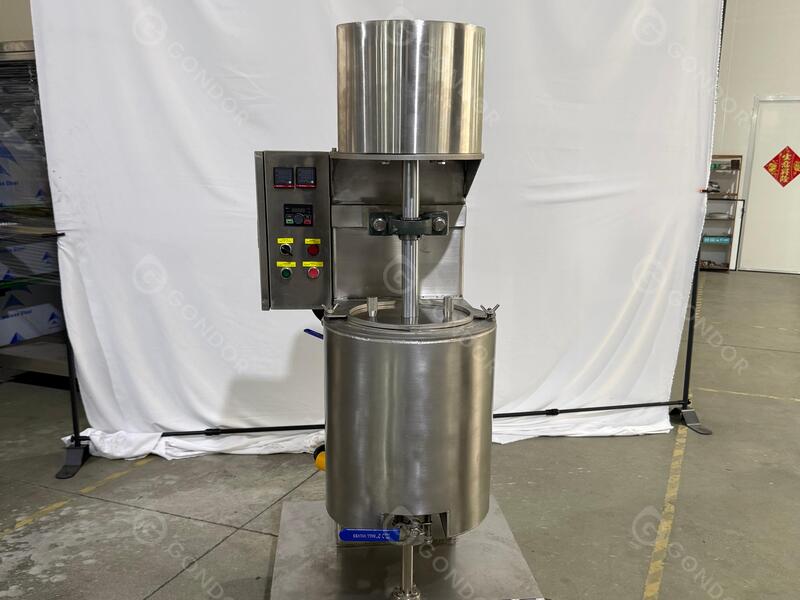
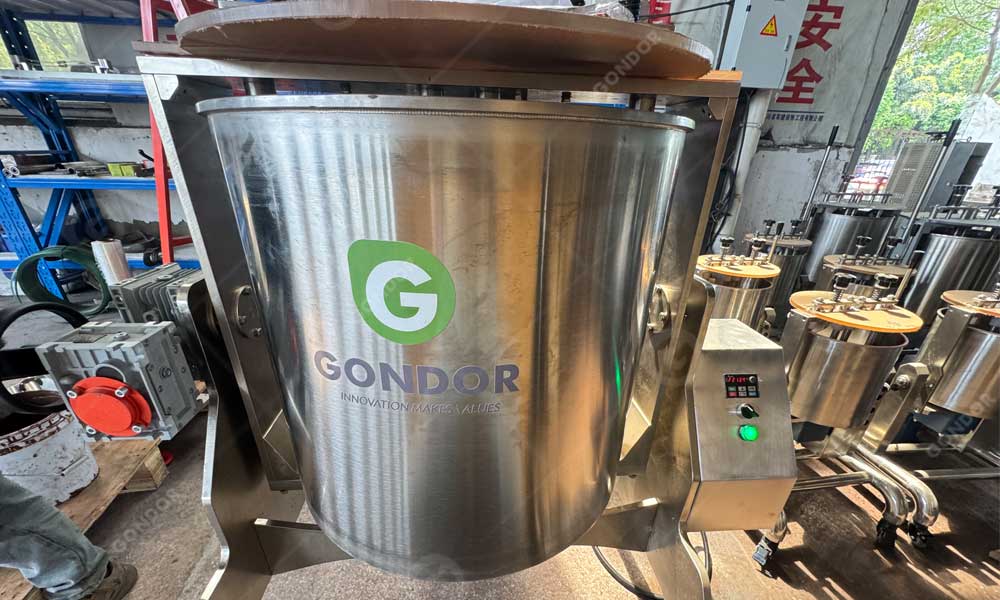
Cocoa butter is gently melted in jacketed melting tanks at 45–50°C to achieve a fully liquid state. Sugar and milk powder are then introduced in controlled quantities.
Using an industrial mixer, these components are blended into a uniform paste, and this is preparing them for fine grinding. What’s more, our pre-mixing systems feature variable-speed agitation and precise temperature control for optimal results.
Refining
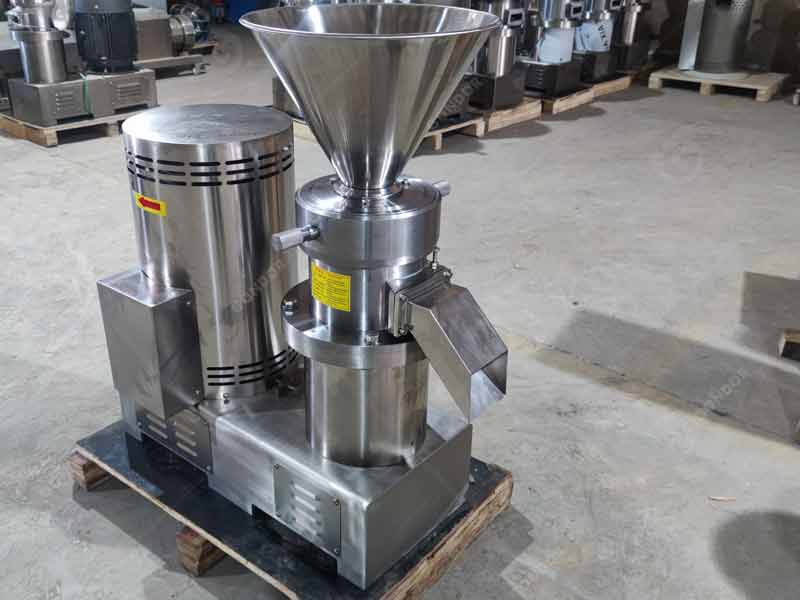
In the process chocolate production workflow, refining reduces particle size to around 20 microns or less, which gives white chocolate its signature smoothness. Ball mills or three-roll refiners are commonly used. Gondor refining equipment integrates particle size sensors for real-time quality monitoring, ensuring every batch meets texture standards.
Conching
Chocolate conching aerates the chocolate mass and develops flavor by driving off excess moisture and volatile compounds. For white chocolate, this process typically lasts 8–12 hours at controlled temperatures (60–80°C).
Tempering
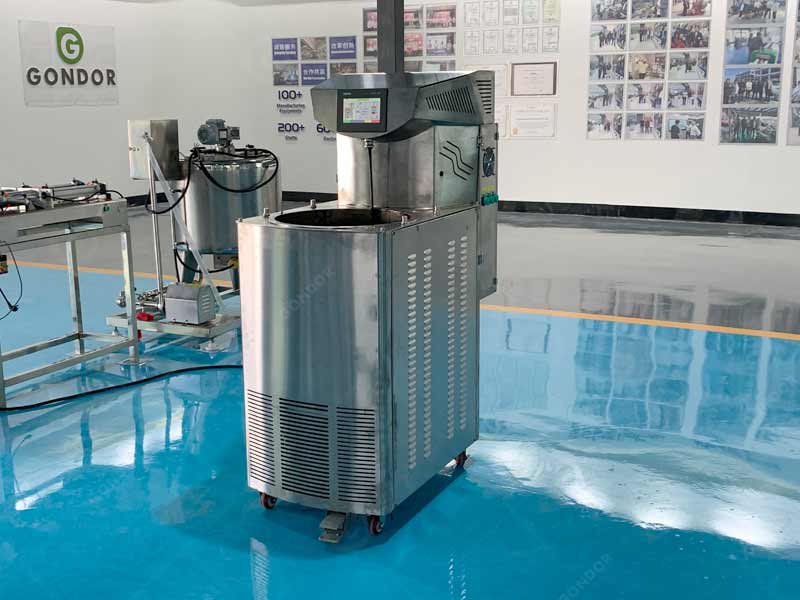
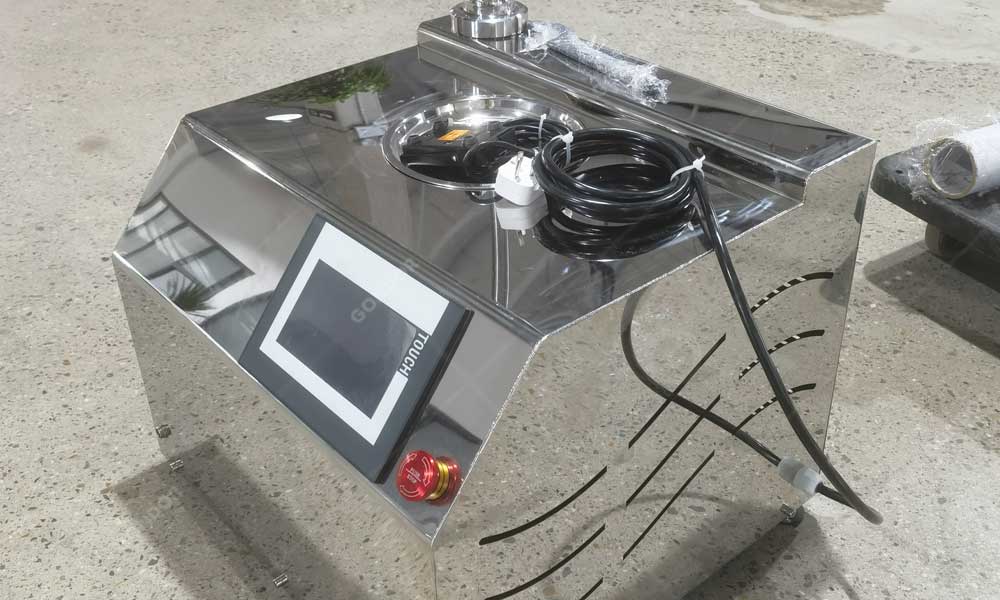
Tempering stabilizes cocoa butter crystals to produce glossy chocolate with a crisp snap and longer shelf life. Our fully automated
chocolate tempering machines maintain ±0.1°C precision, crucial for consistent crystal structure in white chocolate production. The process involves:
- Heating the chocolate mass to melt all crystals.
- Cooling to promote stable crystal formation.
- Slight reheating to working temperature.
Molding and Cooling
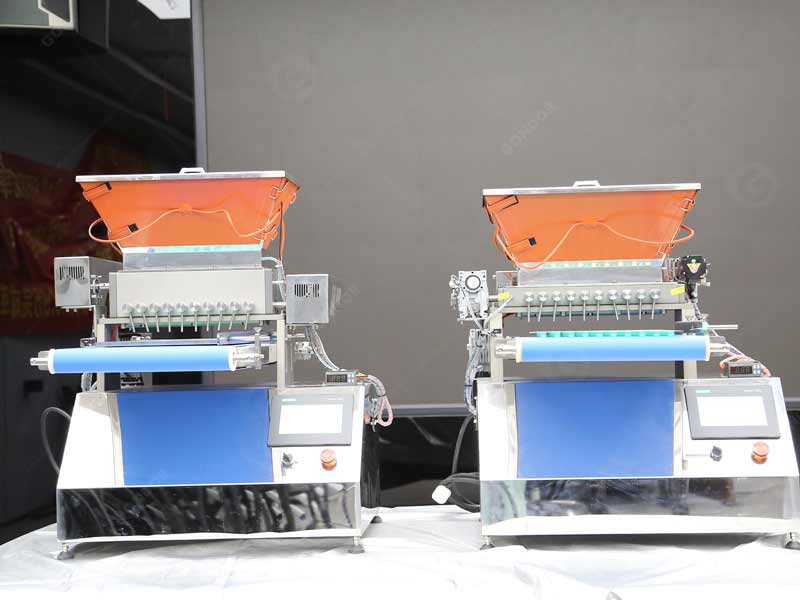
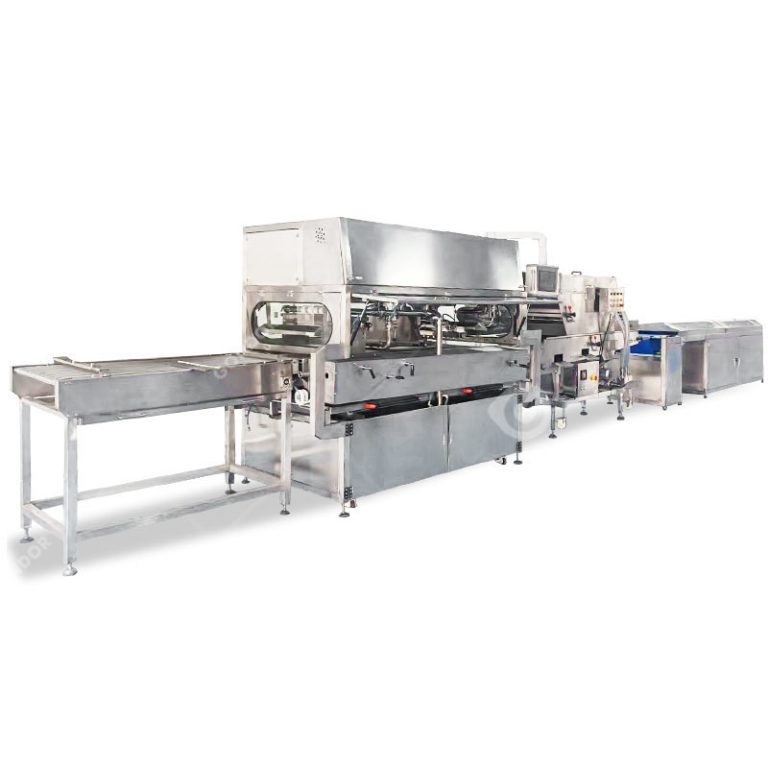
Tempered chocolate is deposited into molds via automated molding lines, then passed through cooling tunnels with gradual temperature reduction. This prevents defects like fat bloom or surface dullness. Moreover, Our cooling tunnels are designed for even airflow and energy efficiency, which supports both small-batch and large-scale operations.
Demolding, Packaging, and Storage
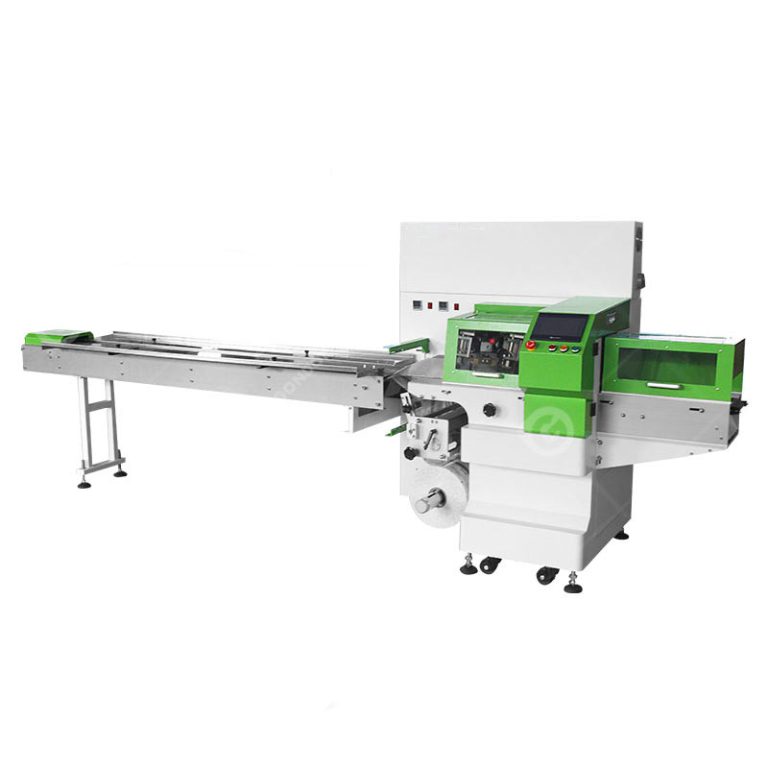
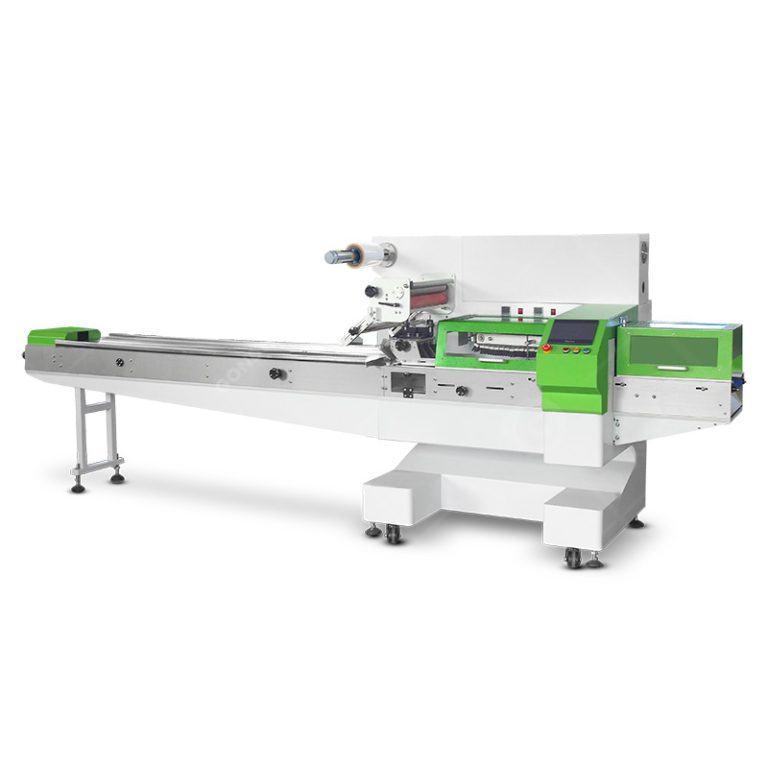
Once cooled, chocolate is demolded and conveyed to automated packaging lines. And packaging materials may include foil, paper wraps, or multilayer films, which depends on branding and shelf-life requirements.
Achieving Excellence in White Chocolate Production with Gondor Machinery
Whether you are launching a boutique chocolate brand or expanding an industrial facility, Gondor Machinery delivers complete process chocolate production solutions. From raw material handling and refining to tempering and packaging, our choclate making machines can meet your demands. Moverover, mastering the process of chocolate production for white chocolate is a blend of science, craftsmanship, and technology. With Gondor Machinery’s expertise and integrated machinery solutions, manufacturers can achieve superior quality, efficiency, and reliability in every batch, which ensures their white chocolate stands out in a competitive market.