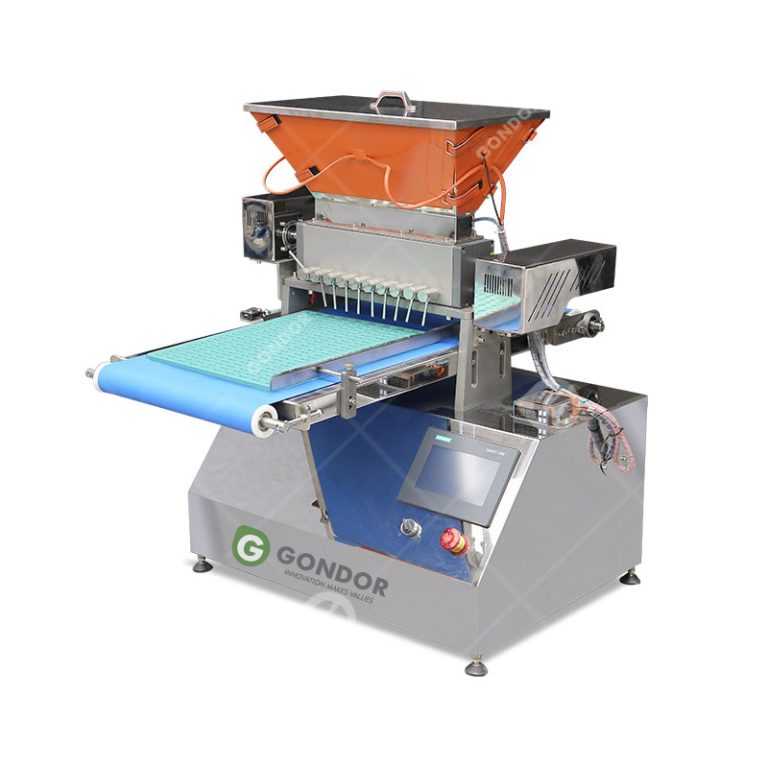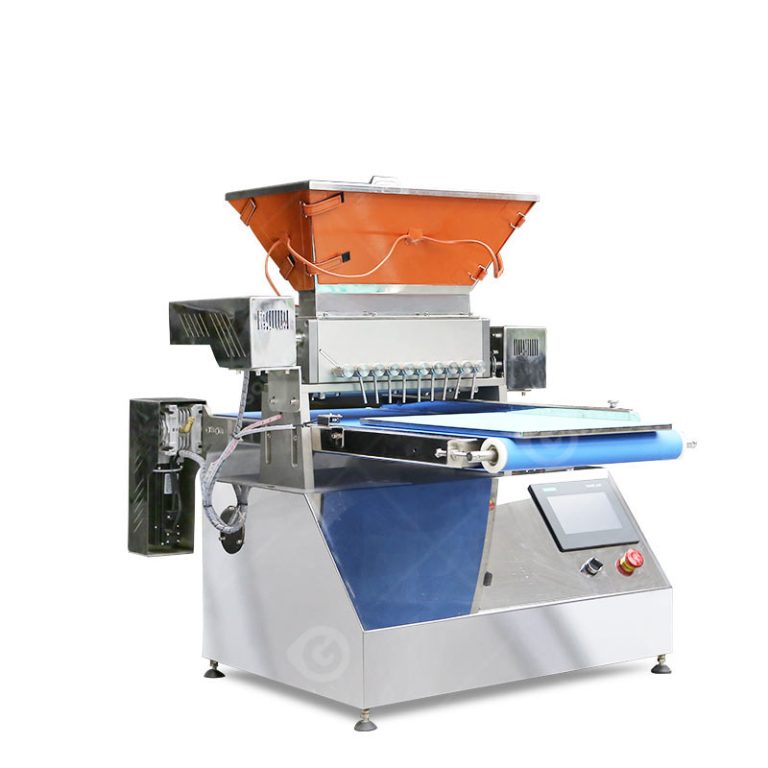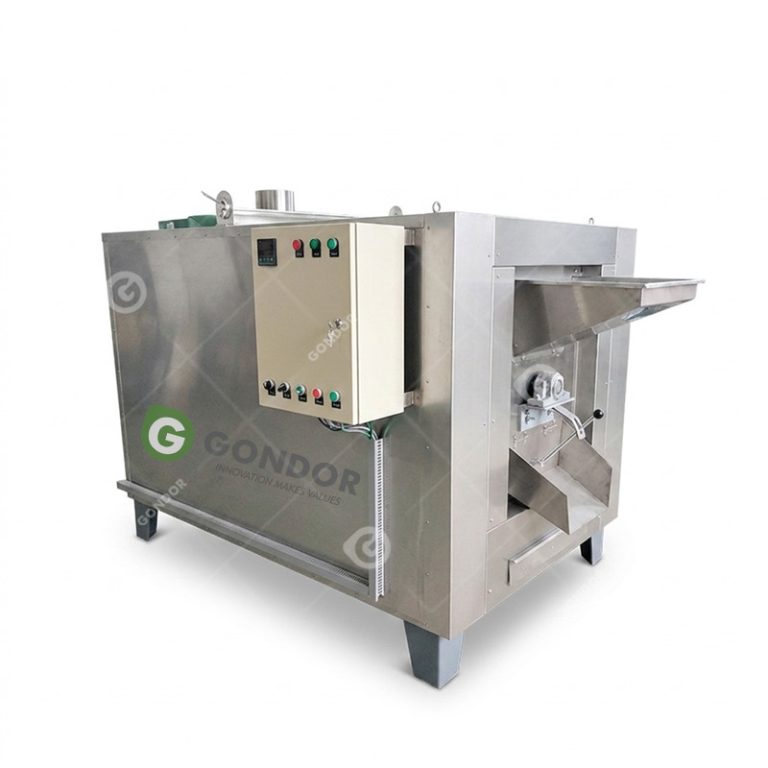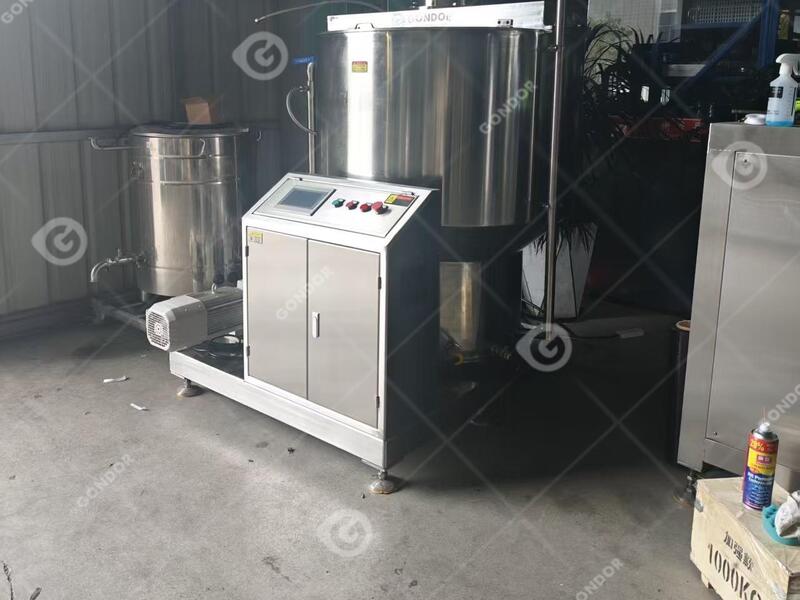


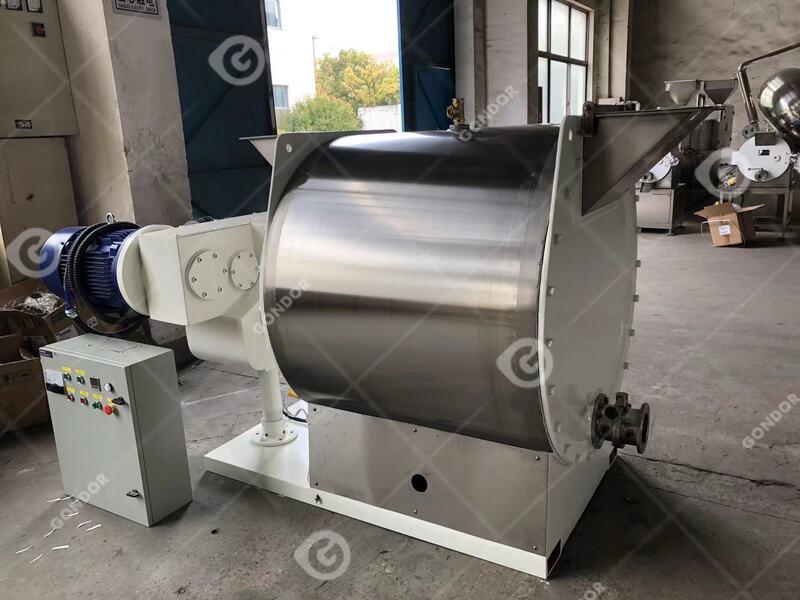
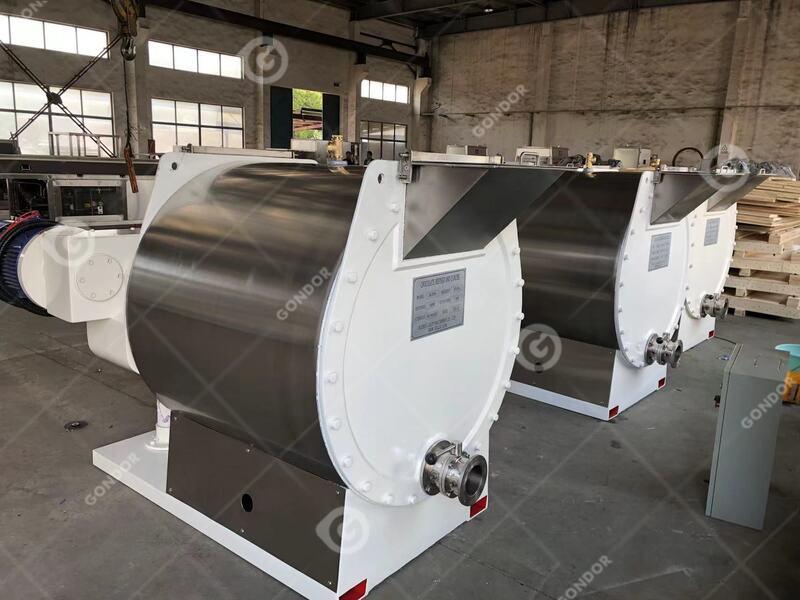
The chocolate refining machine plays four key roles in chocolate production: 1. Improving flavor, 2. Refining particle size, 3. Adjusting viscosity, and 4. Reducing moisture content. In short, the chocolate refining machine transforms “already edible cocoa liquor” into “better-tasting, more stable, and easier-to-process cocoa liquor.”
The chocolate refining machine does more than simply extend mixing time. Through a series of processes, it further processes the initially ground, coarse cocoa liquor into a smoother, more rounded, and more stable chocolate liquor, laying a crucial foundation for subsequent tempering, molding, coating, and filling processes.
Therefore, many chocolate manufacturers, when evaluating the quality of the finished product, often don’t just look at the raw materials or the initial grinding process, but pay particular attention to whether the refining stage is adequate.
The final smoothness, richness, and processing stability of a chocolate often differ significantly at this stage. Without the refining process, chocolate may suffer from noticeable particle size, insufficient fluidity, and poor shaping.
Why is chocolate production inseparable from refining machines?
From a process perspective, after cocoa beans undergo fermentation, roasting, crushing, grinding, and mixing, they do indeed possess the basic form of chocolate. At this point, the chocolate liquor seems almost ready, and the aroma is beginning to emerge. However, if it were to directly proceed to the later stages of processing, problems would usually surface.
For example, the liquor might still have a slightly sharp sour taste; the particles, while no longer large, could still feel slightly rough on the tongue; furthermore, the viscosity of the liquor might not be ideal, sometimes too thick, sometimes uneven, all of which increase the difficulty of subsequent tempering and molding. Not to mention, if trace amounts of moisture remain in the system, it can further affect the texture, flowability, and storage stability.
Therefore, this is the significance of refining machines. It doesn’t simply repeat the previous work, but rather performs “deep processing” on the chocolate. This stage may not seem as intuitive as baking, nor as easily observed as molding, but its impact on the final quality is often greater than many people imagine.
The Core Functions of a Chocolate Refining Machine
1. Removing Unpleasant Acidity
Many people new to chocolate production focus on the fineness of the grind, overlooking the fact that chocolate’s flavor isn’t solely determined by the quality of the raw materials.
Especially after cocoa beans undergo fermentation and roasting, while they develop their basic aroma, some volatile acids, such as acetic acid and propionic acid, often remain. Without further processing, the finished product may have a sharp, pungent acidity, lacking a rounded flavor.
During the refining stage, continuous heating, turning, and ventilation gradually remove these undesirable volatile components. This process isn’t a drastic “de-flavoring,” but rather a gentle refinement. As the pungent odor diminishes, the deeper cocoa and roasted aromas of the chocolate are more easily released.
2. Softening Bitterness and Matures Aroma
Furthermore, refining is not simply about “subtraction.” While removing some undesirable flavors, it also adds to the overall experience—making the aroma more complete and the flavor more mellow.
Under conditions of continuous heating and controlled oxidation, some bitter components in cocoa become less sharp, while the flavor gradually develops towards a softer, more layered character. In actual production, fully refined chocolate often exhibits a more harmonious caramel note, a subtle nutty aroma, and a fuller roasted character.
Direct changes brought about by flavor development:
Typical Changes in Chocolate Mass Before and After Refining
| Item | Before Refining | After Refining |
|---|---|---|
| Flavor | May taste sharp or slightly acidic | More rounded and balanced |
| Mouthfeel | Slight grit or roughness may remain | Smoother and silkier |
| Flow behavior | Often too thick or inconsistent | More stable and easier to process |
| Moisture condition | May still contain trace moisture | Lower moisture and better consistency |
| Downstream processability | Can complicate tempering and molding | Better suited to stable continuous production |