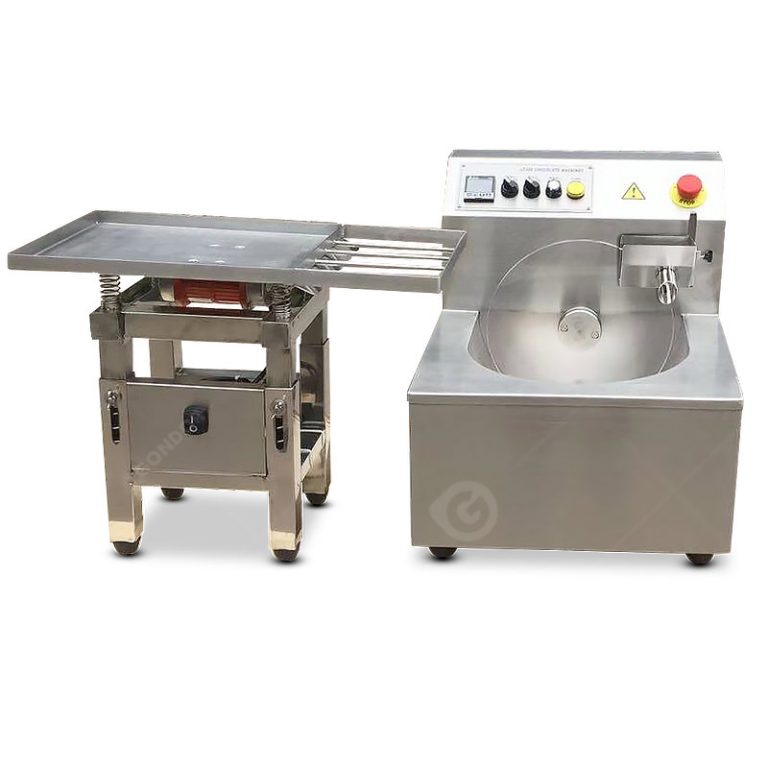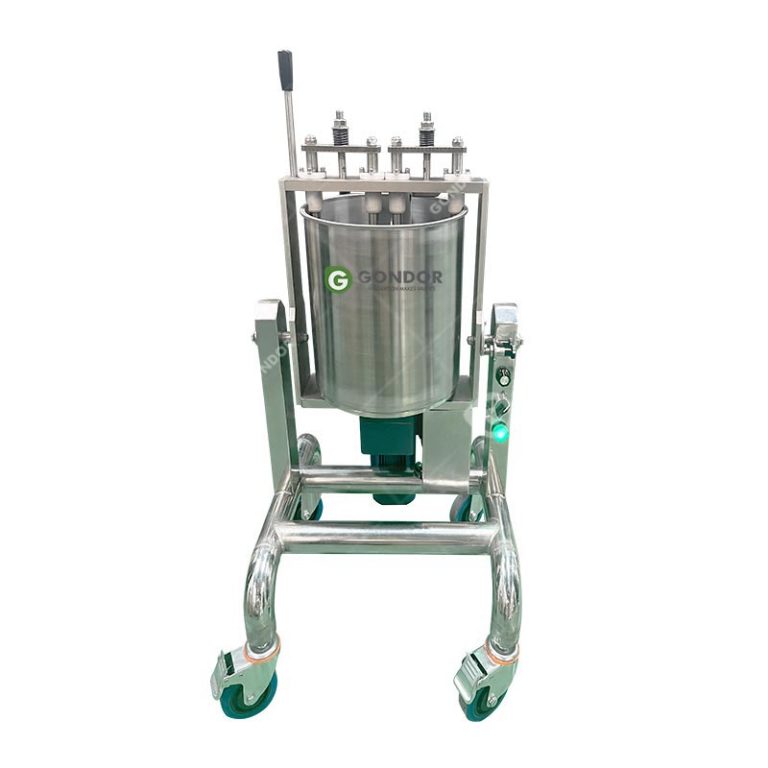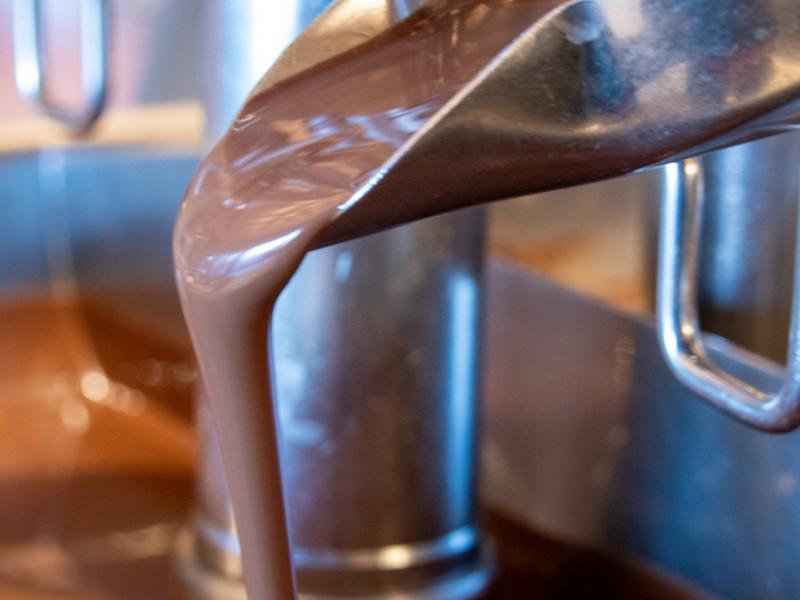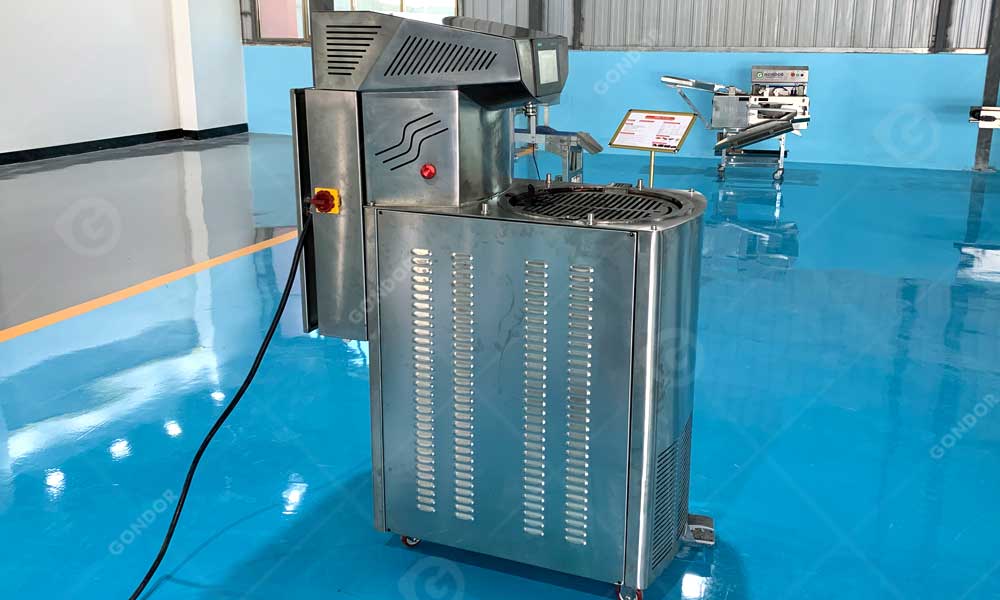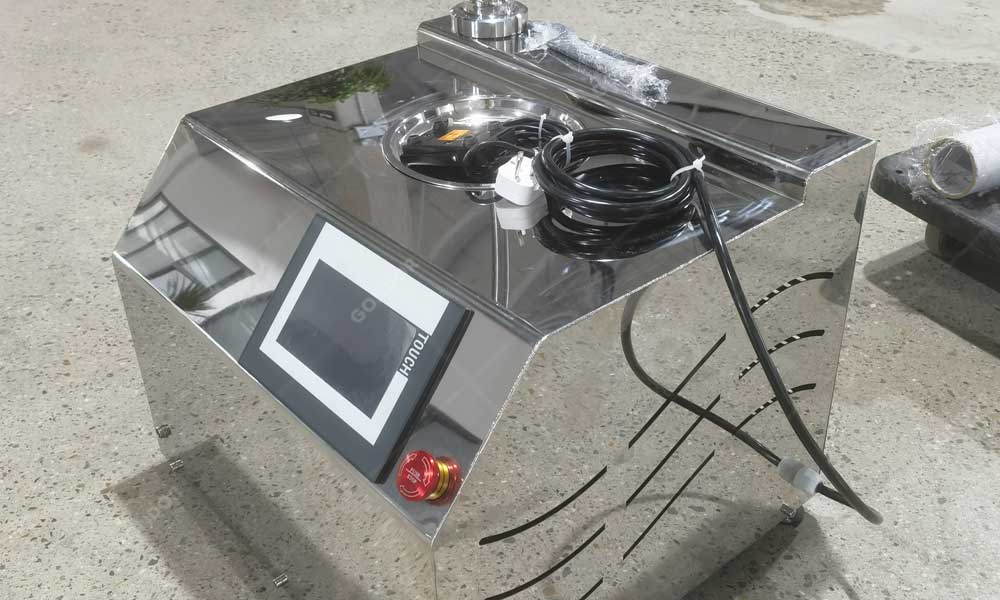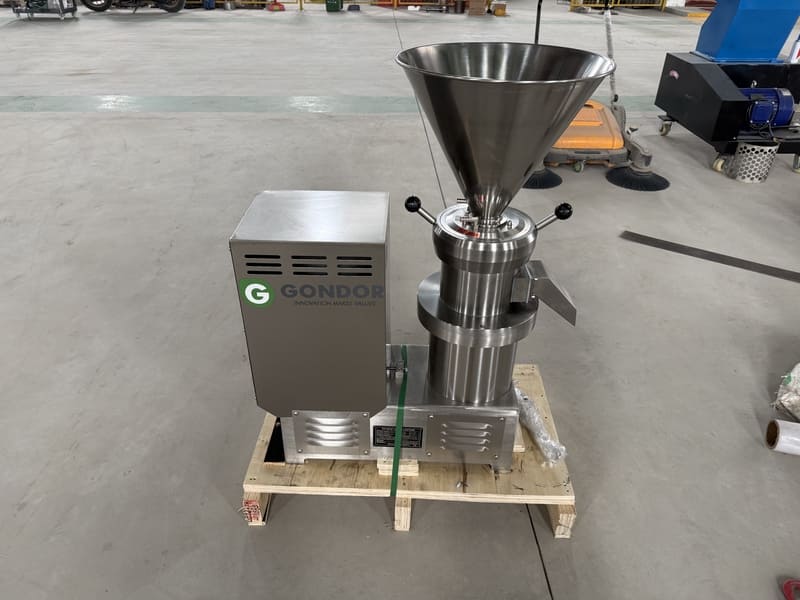


Cocoa grinders and cocoa bean grinders are complementary pieces of equipment in the chocolate production chain. You cannot make smooth chocolate without these two processes.
So, what are the differences between these two types of chocolate equipment?
What do these two types of equipment do?
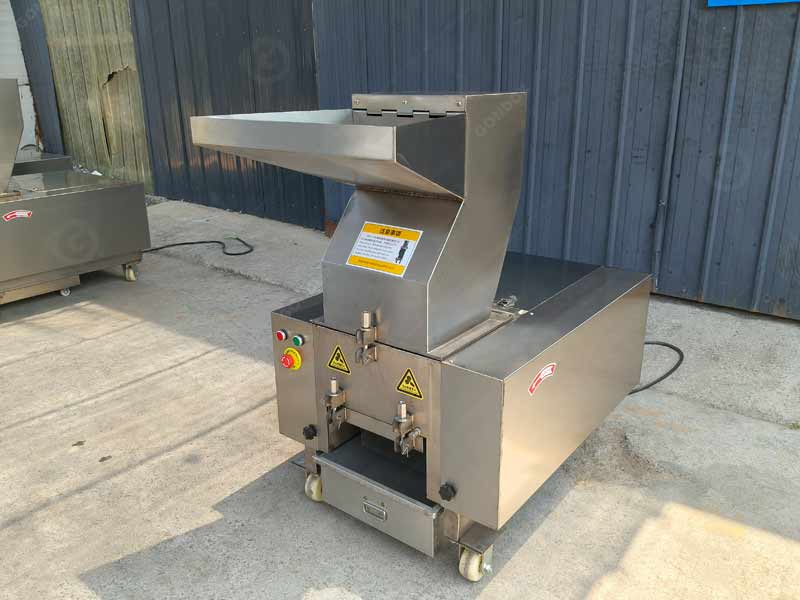
A Cocoa Crusher is used to crush roasted cocoa beans into nibs and loosen the outer shells for easy air separation.
A Cacao Bean Grinder Machine grinds the clean nibs into cocoa liquor, achieving the fineness required for subsequent chocolate production.
Different Working Principles of Cocoa Crusher VS Cacao Bean Grinder Machine
Crusher: Roasting → Crushing → Air Separation → (Nibs enter downstream)
Grinder: (Clean Nibs) → Grinding → Liquor/Pulp → (Optional Fine Grinding/Refining) → Chocolate
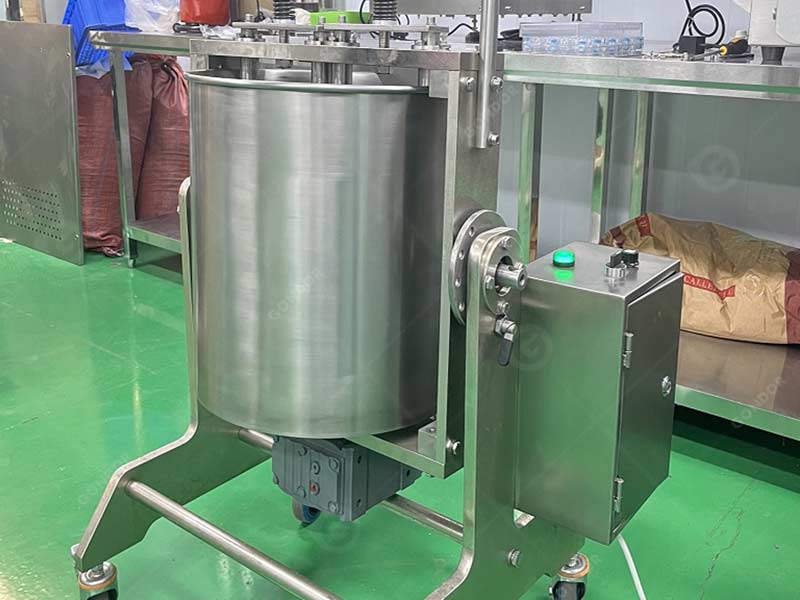
Different Application Scenarios
Cocoa Crusher
Pre-treatment after roasting to obtain uniform nibs.
Improves air-separation dehulling efficiency and overall bean yield.
Suitable for labs/craft workshops to standardize bean size at the initial stage, laying the foundation for subsequent flavor development.
Cocoa Bean Grinder:
Turns crushed beans into cocoa liquor for pressing (cocoa butter/cocoa cake) or preparing chocolate liquor.
Handmade brands use stone mills/stone rollers to enhance texture and flavor.
Industrial production lines use ball mills/colloid mills to achieve high output and strict micron-level control.
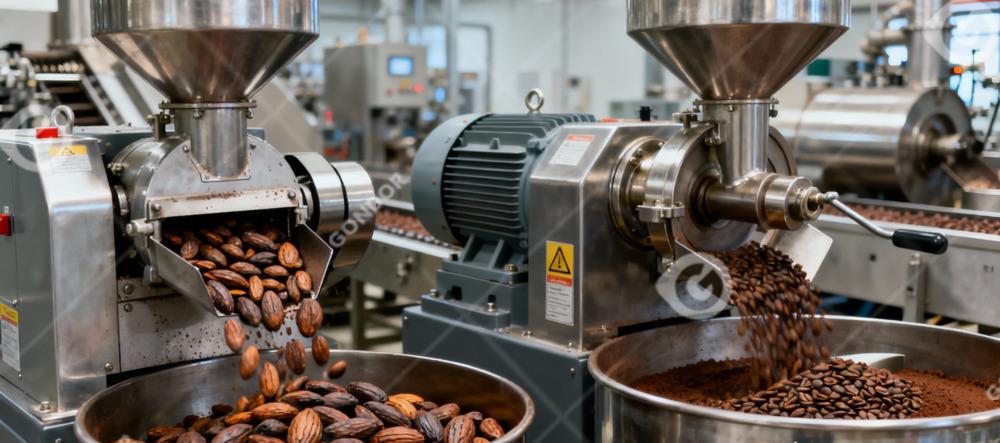
Working Principle:
Cocoa Grinder – Crushing and Particle Size Control: Roasted beans pass through an adjustable crushing gap (toothed roller/patterned roller or serrated disc).
Mechanical impact and shearing split the beans; the outer shell loosens and detaches from the endosperm.
The output is a mixture of “crushed beans + outer shell,” which enters the air-separation process.
Cocoa Bean Grinder – Particle Size Refinement:
Stone Mill/Stone Roller: Granite rollers apply pressure and shearing over a long period, which is beneficial for flavor development.
Ball Mill: The cylinder and grinding media provide rapid impact/shear; coupled with temperature-controlled circulation.
Colloid Mill (Rotor-Stator): High-shear slits achieve continuous refining, outputting stable cocoa liquor.
Advantages of Use
Cocoa Grinder: Uniform particle size, less fine powder → high air separation efficiency, good particle yield.
Simple structure, low energy consumption, easy integration, and easy maintenance.
Adjustable gap adapts to different bean types and roasting levels.
Cocoa Bean Grinder: Produces pumpable cocoa liquor; further refinement to the fineness required for chocolate (approximately 20–30 µm with fine grinding).
Controllable temperature/viscosity better protects flavor and stabilizes the process.
Scalable: From small-batch handcrafting to continuous industrial production capacity.
Components
Cocoa Grinder
Feed Hopper and Flow Control
Crushing Roller/Crushing Disc and Gap Adjustment Mechanism
Protective Cover and Vibration Damping Frame
Cocoa Bean Grinder
Grinding Unit: Stone Mill Wheel + Base / Ball Mill Cylinder + Media / Rotor-Stator
Motor/Drive + Frequency Converter, Jacketed Body (Heating/Cooling), Temperature Probe
Circulation Pump, Piping, Sampling Valve (Continuous System)
Control Panel (PLC/HMI), Safety Interlocks
Suitable for Which Customers
Choose a cocoa grinder if you:
In the upstream process: Roasting → Crushing → Air Classification.
Need better particle consistency and higher dehulling efficiency.
Building a lab/pilot line to optimize roasting and dehulling parameters.
Choose a cocoa bean grinder if you:
Need cocoa liquor for pressing or chocolate liquor preparation.
Prefer a handcrafted texture and flavor (using stone mill) or pursue high industrial yield and strict micron-level particle size control (ball mill/colloid mill).
Temperature and viscosity stability are required for continuous and automated production.
Location in the chocolate production line:
Roasting → Cocoa grinder (crushing) → Air classifier (hulling) → Cocoa bean grinder (liquid block) → Fine grinding/refining → Tempering → Shaping/casting